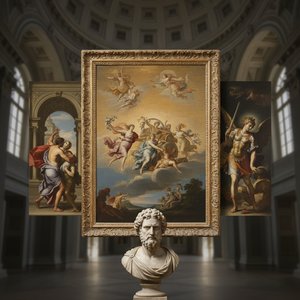
Pacecco De Rosa: A Naples Baroque Visionary
Pacecco De Rosa (Giovanni Francesco De Rosa; 17 December 1607 – 1656) stands as a pivotal figure in the vibrant artistic landscape of Naples during the Baroque era. Born into a family steeped in artistic tradition—his father, Tommaso de Rosa, was also a painter—Pacecco’s formative years were shaped by exposure to influential artistic currents, most notably Filippo Vitale’s Caravaggesque style.
- Early Influences: Vitale's teachings instilled in Pacecco a profound understanding of tenebrism and dramatic chiaroscuro, techniques that would become hallmarks of his oeuvre. The deposition depicting St. Nicholas of Bari, housed in the Certosa di San Martino, exemplifies this early stylistic imprint, demonstrating a clear connection to Vitale’s artistic vision.
- Collaboration with Vitale: Pacecco's partnership with Vitale extended beyond mere instruction; it fostered a creative dialogue that resulted in collaborative projects—particularly the monumental St. Nicholas of Bari and Basiliscus—solidifying their shared stylistic approach.
Moving beyond his initial apprenticeship, Pacecco honed his skills under Massimo Stanzione, whose influence further enriched his artistic repertoire. This connection is evident in works like ‘The Judgment of Paris’ and ‘Diana Bathing,’ where Stanzione's compositional sophistication blends seamlessly with Pacecco’s masterful execution.
- Notable Commissions: Pacecco gained renown for undertaking significant commissions, notably the Madonna with St. Charles Borromeo in San Domenico Maggiore—a collaborative effort showcasing his ability to synthesize diverse artistic influences.
- Expanding Artistic Horizons: His involvement in projects like ‘The Bath’ and ‘The Massacre of the Innocents,’ alongside collaborations with Giovanni Do, broadened Pacecco's stylistic explorations and cemented his reputation as a versatile artist adept at capturing emotive narratives within grand canvases.
Pacecco De Rosa’s legacy resides not only in his impressive body of work but also in his contribution to the burgeoning Baroque movement in Naples. His paintings—characterized by dramatic lighting, expressive gestures, and meticulous detail—remain treasured examples of artistic excellence, reflecting the spiritual fervor and aesthetic dynamism that defined the period.
- Museum Collections: Admire Pacecco’s masterpieces at institutions like Pinacoteca Metropolitana di Bari or Museo Nazionale di Napoli, where his paintings continue to captivate audiences with their evocative beauty and technical prowess.
Further research into Pacecco De Rosa's life and artistic development reveals a painter deeply rooted in the traditions of Naples Baroque, yet simultaneously embracing innovation and stylistic experimentation—a testament to his enduring impact on Italian art history.