The Architect of Ephemeral Landscapes
Born amidst the vibrant, rhythmic pulse of Havana, Cuba, on February 5, 1966, Jorge Rodríguez-Gerada carries within his creative DNA a profound connection to both the tropical intensity of his birthplace and the transformative urban landscapes he would later inhabit. His journey is one of movement and metamorphosis; arriving in the United and States in 1970, his early years in New Jersey were marked by the poignant experience of the immigrant—navigating new languages and social frictions that would eventually fuel his lifelong commitment to social commentary. This early sensitivity to identity and displacement became the bedrock of an artistic practice that seeks not just to decorate space, but to reclaim it, turning the cold surfaces of the modern metropolis into breathing, emotive canvases.
The 1990s served as a crucible for Rodríguez-Gerada’s radical approach to public engagement. Immersed in the burgeoning New York Culture Jamming movement, he collaborated with collectives such as Artfux and the Cicada Corps of Artists to challenge the hegemony of corporate advertising. His work during this era was inherently subversive, utilizing the very tools of mass communication—billboards and public advertisements—to disrupt consumerist narratives. By morphing the faces of models or altering commercial messages to reflect political truths, he pioneered a form of visual activism that transformed the urban environment into a site of critical dialogue, proving that art could be as much an intervention as it is an aesthetic experience.
From Charcoal Shadows to Terrestrial Visions
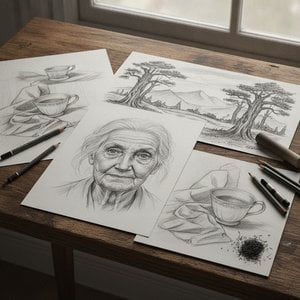
A pivotal shift occurred in 2002 when Rodríguez-Gerada relocated to Barcelona, a move that expanded his technical vocabulary and deepened his exploration of scale. It was here that he began developing his celebrated Identity Series, characterized by monumental, ephemeral charcoal drawings. These works, often executed directly onto the skin of the city, utilize the raw, tactile nature of charcoal to explore themes of memory, selfhood, and the fleeting nature of existence. The grit and dust of the medium mirror the transient nature of the art itself, creating a haunting beauty that exists only for a moment before being reclaimed by the elements.
As his ambitions grew, so did the physical dimensions of his canvas. Moving beyond the street level, he conceived the Terrestrial Series—ambitious earthworks of such staggering proportions that they are designed to be visible from orbit. These projects represent a profound leap in scale, where the artist engages with the very crust of the Earth to create Land Art that bridges the gap between human perception and planetary existence. Through these massive interventions, Rodríguez-Gerada invites us to contemplate our place within the global ecosystem, turning the landscape into a medium for cosmic reflection.
A Legacy of Urban Transformation
The significance of Jorge Rodríguez-Gerada’s oeuvre lies in his ability to dissolve the boundaries between the gallery and the world. His practice is a continuous dialogue with the concept of permanence, constantly questioning what remains when the charcoal fades or the earth shifts. His contributions to the contemporary art canon are marked by several key achievements:
- The Reclaiming of Public Space: Through his early work in culture jamming, he redefined the role of the artist as a social provocateur capable of disrupting commercial hegemony.
- Multidisciplinary Mastery: His ability to seamlessly transition between urban murals, large-scale sculpture, and planetary-scale earthworks demonstrates a unique versatility in medium and scale.
- Cultural Curation: Through initiatives like the AvantGuard Urbano Festival in Spain, he has fostered a global community of artists dedicated to the transformative power of street and land art.
- Exploration of Identity: His work remains deeply rooted in the human experience, using the ephemeral nature of his materials to symbolize the fragility and resilience of human memory and identity.
Today, Rodríguez-Gerada stands as a visionary whose work transcends the traditional limits of art. Whether he is altering a billboard in Manhattan or sculpting the earth in Spain, his mission remains constant: to provoke thought, to challenge authority, and to remind us that even the most fleeting mark can leave an indelible impression on the soul of the world.
Pytania i odpowiedzi
Czy mogę przeglądać dzieła Jorge Rodríguez-Gerada według słów kluczowych?
Dzieła artysty Jorge Rodríguez-Gerada można przeglądać według słów kluczowych na stronie Według słów kluczowych. Każde słowo kluczowe grupuje powiązane ze sobą dzieła.
W jaki sposób mogę zobaczyć wszystkie dzieła stworzone przez Jorge Rodríguez-Gerada?
Każde dzieło Jorge Rodríguez-Gerada dostępne w ta strona można przeglądać na stronie Wszystkie dzieła sztuki artysty.
Skąd pochodzi Jorge Rodríguez-Gerada?
Jorge Rodríguez-Gerada urodził się w Cuba.