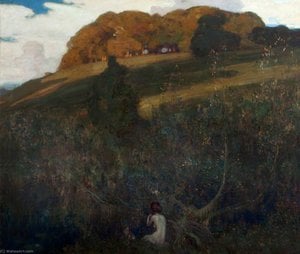
Wizjoner Atmosferycznego Krajobrazu
Sir Alfred Edward East wyłonił się z tętniącego życiem środowiska artystycznego wiktoriańskiej Brytanii, okresu zdefiniowanego przez głęboką fascynację zarówno skrupulatnym realizmem, jak i rodzącymi się ideałami romantyzmu. Urodzony w Kettering w hrabstwie Northamptonshire, rozpoczął swoją twórczą drogę od podstawowego wykształcenia w Glasgow School of Art. Choć jego wczesne skłonności były zakorzenione w szlachetnych tradycjach brytyjskiego malarstwa pejzażowego – gatunku uświetnionego przez takich mistrzów jak Constable czy Turner – artystyczna trajektoria Easta przeszła decydującą i transformacyjną zmianę. Wykroczył on poza zwykłą dokumentację, poszukując zamiast tego uchwycenia samej esencji świata naturalnego poprzez pryzmat głębokiego rezonansu emocjonalnego.
Ta ewolucja została w sposób fundamentalny ukształtowana przez jego spotkanie z francuską szkołą Barbizon. Zamiast jedynie przyjąć nową technikę, East przyjął zmianę filozoficzną, która stawiała na bezpośrednią obserwację i niespieszny, szczery opis życia wiejskiego. Porzucił wielkie narracje historyczne na rzecz poezji odnajdywanej w codziennych scenach, skupiając się na tym, jakie to uczucie być w pełni zanurzonym w naturze. To dążenie do malarstwa en plein air pozwoliło mu opanować subtelną grę światła, cienia i atmosfery, tworząc dzieła o niemal namacalnej jakości.
Wpływ Dalekich Horyzontów
Przełomowy moment w karierze Easta nastąpił w 1888 roku, kiedy to Marcus Huish, dyrektor zarządzający Fine Art Society, zlecił mu sześciomiesięczną podróż do Japonii. Ta wyprawa okazała się transformująca, gdyż unikalne światło, żywe kolory i odrębna estetyka kulturowa japońskiego krajobrazu całkowicie zawładnęły jego wyobraźnią. Nie ograniczał się on jedynie do dokumentowania egzotycznych miejsc; on chłonął nowy sposób patrzenia – podwyższoną wrażliwość na kompozycję oraz delikatną równowagę między naturą a obecnością człowieka. Kolejna wystawa 104 obrazów z tej podróży, zorganizowana w 1890 roku, odniosła spektakularny sukces, trwale ugruntowując jego pozycję jako jednego z czołowych pejzażystów swojej epoki.
Jego twórczość pozostaje piękną syntezą różnorodnych wpływów, łączącą w sobie następujące elementy:
- Wpływ szkoły Barbizon: oddanie barwom ziemi, stonowanym paletom oraz sugestywnej mocy perspektywy powietrznej.
- Brytyjska tradycja: głęboki szacunek dla surowego piękna i spokojnego ducha angielskiej wsi.
- Estetyka japońska: napływ nowych perspektyw na światło oraz wyrafinowana wrażliwość na subtelne detale świata przyrody.
Dziedzictwo i Znaczenie Artystyczne
Przez całe życie oddanie Easta w chwytaniu duszy krajobrazu pozostawiło niezatarty ślad w sztuce jego czasów. Jego zdolność do oddania cichej wielkości scen takich jak Midland Meadows czy sezonowych przemian widocznych w October Glow, near Yardley Woods świadczy o mistrzostwie w operowaniu nastrojem i światłem. Poza jego osobistymi płótnami, jego więź z korzeniami przetrwała dzięki Alfred East Art Gallery w Kettering, która służy jako sanktuarium dla samego ducha malarstwa pejzażowego, którego pionierem był artysta. Jego dziedzictwo wciąż rezonuje w dziełach, które zapraszają widzów do ponownego nawiązania kontaktu z nieprzemijającym pięknem świata natury.
Pytania i odpowiedzi
Gdzie i w którym roku urodził(a) się Alfred East?
Alfred East urodził się w Kettering w 1844 roku.
Czy mogę sortować dzieła Alfred East według koloru?
Strona Indeks kolorystyczny pozwala przeglądać dzieła Alfred East z podziałem na kolory.
Czy istnieje zestawienie wszystkich tematów, które malował Alfred East?
Dzieła artysty Alfred East można przeglądać według tematów na stronie Atlas tematów.