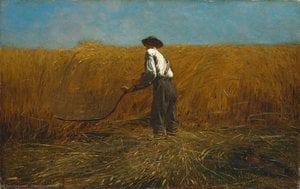
Uncle Ned at Home – A Portrait of Rural Resilience
Winslow Homer’s “Uncle Ned at Home,” painted in 1875, transcends mere depiction; it embodies the spirit of American realism and captures a poignant moment of quiet contemplation amidst the vastness of nature. This oil on canvas masterpiece isn't simply a visual record of a Maine cabin interior—it’s an invitation to delve into Homer’s masterful observation of everyday life and his profound connection with the natural world.
Composition and Setting: Harmony Found in Simplicity
The painting’s genius lies in its understated elegance. Homer skillfully arranges elements – a weathered cabin, a simple bench, and most notably, a man—to create an atmosphere of serene tranquility. The placement of birds circling overhead subtly reinforces the theme of freedom and connection to the environment. Notice how Homer utilizes light; it casts warm hues onto the cabin walls, highlighting textures and fostering a sense of intimacy. This careful composition speaks volumes about Homer’s artistic philosophy – prioritizing clarity and emotional resonance over elaborate ornamentation.
Technique: Homer's Brushstrokes Speak Volumes
Homer employed a technique characterized by thick impasto—heavy application of paint—creating palpable texture that mimics the roughness of wood grain and stone. This method wasn’t merely stylistic; it served to convey realism, mirroring the physicality of rural life. The artist meticulously rendered details like the man's clothing and facial expression, conveying a sense of dignity and resilience. Homer’s masterful brushwork contributes significantly to the painting’s emotional impact—it invites viewers to feel the warmth of the hearth and experience the stillness of the Maine countryside.
Historical Context: The Rise of American Realism
"Uncle Ned at Home" emerged during a pivotal period in American art history – the ascendancy of realism. Following Romantic idealism, artists like Homer sought to portray life as it truly was, eschewing fantastical narratives for honest depictions of ordinary people and landscapes. This movement reflected a broader cultural shift toward valuing practicality and observation, mirroring the burgeoning industrial revolution alongside the enduring beauty of rural America. Homer’s work aligns perfectly with this ethos, presenting a timeless portrait of human connection and perseverance.
Symbolism: Beyond Representation – An Echo of Values
The inclusion of birds symbolizes freedom and aspiration—a recurring motif in Homer's oeuvre. They represent hope amidst hardship, mirroring the spirit of the American frontier. The cabin itself embodies stability and tradition, representing a connection to ancestral roots. Furthermore, the man’s posture exudes quiet strength – he is not actively engaged in labor but stands calmly observing his surroundings, suggesting an acceptance of life’s rhythms and a profound appreciation for the beauty of nature. Homer's subtle symbolism elevates “Uncle Ned at Home” beyond mere visual representation, transforming it into a meditation on fundamental human values.
- Artist: Winslow Homer
- Year: 1875
- Medium: Oil on Canvas
- Location: Unknown
For a stunning reproduction of “Uncle Ned at Home,” explore WahooArt. Discover similar works by Homer and immerse yourself in the legacy of American Realism!



 Podgląd w skali
 Zamów ręcznie malowaną reprodukcję
 Wyślij jako kartkę
 Udostępnij
 Szczegóły dzieła

 Pobierz
 Podobne obiekty
 RTG
RTG Pokaz slajdów
 Statystyki

 Rozwiń treść






































 Opcja ze szkłem jest dostępna wyłącznie w rozmiarach poniżej 110 cm