Winslow Homer's "The Reaper": A Meditation on Labor and American Identity
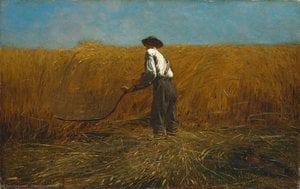
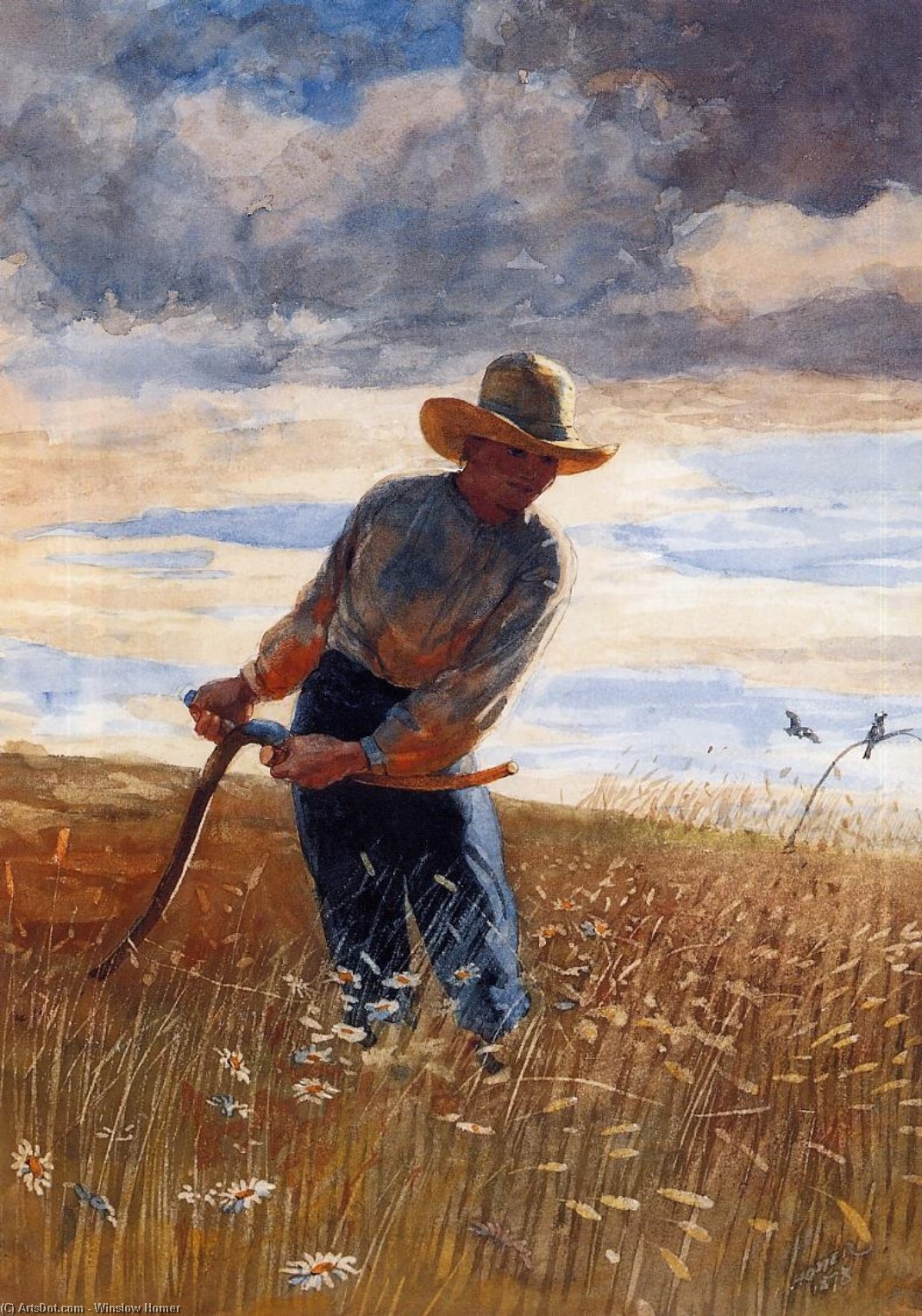
Winslow Homer’s “The Reaper,” painted in 1878, is more than just a depiction of a rural scene; it’s a profound meditation on the dignity of labor, the rhythms of nature, and the burgeoning sense of national identity taking root in America. This watercolor captures a solitary figure – a man in a worn straw hat – engaged in the timeless task of harvesting grain with a scythe. The composition is deceptively simple, yet brimming with quiet intensity, reflecting Homer’s unique approach to artmaking that prioritized direct observation and emotional resonance over academic convention.
- Subject Matter: The central figure embodies the hardworking farmer, a quintessential symbol of early American life.
- Setting: A vast field of tall grass, rendered with meticulous detail, evokes the expansive landscapes that defined the nation’s frontier spirit.
- Atmosphere: Cloudy skies and muted tones contribute to a sense of tranquility and contemplation, inviting the viewer to share in the farmer's solitary experience.
A Painter Forged by Observation
Homer’s artistic journey was markedly different from that of many of his European contemporaries. He eschewed formal training at traditional academies, instead apprenticing himself to the demands of illustration for Harper’s Weekly beginning at just twelve years old. This early experience instilled in him a remarkable ability to capture fleeting moments and details with astonishing accuracy – a skill honed by necessity in the fast-paced world of print media. His focus wasn't on recreating idealized landscapes or historical narratives, but on truthfully representing the lives he observed around him: the bustling streets of Boston, the quiet dignity of rural New England, and ultimately, the evolving story of America itself.
Technique and Style – The Essence of Watercolor
“The Reaper” exemplifies Homer’s mastery of watercolor. He employs a loose, expressive brushstroke to convey movement and texture, particularly in the swaying grass and the flowing scythe. The color palette is dominated by earthy tones—greens, browns, and grays—creating a harmonious blend that reflects the natural world. The subtle gradations of light and shadow add depth and realism to the scene, while the careful placement of birds scattered throughout the painting introduces an element of spontaneity and life. Homer’s technique isn't about precise representation; it’s about capturing *feeling* – the quiet strength and resilience of the farmer, the vastness of the landscape, and the enduring connection between humanity and nature.
Symbolism and Emotional Impact
Beyond its realistic depiction, “The Reaper” carries significant symbolic weight. The solitary figure represents not just agricultural labor but also themes of perseverance, self-reliance, and the cyclical nature of life. The act of harvesting is a metaphor for renewal and hope, while the vastness of the field suggests both opportunity and isolation. Homer’s work resonates with a deep emotional current – a sense of quiet dignity, connection to the land, and an appreciation for the simple beauty of everyday existence. This painting speaks to the enduring spirit of America, rooted in its hardworking people and its boundless landscapes.


 Podgląd w skali
 Przełącz na wydruki
 Wyślij jako kartkę
 Udostępnij
 Szczegóły dzieła

 Pobierz
 Podobne obiekty
 RTG
RTG Pokaz slajdów
 Statystyki

 Rozwiń treść






































 Opcja ze szkłem jest dostępna wyłącznie w rozmiarach poniżej 110 cm