Podgląd w skali 1:1 Podgląd AR Zamów ręcznie malowaną reprodukcję Przejdź do wersji cyfrowej Wyślij jako kartkę
Szczegóły dzieła Przewodnik Dodaj do ulubionych Pobierz obraz Podobne obiekty RTG Pokaz slajdów Q&A Statystyki

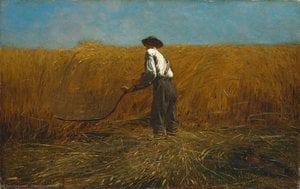
Autumn

Experience Winslow Homer’s ‘In Autumn Woods,’ a breathtaking watercolor capturing the serene beauty of fall. Vibrant colors and masterful composition evoke nature’s tranquility. Own a stunning reproduction today!

Winslow Homer (1836-1910): Ikoniczny amerykański realistyczny malarz słynący z obrazów morskich i krajobrazów XIX wieku. Odkryj arcydzieła takie jak "The Gulf Stream" i "Breezing Up".

Giclée / Wydruk artystyczny

Wydruki giclée lub płótna o jakości muzealnej, szybka realizacja i szeroki wybór opcji wykończenia. ( Zamów ręcznie malowaną reprodukcję Przejdź do wersji cyfrowej)

Corner sample of the P118B picture frame: polistyren formowany, 5 cm wide and 3 cm thick
P118B zł10
Corner sample of the P118H picture frame: polistyren formowany, 5 cm wide and 3 cm thick
P118H zł10
Corner sample of the P118W picture frame: polistyren formowany, 5 cm wide and 3 cm thick
P118W zł10
Corner sample of the P438Z picture frame: polistyren formowany, 5.5 cm wide and 3.5 cm thick
P438Z zł10
Corner sample of the P508JH picture frame: polistyren formowany, 7 cm wide and 3.5 cm thick
P508JH zł12
Corner sample of the P508YH picture frame: polistyren formowany, 7 cm wide and 3.5 cm thick
P508YH zł12
Corner sample of the P805H picture frame: polistyren formowany, 5 cm wide and 3.5 cm thick
P805H zł10
Corner sample of the P805Z picture frame: polistyren formowany, 5 cm wide and 3.5 cm thick
P805Z zł10
Corner sample of the P919BZ picture frame: polistyren formowany, 7 cm wide and 3.5 cm thick
P919BZ zł10
Corner sample of the P919G picture frame: polistyren formowany, 7 cm wide and 3.5 cm thick
P919G zł10
Corner sample of the P919XJ picture frame: polistyren formowany, 7 cm wide and 3.5 cm thick
P919XJ zł10
Corner sample of the P959ZH picture frame: polistyren formowany, 5 cm wide and 3 cm thick
P959ZH zł10
Corner sample of the P968JZ picture frame: polistyren formowany, 6 cm wide and 4 cm thick
P968JZ zł12
Corner sample of the W106C picture frame: lite drewno, 5 cm wide and 3 cm thick
W106C zł8
Corner sample of the W218G picture frame: lite drewno, 5 cm wide and 3 cm thick
W218G zł10
Corner sample of the W218JH picture frame: lite drewno, 5 cm wide and 3 cm thick
W218JH zł8
Corner sample of the W218Y picture frame: lite drewno, 5 cm wide and 3 cm thick
W218Y zł10
Corner sample of the W307PJ picture frame: lite drewno, 6 cm wide and 3 cm thick
W307PJ zł10
Corner sample of the W316G picture frame: lite drewno, 6 cm wide and 3 cm thick
W316G zł10
Corner sample of the W316PJ picture frame: lite drewno, 6 cm wide and 3 cm thick
W316PJ zł8
Corner sample of the W316Y picture frame: lite drewno, 6 cm wide and 3 cm thick
W316Y zł10
Corner sample of the W398PJ picture frame: lite drewno, 5 cm wide and 3 cm thick
W398PJ zł8
Corner sample of the W4111J picture frame: lite drewno, 6.5 cm wide and 3.5 cm thick
W4111J zł10
Corner sample of the W500HY picture frame: lite drewno, 7 cm wide and 5 cm thick
W500HY zł15
Corner sample of the W500JH picture frame: lite drewno, 7 cm wide and 5 cm thick
W500JH zł15
Corner sample of the W692G picture frame: lite drewno, 8 cm wide and 4 cm thick
W692G zł12
Corner sample of the W849H picture frame: lite drewno, 5 cm wide and 3 cm thick
W849H zł8
Corner sample of the W940BG picture frame: lite drewno, 7.5 cm wide and 4.5 cm thick
W940BG zł15
Corner sample of the W953PJ picture frame: lite drewno, 6 cm wide and 3.5 cm thick
W953PJ zł8

Standardowy format
personalizowane
CM
INCH

Wybierz spośród naszych standardowych rozmiarów, które zachowują oryginalne proporcje dzieła sztuki.

szerokość
wysokość

Wpisz wymaganą szerokość i wysokość, aby dopasować grafikę do ramy lub ściany. Wydruk można jedynie przyciąć, nigdy nie powiększając go poza oryginalny obraz, dlatego format o innych proporcjach spowoduje utratę części kompozycji. Przed rozpoczęciem druku prześlemy Ci cyfrowy podgląd do zatwierdzenia. Obraz wyświetlany na tej stronie nie pokazuje rzeczywistego przycięcia — jedynie podgląd oddaje ten efekt.

Dostawa na cały świat () w ciągu 2 tygodni zamiast standardowych 4/5 tygodni. (30 Październik)

Bezpłatna ekspresowa wysyłka na cały świat
Wysokiej jakości płótno lniane
Pełne ubezpieczenie przesyłki
Gwarancja zwrotu należności celnych i podatków importowych
Gwarancja wiernego odwzorowania kolorów
100-dniowa polityka zwrotów (tylko w przypadku wad)
Gwarancja 100% zwrotu pieniędzy
Zniżka przy zakupie wielu sztuk

Suma całkowita

zł 264

Autumn

Giclée / Wydruk artystyczny

Wymiary reprodukcji

-

Cena całkowita

zł 264

Najważniejsze informacje

  • Artistic style: Realistic
  • Year: 1877
  • Location: Private Collection
  • Artist: Winslow Homer
  • Subject or theme: Fall season; Pastoral scene

Quiz o sztuce

Do każdego pytania dotyczy tylko jedna poprawna odpowiedź.

Pytanie 1:
What artistic movement is Winslow Homer’s ‘Autumn’ primarily associated with?
Pytanie 2:
The painting depicts a woman walking through what type of landscape?
Pytanie 3:
What is notable about Winslow Homer’s early artistic training?
Pytanie 4:
The image description highlights the presence of what element that contributes to the overall atmosphere?
Pytanie 5:
Winslow Homer is celebrated for his depictions of which subjects?

A Moment Frozen in Autumn’s Embrace

Winslow Homer’s “Autumn,” painted in 1877, is far more than a mere depiction of seasonal change; it is an evocative embodiment of the American spirit. In this masterful oil on canvas, Homer invites us into a quiet contemplation of rural life, where every brushstroke serves to capture a fleeting moment of tranquility. The scene unfolds with a deliberate, graceful rhythm: a woman, dressed in an elegant black gown and a thoughtful hat, wanders along a path lined with trees ablaze in crimson and gold. As she moves through the woods, her presence acts as a bridge between the viewer and the natural world, turning a simple landscape into a profound narrative of observation and connection.

The painting’s power lies in its ability to distill complex emotions into a carefully crafted composition. While the primary focus remains on the solitary figure, Homer subtly weaves in a broader social tapestry. In the distance, other figures can be glimpsed, suggesting a family or a community enjoying the season’s bounty. This layering of depth ensures that the painting is never static; it breathes with the life of a living, breathing landscape. For the collector or interior designer, this piece offers a sense of serene movement, making it an ideal centerpiece for spaces designed for reflection and peace.

The Mastery of American Realism

At its core, “Autumn” is a triumph of the Realist movement. During a period when many artists were still enamored with Romantic idealism and grand, sweeping myths, Homer chose a different path. He sought the unvarnified truth of the everyday. His technique is rooted in an exceptional ability to document the tangible textures of existence—the rough bark of ancient trees, the delicate decay of fallen leaves, and the subtle play of light through a thinning canopy. This commitment to realism is reflected in his muted yet rich palette, dominated by earthy browns, deep reds, and warm yellows that mirror the natural cycle of life and dormancy.

Homer’s background as a commercial illustrator for Harper's Weekly provided him with a unique advantage: a trained eye for clarity and detail. He did not need the grand stages of European academies to learn how to see; he learned by observing the bustling streets of Boston and the quiet dignity of New England. In “Autumn,” this precision is evident in the way the light catches the woman's pale skin and the way the shadows pool beneath the vibrant foliage. This level of detail ensures that a high-quality reproduction retains the tactile gravity and "weight" that Homer intended, allowing the artwork to command attention in any sophisticated setting.

Symbolism and Emotional Resonance

Beyond its visual splendor, “Autumn” carries a deep symbolic resonance. The season of autumn is inherently transitional—a period of both beauty and inevitable decline. The vibrant red leaves represent the peak of life's brilliance just before the onset of winter's slumber. By placing a solitary woman at the heart of this transition, Homer touches upon themes of introspection and the passage of time. There is a certain nostalgia embedded in the scene, a longing for the simplicity of a world that feels both grounded and ephemeral.

For those seeking to infuse their homes with art that inspires emotion, this piece offers a unique emotional spectrum. It can evoke feelings of warmth and coziness through its autumnal hues, or a sense of quiet solitude through its composition. Whether displayed in a sunlit library or a moody study, the painting serves as a window into a bygone era of American history, offering a timeless connection to the beauty found in the most humble of moments. It is an investment not just in a beautiful image, but in a piece of cultural heritage that continues to resonate with the soul.

Pytania i odpowiedzi

Czy istnieje karta informacyjna o „Autumn” – Winslow Homer przeznaczona dla studentów?

Strona Karta informacyjna dla uczniów dzieła „Autumn” – Winslow Homer oferuje dwustronicową kartę informacyjną w formacie do druku: samo dzieło wraz z tabelą identyfikacyjną, oś czasu umieszczającą je w latach życia artysty, inne prace tego twórcy, zmierzoną paletę kolorystyczną oraz gotowe do skopiowania cytaty w czterech stylach.

Czy „Autumn” – Winslow Homer to portret, pejzaż czy kompozycja kwadratowa?

Format dzieła „Autumn” to Portrait. Jest to pomocna informacja podczas planowania miejsca, w którym zostanie umieszczona reprodukcja.

Czy istnieją dzieła podobne do „Autumn”?

Dzieła podobne do „Autumn” – Winslow Homer można znaleźć na stronie Podobne dzieła danego dzieła.


Biografia artysty

Winslow Homer (1836-1910): A Brush With the American Spirit

Winslow Homer, born in Boston in 1836, wasn’t sculpted by the traditional European art academies that shaped so many of his contemporaries. Instead, he emerged from a distinctly American experience, one rooted in practicality and observation. His journey began not with grand historical canvases, but as a commercial illustrator at the tender age of twelve for Harper's Weekly. This early apprenticeship was formative, honing an exceptional ability to capture scenes with clarity and detail – skills that would become hallmarks of his mature work. He wasn’t learning perspective in Paris; he was learning to *see* America, its people, and its unfolding story. The bustling streets of Boston, the quiet dignity of rural New England life, these were his first subjects, rendered with a precision born of necessity for the demands of print media. This foundation allowed him to transition into painting, initially in watercolor, before fully embracing the expressive potential of oil paints.

Early Life and Artistic Beginnings

Homer’s childhood was marked by a close relationship between his parents—Charles Savage Homer, a merchant with restless tendencies, and Henrietta Maria Benson Homer, a gifted amateur watercolorist who instilled in him a lifelong appreciation for artistic expression. His brother, Charles S. Homer Jr., pursued a successful career as a chemist, providing a contrasting perspective on the family’s ambitions. From a young age, Homer demonstrated an innate talent for drawing, sketching landscapes and portraits with remarkable accuracy. He began his formal artistic training at fourteen, studying briefly in Paris under Jean-Baptiste Camille Corot—a pivotal experience that exposed him to the Impressionist movement but ultimately solidified his commitment to a distinctly American aesthetic. This Parisian sojourn instilled in Homer a fascination with light and color, influencing his later paintings and establishing a foundation for his distinctive style.

The Civil War Years: Witnessing History Through Art

The outbreak of the Civil War profoundly impacted Homer’s artistic vision. Recognizing the opportunity to document the realities of conflict—rather than glorifying heroic battles—he accepted a commission from Harper's Weekly to chronicle life on the Union front lines. Unlike many artists of his time who idealized warfare, Homer eschewed grand narratives and focused instead on portraying the everyday experiences of soldiers and civilians—the quiet moments of grief, resilience, and camaraderie amidst devastation. His sketches and lithographs captured the grim beauty of battlefields—the mud, the smoke, the exhausted faces of men—offering a visceral portrayal of the human cost of war. This experience instilled in him an unwavering commitment to portraying truthfulness and compassion—values that would permeate his subsequent works. Homer’s Civil War drawings stand as unparalleled examples of journalistic art, demonstrating his ability to transform observation into powerful visual storytelling.

From Watercolor Landscapes to Monumental Oil Paintings

Initially experimenting with watercolor, Homer quickly mastered the medium's fluidity and luminosity, creating a prolific oeuvre of serene landscapes—primarily set in Maine—that celebrated the majesty of nature and captured the subtle nuances of light and atmosphere. His watercolors are characterized by delicate brushstrokes and vibrant colors—a testament to his meticulous attention to detail and his profound understanding of visual perception. However, Homer’s artistic ambition extended beyond watercolor; he sought to convey emotion and drama through larger canvases painted in oil. He achieved this goal with remarkable success, producing monumental paintings that commanded attention and evoked powerful responses from viewers. Works like *The Gulf Stream*—a dramatic depiction of a lone sailor battling the fury of the ocean—and *Breezing Up (A Fair Wind)*—a celebration of maritime life—demonstrate Homer’s mastery of technique and his ability to capture the sublime beauty of nature alongside its inherent dangers.

Legacy and Influence: An American Icon

Winslow Homer's enduring legacy rests on his unwavering commitment to portraying America with honesty and authenticity—rejecting romantic idealism in favor of a direct engagement with reality. He established himself as one of America’s foremost painters, influencing generations of artists who followed him—particularly those committed to realism and landscape painting. His distinctive style—characterized by solidity, texture, and masterful use of light—continues to inspire contemporary artists today. Homer's paintings remain treasured for their emotional depth and visual power—testaments to his profound understanding of the human condition and his ability to convey complex ideas through simple yet evocative imagery. He is remembered not merely as a painter but as a chronicler of American life, capturing its spirit and beauty with unwavering conviction.
Winslow Homer

Winslow Homer

1836 - 1910 , Stany Zjednoczone

Krótka nota

  • Artistic Movement Or Style: Realizm amerykański
  • Artists Or Movements Influenced By This Artist: ['Amerykańskie malarstwo']
  • Artists Who Influenced This Artist:
    • École de Barbizon
    • Courbet
    • Millet
  • Date Of Birth: 24 lutego 1836
  • Date Of Death: 29 września 1910
  • Full Name: Winslow Homer
  • Nationality: Amerykański
  • Notable Artworks:
    • Breezing Up
    • The Gulf Stream
    • Innocence
  • Place Of Birth: Boston, USA
Odkryj dzieła sztuki uporządkowane według tematów, stylów i cech charakterystycznych.