Zobacz w skali 1:1 Zobacz w AR Przełącz na wersję drukowaną Kup ręcznie malowany obraz Wyślij
Szczegóły Przewodnik Dodaj do ulubionych Pobierz plik obrazu Podobne obiekty RTG Pokaz slajdów Statystyki

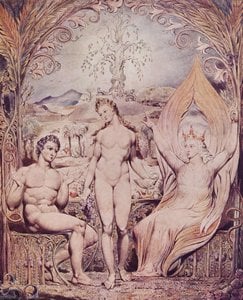
Satan Exulting over Eve

Witness William Blake's visionary masterpiece, "Satan Exulting over Eve." This captivating 1795 pen drawing explores temptation and fall with intricate symbolism & vibrant detail. Own a piece of art history!

Poznaj wyjątkową twórczość Williama Blake'a - poeta i malarza romantyzmu! Jego dzieła pełne są symbolizmu, mistycyzmu i niezwykłej wizji świata. Odkryj jego dziedzictwo!

Kup wysokiej rozdzielczości, ulepszony obraz cyfrowy o jakości znacznie przewyższającej podgląd online.

Każdy plik jest starannie przygotowywany przez naszych specjalistów przy użyciu zaawansowanych narzędzi oraz profesjonalnej, ręcznej retuszy. Dbamy o to, aby każdy obraz cechował się wyjątkową ostrością, precyzyjnym odwzorowaniem kolorów i subtelnymi detalami.

Ostateczny plik dostarczany jest drogą mailową w ciągu 72 godzin, zoptymalizowany do natychmiastowego wykorzystania w profesjonalnych zastosowaniach redakcyjnych i poligraficznych. To ta sama jakość, której ufają czołowe studia projektowe, wydawnictwa oraz galerie sztuki.

Obraz cyfrowy

Pobierz plik o wysokiej rozdzielczości do osobistego użytku, druku oraz projektów kreatywnych. ( Przełącz na wersję drukowaną Kup ręcznie malowany obraz)

Cena całkowita

$ 24,90

W każdym zamówieniu na obraz cyfrowy znajduje się

Profesjonalna dostawa cyfrowa z gwarancją

Wybierając WahooArt.com, nie otrzymujesz jedynie obrazu – otrzymujesz profesjonalnie udoskonalone cyfrowe dzieło sztuki, stworzone z najwyższą precyzją i objęte gwarancją satysfakcji. Oto wszystko, co automatycznie dołączane jest do Twojego zamówienia:

shipping_icon
Błyskawiczna dostawa e-mailowa

Plik z obrazem cyfrowym w wysokiej rozdzielczości zostanie przesłany na Twój adres e-mail w ciągu 72 godzin od złożenia zamówienia – gotowy do natychmiastowego użycia.

canvas_icon
Plik cyfrowy ulepszony przez AI

Twoja grafika została profesjonalnie zoptymalizowana przy użyciu zaawansowanych narzędzi AI oraz ręcznej edycji, co zapewnia maksymalną szczegółowość, klarowność i wierność kolorów.

insurance_icon
Bezpłatna dożywotnia ponowna dostawa

Przypadkowo usunąłeś lub zgubiłeś swój plik? Bez obaw – prześlemy go Tobie ponownie w dowolnym momencie, bez żadnych opłat.

tax_icon
Bez opłat importowych – zawsze

Ciesz się swoją sztuką natychmiast, bez żadnych opłat celnych, należności ani kosztów dostawy – pliki cyfrowe są zawsze wolne od podatku.

color_icon
Gwarancja odwzorowania kolorów

Dzięki zastosowaniu profesjonalnych narzędzi i procesów zarządzania barwą zapewniamy, że Twoje cyfrowe zdjęcie odzwierciedla oryginalne kolory tak wiernie, jak to tylko możliwe.

return_icon
100 dni na satysfakcję

Jeśli nie będziesz zadowolony ze swojego cyfrowego obrazu, poprawimy go lub zwrócimy 100% kosztów w ciągu 100 dni – bez zbędnych pytań.

guarantee_icon
100% Gwarancja zwrotu pieniędzy

Nie jesteś zadowolony? Otrzymaj pełny zwrot kosztów w ciągu 100 dni od otrzymania pliku cyfrowego – bez zbędnych pytań.

discount_icon
Rabaty przy zamówieniach hurtowych

Kup 3 obrazy, oszczędź 10% - Kup 5, oszczędź 15% - Kup 10+, oszczędź 20%. Idealne do projektów kreatywnych, galerii i agencji.

Kluczowe informacje

  • Location: Various Museums
  • Dimensions: 40 x 53 cm
  • Title: Satan Exulting over Eve
  • Year: 1795
  • Medium: Pen & Watercolor
  • Influences: Religious Lore
  • Artistic style: Visionary, Symbolic

Quiz wiedzy o sztuce

Do każdego pytania dotyczy tylko jedna poprawna odpowiedź.

Pytanie 1:
What technique is most prominently used in William Blake’s ‘Satan Exulting over Eve’?
Pytanie 2:
The image depicts a scene from which of the following mythological narratives?
Pytanie 3:
What is the primary symbolic relationship depicted in ‘Satan Exulting over Eve’?
Pytanie 4:
According to Blake’s philosophy, what is the significance of his artistic process?
Pytanie 5:
In the artwork, what element contributes to a sense of depth and dimensionality?

A Vision of Temptation: Unveiling William Blake’s “Satan Exulting over Eve”

William Blake, a figure perpetually adrift from the conventional currents of his era, remains one of the most profoundly influential artists and poets of the Romantic Age. His work transcends mere representation; it's an immersive journey into realms of mysticism, symbolism, and deeply personal visions. “Satan Exulting over Eve,” created in 1795 as a pen drawing, stands as a potent emblem of this artistic philosophy – a meticulously crafted narrative exploring themes of temptation, fall, and the inherent duality within human nature. This isn’t simply a depiction of biblical lore; it's a visceral exploration of the soul’s struggle against desire, rendered with Blake’s signature innovative technique and imbued with an unsettling emotional resonance.

Satan Exulting over Eve by William Blake

The Alchemy of Creation: Blake’s Unique Artistic Process

Blake's approach to art was revolutionary for his time, a deliberate departure from established practices. He didn’t merely sketch and paint; he orchestrated an elaborate three-step process designed to capture the intensity of his visions. First, he applied thick, sticky watercolors directly onto stiff paper board – a technique that created a unique textural surface. This wet canvas was then stamped onto fresh paper, transferring the image with remarkable clarity. Finally, he meticulously enhanced the print with watercolor washes and precise pen and ink detailing, layering these elements to build depth and complexity. This method, born from necessity and fueled by his artistic ambition, resulted in an unparalleled level of detail and symbolic richness, a hallmark of Blake’s distinctive style.

A Dramatic Narrative: Symbolism and Interpretation

“Satan Exulting over Eve” immediately commands attention with its dynamic composition. The central figures – Satan, depicted as a winged, triumphant being holding a shield, and Eve, entwined by the serpent – dominate the scene, creating a palpable sense of drama and conflict. The background is deliberately ambiguous, blending earthly elements with supernatural ones, suggesting a realm beyond the confines of ordinary experience. The serpent itself isn’t merely a symbol of evil; it's an active participant in the narrative, its coils intimately bound to Eve, representing the seductive power of knowledge and desire. Notice the stark contrast between Satan’s fiery red hues – symbolizing his triumph and passion – and the muted earth tones used for Eve, highlighting her vulnerability and surrender. The overall effect is a powerful visual metaphor for the consequences of choice and the allure of transgression.

A Legacy Enduring: Blake's Influence and Artistic Context

William Blake’s visionary art profoundly impacted subsequent generations of artists and writers. His work, often considered pre-Romantic, anticipated many of the key themes and aesthetics of the movement – a fascination with imagination, spirituality, and the sublime. His images are housed in prestigious institutions like the Tate Gallery in London and The J. Paul Getty Museum in Los Angeles, testament to their enduring artistic merit. Blake’s unique approach to printmaking, combining watercolor and pen & ink, was truly innovative for his time, influencing artists long after his death. Reproductions of “Satan Exulting over Eve” offer a remarkable opportunity to experience the depth and complexity of this iconic work, bringing its powerful symbolism into any setting.


Biografia artysty

William Blake - A Visionary’s Journey: The Life and Art of William Blake

William Blake, born in London on November 28, 1757, was a figure perpetually out of step with his time, yet destined to become one of the most celebrated artists and poets of the Romantic Age. His life unfolded against the backdrop of a rapidly changing England—a world grappling with industrialization, political upheaval, and shifting spiritual beliefs. From humble beginnings as the son of a hosier, Blake’s early years were marked by an intensely vivid imagination and a propensity for visionary experiences that would profoundly shape his artistic trajectory. Though largely self-taught in formal academics, he received drawing instruction at a young age, quickly revealing a talent that hinted at the extraordinary path ahead. His apprenticeship with engraver James Basire proved pivotal, providing him not only with technical mastery but also an understanding of printmaking techniques he would later revolutionize. These early influences—the Gothic grandeur of Westminster Abbey, the classical forms of Raphael and Michelangelo—served as foundational elements in his developing aesthetic, though Blake was never one to remain bound by convention.

Early Life and Artistic Training

Blake’s formative years instilled within him a deep appreciation for both beauty and terror – sensations he would translate into unforgettable imagery throughout his artistic career. Despite lacking formal schooling, he possessed an innate aptitude for drawing, nurtured by encouragement from his father who recognized his son's exceptional talent. This early training honed his observational skills and established a bedrock of classical knowledge that informed his stylistic choices. His apprenticeship with James Basire, London’s leading engraver, was instrumental in developing his printmaking abilities—a craft he would elevate to an art form through his groundbreaking technique of illuminated printing. It wasn't merely copying existing designs; it demanded meticulous attention to detail and a profound understanding of tonal gradation, skills that would prove invaluable as he pursued his artistic vision.

Illuminated Printing: A Revolutionary Technique

Blake’s artistic innovation resided fundamentally in *how* he created—a departure from the prevailing methods of engraving prevalent during his era. Dissatisfied with conventional printing processes, he devised a unique method known as “illuminated printing,” which involved etching both text and illustrations onto copper plates before applying hand-colored inks to produce stunning prints. This wasn’t simply illustration accompanying poetry; it was an integrated art form where image and verse were inextricably linked, each enriching the meaning of the other. Blake's meticulous process demanded considerable labor—often taking weeks or months to complete—but it afforded him unparalleled artistic control over color, texture, and overall visual impact. This technique allowed for a level of expressive nuance unattainable through traditional methods, cementing his place as a pioneer in printmaking history. He skillfully combined etching with watercolor washes and gouache pigments, creating images that pulsed with vibrant hues and captivating detail—a stylistic hallmark that distinguishes his work from many of his contemporaries.

Major Works and Artistic Style

Blake’s oeuvre encompasses poetry, engravings, watercolors, drawings, and illuminated manuscripts—each reflecting his distinctive worldview and artistic sensibilities. Among his most celebrated works are *Songs of Innocence & Experience* (1794), a dual collection exploring themes of innocence and corruption through allegorical narratives; *The Marriage of Heaven & Hell* (1793), a provocative prose poem challenging societal morality with its embrace of energy, desire, and rebellion; and *Jerusalem*, an ambitious epic poem depicting a utopian vision of Albion—ancient name for Britain—inspired by biblical prophecy. His engravings are equally remarkable for their dramatic compositions, symbolic imagery, and masterful execution. Illustrations for Dante’s *Divine Comedy* exemplify his ability to translate complex literary narratives into powerful visual representations—a feat achieved through meticulous attention to detail and a deliberate rejection of linear perspective in favor of emotive symbolism. Blake's artistic style is characterized by its bold use of color, its incorporation of fantastical elements, and its unwavering commitment to conveying profound spiritual truths. He rejected the conventions of academic art, prioritizing imaginative vision over realistic representation—a stance that aligned him with the burgeoning Romantic movement and cemented his legacy as a visionary artist.

Blake’s Enduring Influence

Despite facing considerable obscurity during his lifetime, William Blake's influence on subsequent generations of artists and writers has proven to be profound. The Pre-Raphaelites, captivated by his stylistic innovations and symbolic depth, embraced him as a kindred spirit—drawing inspiration from his use of color, texture, and imaginative storytelling. Later movements—Symbolism and Modernism—found resonance in his exploration of psychological complexity and spiritual yearning—a testament to the enduring power of Blake’s artistic vision. Today, William Blake is recognized as a cornerstone of Romantic art, an artist whose uncompromising pursuit of creative freedom continues to inspire artists worldwide. His work serves as a reminder that true artistry lies not merely in technical skill but in conveying profound emotional truths—a legacy that transcends time and resonates powerfully with audiences across cultures.
William Blake

William Blake

1757 - 1827 , Wielka Brytania

Najważniejsze informacje

  • Artistic Movement Or Style: Romanticizm
  • Artists Who Influenced This Artist:
    • Rafael
    • Michał Anioł
  • Date Of Birth: Londyn, Wielka Brytania (1757)
  • Date Of Death: Londyn, Wielka Brytania (1827)
  • Full Name: William Blake
  • Nationality: Brytyjski
  • Notable Artworks:
    • Pieśni Innocencji i Doświadczenia
    • Święcący Smok i Żona Ubierana na Słońce
    • Żądza i Jego Rodzina Odzyskuje Dobrobyt
  • Place Of Birth: Londyn