Zobacz w skali 1:1 Zobacz w AR Kup ręcznie malowany obraz Przełącz na wersję cyfrową Wyślij
Szczegóły Dodaj do ulubionych Pobierz plik obrazu Podobne obiekty RTG Pokaz slajdów Statystyki

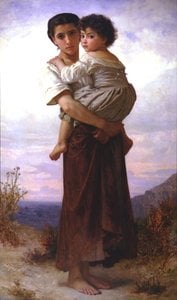
The Little Shepherdess

‘Shepherdess,’ created in 1889 by William-Adolphe Bouguereau, exemplifies Academicism style with Naturalism influences. This portrait depicts a serene woman holding a stick amidst a pastoral landscape featuring horses and birds—a testament to Bouguereau’s dedication to idealized realism.

William-Adolphe Bouguereau – mistrz realizmu akademickiego! Podziwiaj jego piękne obrazy mitologiczne, sceny rodzajowe i kobiece sylwetki. Odkryj jego dziedzictwo już dziś!

Giclée / Wydruk artystyczny

Wydruki giclée lub płótna o jakości muzealnej, szybka realizacja i szeroki wybór opcji wykończenia. ( Kup ręcznie malowany obraz Przełącz na wersję cyfrową)

P118B $10
P118H $10
P118W $10
P438Z $10
P508JH $12
P508YH $12
P805H $10
P805Z $10
P919BZ $10
P919G $10
P919XJ $10
P959ZH $10
P968JZ $12
W106C $8
W218G $10
W218JH $8
W218Y $10
W307PJ $10
W316G $10
W316PJ $8
W316Y $10
W398PJ $8
W4111J $10
W500HY $15
W500JH $15
W692G $12
W849H $8
W940BG $15
W953PJ $8

Standardowy
na zamówienie
CM
INCH

Wybierz spośród naszych standardowych rozmiarów, które zachowują oryginalne proporcje dzieła sztuki.

szerokość
wysokość

Możesz wprowadzić własne wymiary, aby dopasować dzieło do konkretnej ramy lub przestrzeni. Jeśli wybrany rozmiar nie będzie odpowiadał proporcjom oryginalnego obrazu, przytniecie dzieło lub rozszerzymy obraz za pomocą odbicia lustrzanego lub jednolitego wypełnienia krawędzi. Przed rozpoczęciem produkcji prześlemy cyfrową wizualizację do Twojej akceptacji.
Prosimy pamiętać, że podgląd na ekranie nie odzwierciedla faktycznego przycinania ani rozszerzania. Tylko wizualizacja dokładnie pokaże końcową kompozycję.
Mimo dostępności niestandardowych rozmiarów, zalecamy wybór wymiaru z listy zdefiniowanej, aby zachować oryginalne proporcje.

Dostawa na cały świat () w ciągu 2 tygodni zamiast standardowych 4/5 tygodni. (15 Wrzesień)

why_choose_icon
Bezpłatna ekspresowa wysyłka na cały świat
why_choose_icon
Wysokiej jakości płótno lniane
why_choose_icon
Pełne ubezpieczenie transportowe
why_choose_icon
Gwarancja zwrotu należności celnych i podatków importowych
why_choose_icon
Gwarancja idealnego odwzorowania barw
why_choose_icon
100-dniowy okres na zwrot dzieła w przypadku wykrycia wad produkcyjnych
why_choose_icon
Gwarancja 100% zwrotu pieniędzy
why_choose_icon
Oferta przy zakupie wielu sztuk

Cena całkowita

$ 68

reproduction

The Little Shepherdess

Giclée / Wydruk artystyczny

Rozmiar reprodukcji

-

Suma do zapłaty

$ 68

Kluczowe informacje

  • Medium: Oil on Canvas
  • Notable elements or techniques: Detailed realism; luminous color palette
  • Title: The Little Shepherdess
  • Artist: William-Adolphe Bouguereau
  • Influences:
    • Raphael
    • Titian
  • Subject or theme: Rural pastoral scene
  • Artistic style: Idealized beauty

Quiz wiedzy o sztuce

Do każdego pytania dotyczy tylko jedna poprawna odpowiedź.

Pytanie 1:
What artistic style is William-Adolphe Bouguereau’s ‘The Little Shepherdess’ primarily characterized by?
Pytanie 2:
According to the description, what prominent element contributes to the impression of serenity in the painting?
Pytanie 3:
The image depicts a woman holding a stick. What does this gesture suggest about her character?
Pytanie 4:
What artistic influences did Bouguereau draw upon during his training at the École des Beaux-Arts?
Pytanie 5:
What is one notable feature of Bouguereau’s technique that contributes to the painting's luminous quality?

A Vision of Pastoral Serenity

In the luminous realm of William-Adolphe Bouguereau’s "The Little Shepherdess," completed in 1889, viewers are transported into a meticulously crafted world where innocence and pastoral beauty converge. This quintessential masterpiece of Academic Impressionism serves as more than a mere depiction of rural life; it is an invitation to witness a moment of profound tranquility. The painting portrays a young woman, her presence radiating a sense of purity and grace, seated amidst a verdant meadow. Beside her, the subtle presence of a shepherd boy gazing with quiet adoration adds a layer of tender narrative, suggesting the romanticized societal ideals of the Belle Époque. As the eye wanders through the composition, the inclusion of horses and the soft rustle of trees in the background reinforce a theme of timeless tradition and the harmonious coexistence of humanity and nature.

The technical brilliance of Bouguereau is nowhere more evident than in his masterful use of the glazing technique. By layering thin, translucent washes of color over a precise underpainting, the artist achieved a breathtakingly luminous quality that seems to emanate from within the canvas itself. Every texture—from the soft, tactile wool of the shepherdess's attire to the delicate, sun-drenched blades of grass—is rendered with an unparalleled realism that borders on the divine. His brushstrokes are nearly invisible, serving only to create a soft, diffused glow that bathes the figures in warmth. This meticulous attention to detail ensures that the skin tones possess a lifelike vitality, making the subject feel present and breathing, a hallmark of his commitment to the classical ideals of beauty.

Historical Resonance and Symbolic Depth

To understand "The Little Shepherdess" is to understand the cultural heartbeat of late 19th-century France. Created during an era fascinated by mythological narratives and the idealized representation of womanhood, the work draws deep inspiration from the Old Masters. Bouguereau’s reverence for Raphael is palpable, particularly in how he translates the spiritual weight of Renaissance frescoes into a modern, pastoral setting. The painting embodies the Victorian obsession with moral virtue and domestic tranquility, presenting an idyllic version of the countryside that offered a soothing escape from the rapid industrialization of the age. It is a window into a lost era of perceived simplicity and grace.

Beyond its visual splendor, the artwork carries a profound emotional weight that continues to captivate collectors and decorators alike. The symbolism of the shepherdess—often representing innocence and the untainted soul—resonates deeply within the domestic space. For the interior designer, this piece offers a sense of calm and sophisticated nostalgia, making it an ideal focal point for rooms intended to evoke peace and reflection. Whether viewed as a study in classical technique or an emotional journey into a sunlit meadow, "The Little Shepherdess" remains a timeless testament to the enduring power of beauty, offering a soulful connection to the heights of academic artistry.


Biografia artysty

William-Adolphe Bouguereau: A Life Dedicated to the Pursuit of Beauty

William-Adolphe Bouguereau, a name synonymous with academic realism and idealized beauty, was born in La Rochelle, France, on November 30th, 1825. His early life amidst the vineyards and olive groves of this coastal city instilled within him a deep appreciation for nature’s elegance – a sentiment that would profoundly shape his artistic vision. From a young age, Bouguereau demonstrated an exceptional talent for drawing and painting, nurtured by his uncle Eugène, a Catholic priest who recognized and encouraged his burgeoning abilities. This foundation laid the groundwork for a career dedicated to capturing what he perceived as the inherent beauty of the world around him – a pursuit that would define his artistic legacy.

Early Training and Parisian Influence

At the age of twelve, Bouguereau moved to Mortagne-sur-Gironde to reside with his family, where he began formal training under Charles Marionneau, a local artist. This early exposure to practical techniques proved invaluable, but it was his relocation to Paris in 1846 that truly propelled his artistic development. He enrolled at the École des Beaux-Arts, the prestigious art school of France, and quickly distinguished himself under the guidance of François-Edouard Picquenot. Crucially, Bouguereau’s studies were deeply influenced by the masterpieces of the Old Masters – particularly Raphael and Titian. These artists weren't simply subjects for imitation; they became the bedrock upon which Bouguereau constructed his unique style: a meticulous attention to detail, luminous color palettes, and an unwavering commitment to portraying beauty in its most idealized form. He wasn’t merely painting what he *saw*, but rather what he believed to be inherently beautiful, striving for a perfection that resonated with the aesthetic sensibilities of his time.

The Master of Mythological and Genre Scenes

Bouguereau's artistic style is often described as academic realism, and rightly so. He possessed an unparalleled mastery of anatomy, light, and composition. His canvases are populated by figures rendered with astonishing precision – the delicate curve of a shoulder, the subtle flush of skin, the expressive depth of an eye. However, his work transcends mere technical skill; it’s infused with emotion and narrative power. He frequently depicted mythological scenes, transforming ancient tales into vibrant, emotionally resonant moments. *The Birth of Venus*, for example, isn't just a depiction of a goddess emerging from the sea; it’s a celebration of feminine grace and ethereal beauty. Similarly, works like *Zenobia Found by Shepherds on the Banks of the Araxes* capture vulnerability and pathos with remarkable sensitivity. Beyond mythology, Bouguereau found inspiration in everyday life – shepherdesses tending their flocks, young girls at play, mothers cradling their children. These genre scenes, while seemingly simple, are imbued with a sense of dignity and tenderness that elevates them to the realm of art. *Faneuse (1869)* exemplifies this approach, portraying a young woman in a tranquil landscape with an exquisite attention to detail and atmosphere. His dedication to capturing innocence is particularly evident in paintings like *Child at Bath*, where the delicate rendering of skin and light creates a truly captivating image.

Recognition and Legacy

Throughout his career, Bouguereau garnered significant acclaim within France and internationally. He was awarded the prestigious Prix de Rome in 1850, granting him access to study in Rome for four years – an experience that profoundly shaped his artistic sensibilities. Upon his return, he quickly established himself as a leading salon painter, consistently exhibiting at the Salon and receiving numerous honors. Despite this success, Bouguereau’s style was often met with resistance from the avant-garde movements of the late 19th century, particularly Impressionism. His meticulous technique and adherence to traditional academic standards were seen as outdated and conservative. However, in the decades following his death in 1905, a reassessment of his work began to take place. Art historians recognized the exceptional skill and emotional depth of his paintings, leading to a resurgence of interest in Bouguereau’s art. Today, his works are celebrated for their beauty, technical mastery, and enduring appeal – securing his position as one of the most important figures in 19th-century French painting. His influence can be seen in contemporary figurative painting, where artists continue to draw inspiration from his ability to capture light, form, and emotion with unparalleled precision.

Key Works

Here are some of Bouguereau’s most celebrated works:
  • The Nymphaeum (1862)
  • Bergère 1886 (1886)
  • Child at Bath (1875-1883)
  • Song of the Angels (1881)
  • The Birth of Venus (1894-1898)

A Lasting Influence

William-Adolphe Bouguereau’s legacy extends far beyond his individual paintings. He was a dedicated teacher, imparting his knowledge and techniques to generations of aspiring artists. His commitment to traditional artistic values – meticulous draftsmanship, anatomical accuracy, and emotional expression – continues to resonate with artists today. His works are now housed in prestigious museums across the globe, ensuring that his vision of beauty will continue to inspire and captivate audiences for years to come.

William-Adolphe Bouguereau

William-Adolphe Bouguereau

1825 - 1905 , Francja

Najważniejsze informacje

  • Artistic Movement Or Style: Akademizm
  • Artists Or Movements Influenced By This Artist: ['Impressionizm']
  • Artists Who Influenced This Artist:
    • Raphael
    • Titian
  • Date Of Birth: 30 listopada 1825
  • Date Of Death: 19 sierpnia 1905
  • Full Name: William-Adolphe Bouguereau
  • Nationality: Francuz
  • Notable Artworks:
    • Matka Boska
    • Pierwszy pocałunek
    • Narodziny Wenus
  • Place Of Birth: La Rochelle, Francja
Odkryj dzieła sztuki uporządkowane według tematów, stylów i cech charakterystycznych.