Zobacz w skali 1:1 Zobacz w AR Przełącz na wersję drukowaną Kup ręcznie malowany obraz Wyślij
Szczegóły Guide Dodaj do ulubionych Pobierz plik obrazu Podobne obiekty RTG Pokaz slajdów Statystyki

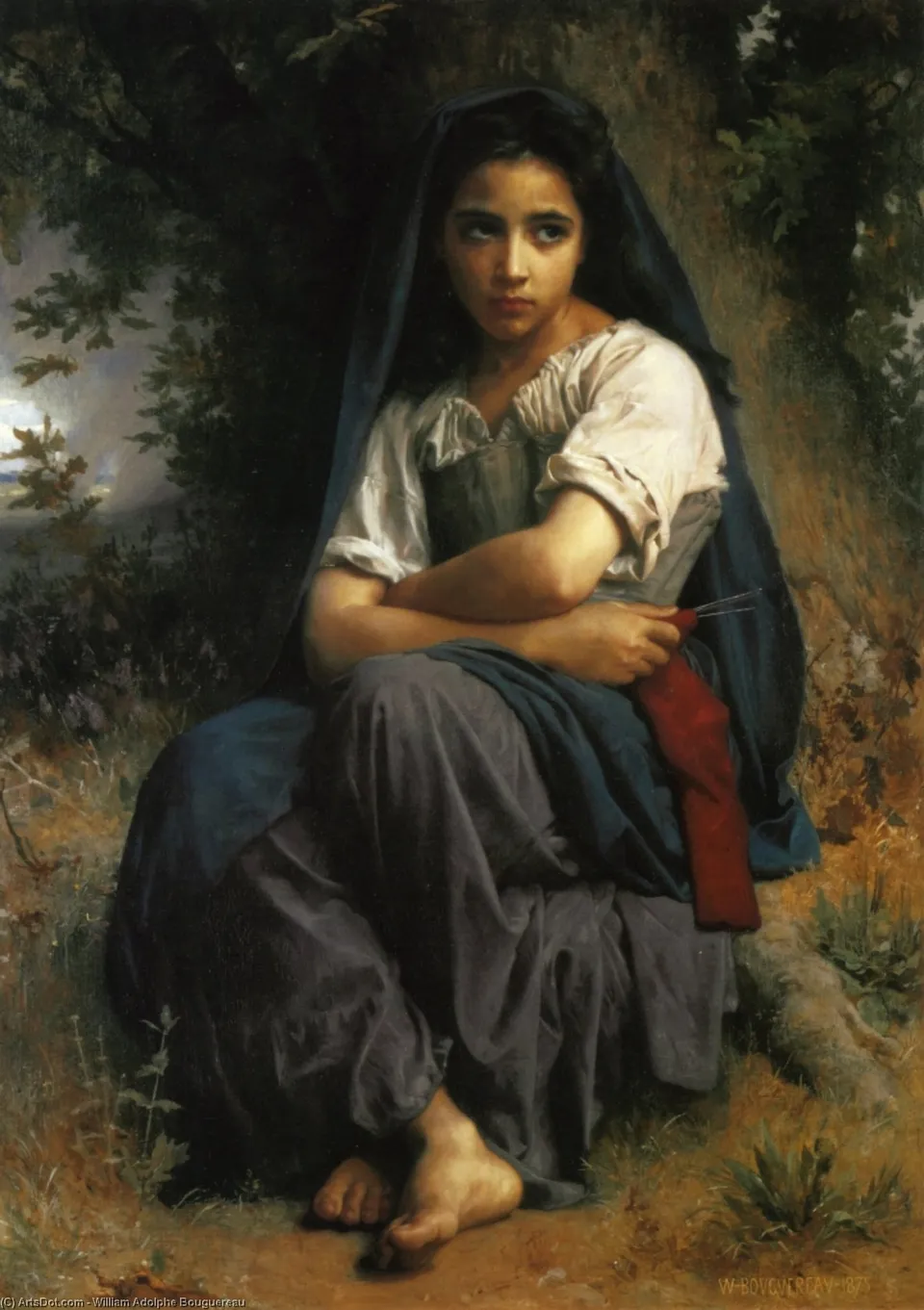
The Little Knitter

Captured in Academicism style by William-Adolphe Bouguereau during the Belle Époque, ‘The Little Knitter’ portrays a serene young girl lost in contemplation amidst dappled sunlight and scattered leaves—a timeless masterpiece inviting you to experience its exquisite beauty.

William-Adolphe Bouguereau – mistrz realizmu akademickiego! Podziwiaj jego piękne obrazy mitologiczne, sceny rodzajowe i kobiece sylwetki. Odkryj jego dziedzictwo już dziś!

Kup wysokiej rozdzielczości, ulepszony obraz cyfrowy o jakości znacznie przewyższającej podgląd online.

Każdy plik jest starannie przygotowywany przez naszych specjalistów przy użyciu zaawansowanych narzędzi oraz profesjonalnej, ręcznej retuszy. Dbamy o to, aby każdy obraz cechował się wyjątkową ostrością, precyzyjnym odwzorowaniem kolorów i subtelnymi detalami.

Ostateczny plik dostarczany jest drogą mailową w ciągu 72 godzin, zoptymalizowany do natychmiastowego wykorzystania w profesjonalnych zastosowaniach redakcyjnych i poligraficznych. To ta sama jakość, której ufają czołowe studia projektowe, wydawnictwa oraz galerie sztuki.

Obraz cyfrowy

Pobierz plik o wysokiej rozdzielczości do osobistego użytku, druku oraz projektów kreatywnych. ( Przełącz na wersję drukowaną Kup ręcznie malowany obraz)

Cena całkowita

$ 24,90

W każdym zamówieniu na obraz cyfrowy znajduje się

Profesjonalna dostawa cyfrowa z gwarancją

Wybierając WahooArt.com, nie otrzymujesz jedynie obrazu – otrzymujesz profesjonalnie udoskonalone cyfrowe dzieło sztuki, stworzone z najwyższą precyzją i objęte gwarancją satysfakcji. Oto wszystko, co automatycznie dołączane jest do Twojego zamówienia:

shipping_icon
Błyskawiczna dostawa e-mailowa

Plik z obrazem cyfrowym w wysokiej rozdzielczości zostanie przesłany na Twój adres e-mail w ciągu 72 godzin od złożenia zamówienia – gotowy do natychmiastowego użycia.

canvas_icon
Plik cyfrowy ulepszony przez AI

Twoja grafika została profesjonalnie zoptymalizowana przy użyciu zaawansowanych narzędzi AI oraz ręcznej edycji, co zapewnia maksymalną szczegółowość, klarowność i wierność kolorów.

insurance_icon
Bezpłatna dożywotnia ponowna dostawa

Przypadkowo usunąłeś lub zgubiłeś swój plik? Bez obaw – prześlemy go Tobie ponownie w dowolnym momencie, bez żadnych opłat.

tax_icon
Bez opłat importowych – zawsze

Ciesz się swoją sztuką natychmiast, bez żadnych opłat celnych, należności ani kosztów dostawy – pliki cyfrowe są zawsze wolne od podatku.

color_icon
Gwarancja odwzorowania kolorów

Dzięki zastosowaniu profesjonalnych narzędzi i procesów zarządzania barwą zapewniamy, że Twoje cyfrowe zdjęcie odzwierciedla oryginalne kolory tak wiernie, jak to tylko możliwe.

return_icon
100 dni na satysfakcję

Jeśli nie będziesz zadowolony ze swojego cyfrowego obrazu, poprawimy go lub zwrócimy 100% kosztów w ciągu 100 dni – bez zbędnych pytań.

guarantee_icon
100% Gwarancja zwrotu pieniędzy

Nie jesteś zadowolony? Otrzymaj pełny zwrot kosztów w ciągu 100 dni od otrzymania pliku cyfrowego – bez zbędnych pytań.

discount_icon
Rabaty przy zamówieniach hurtowych

Kup 3 obrazy, oszczędź 10% - Kup 5, oszczędź 15% - Kup 10+, oszczędź 20%. Idealne do projektów kreatywnych, galerii i agencji.

Kluczowe informacje

  • Artist: William-Adolphe Bouguereau
  • Title: The Little Knitter
  • Notable elements: Detailed depiction; Tranquil setting
  • Dimensions: 115 x 81 cm
  • Year: 1875
  • Medium: Oil on canvas

A Moment Frozen in Time: The Essence of Innocence

In the quietude of a sun-dappled afternoon, William-Adolphe Bouguereau’s 1875 masterpiece, "The Little Knitter," invites the viewer into a realm of profound serenity and timeless grace. This exquisite oil on canvas serves as more than just a portrait; it is a window into the soul of the Belle Époque, capturing a fleeting moment of childhood contemplation that feels both deeply personal and universally resonant. The painting depicts a young girl seated gently upon the earth, her focus entirely absorbed in the rhythmic, meditative task of knitting. There is an undeniable tenderness in her posture, a soft vulnerability that immediately establishes an emotional bond between the subject and the observer. As she gaz indeed off-camera, her gaze suggests a rich inner world, perhaps lost in a daydream or observing a distant movement in the natural landscape, leaving the viewer to wonder about the thoughts swirling behind her innocent eyes.

The setting, a lush backdrop of verdant trees and scattered leaves, provides a natural sanctuary for this domestic scene. The interplay of light and shadow within the foliage adds a layer of depth and organic beauty, grounding the subject in a realistic yet idealized pastoral environment. For collectors and interior designers alike, this piece offers a sense of tranquility that can transform any space, bringing an air of classical sophistication and peacefulness to a room. It is a work that does not demand attention through loud colors or jarring compositions, but rather earns it through a subtle, magnetic charm that lingers long after the first glance.

The Mastery of Academic Impressionism

Technically, "The Little Knitter" is a triumph of Academic Impressionism, a sophisticated style where Bouguereau masterfully reconciled the rigorous precision of classical tradition with the soft, luminous atmosphere of modern experimentation. His brushwork is nothing short of miraculous; he employs a smooth, polished technique that almost erases the presence of the artist’s hand, creating an ethereal, porcelain-like finish on the girl's skin. This meticulous attention to detail allows for a palpable sense of texture that engages the senses—one can almost feel the weight and softness of the wool scarf wrapped around her head and the delicate, fine weave of her blue dress.

Bouguereau’s palette is a masterclass in subtlety, utilizing muted blues, soft greens, and earthy tones to evoke a serene and harmonious atmosphere. This careful selection of color avoids the harshness of reality, instead leaning into an idealized beauty that was the hallmark of his celebrated career. By blending the structural integrity of the Old Masters—drawing inspiration from the likes of Raphael and Titian—with a more contemporary approach to light and color, Bouguereau created a visual language that feels both historically significant and eternally fresh. For those seeking a high-quality reproduction, this technical brilliance is what makes the painting such a captivating centerpiece for fine art collections.

Symbolism and the Legacy of Virtue

Beyond its aesthetic splendor, "The Little Knitter" is steeped in symbolic meaning, reflecting the moral and social values of late 19th-century France. The act of knitting serves as a powerful metaphor for domesticity, patience, and the quiet transmission of care and tradition from one generation to the next. It represents a nurturing instinct and the beauty found in simple, virtuous labors. In an era of rapid industrialization, Bouguereau’s focus on such a peaceful, domestic vignette offered a nostalgic retreat into a world defined by innocence and moral clarity.

The painting functions as a poignant reminder of the beauty inherent in stillness. In our modern, fast-paced existence, the image of a child lost in a moment of quiet industry offers a much-needed emotional respite. It is this profound psychological truth—the ability of art to capture the sanctity of a single, unhurried moment—that ensures Bouguereau’s enduring legacy. Whether displayed in a private study, a grand salon, or a contemporary living space, "The Little Knitter" continues to inspire awe, serving as a testament to the power of beauty to soothe the spirit and elevate the human experience.


Biografia artysty

William-Adolphe Bouguereau: A Life Dedicated to the Pursuit of Beauty

William-Adolphe Bouguereau, a name synonymous with academic realism and idealized beauty, was born in La Rochelle, France, on November 30th, 1825. His early life amidst the vineyards and olive groves of this coastal city instilled within him a deep appreciation for nature’s elegance – a sentiment that would profoundly shape his artistic vision. From a young age, Bouguereau demonstrated an exceptional talent for drawing and painting, nurtured by his uncle Eugène, a Catholic priest who recognized and encouraged his burgeoning abilities. This foundation laid the groundwork for a career dedicated to capturing what he perceived as the inherent beauty of the world around him – a pursuit that would define his artistic legacy.

Early Training and Parisian Influence

At the age of twelve, Bouguereau moved to Mortagne-sur-Gironde to reside with his family, where he began formal training under Charles Marionneau, a local artist. This early exposure to practical techniques proved invaluable, but it was his relocation to Paris in 1846 that truly propelled his artistic development. He enrolled at the École des Beaux-Arts, the prestigious art school of France, and quickly distinguished himself under the guidance of François-Edouard Picquenot. Crucially, Bouguereau’s studies were deeply influenced by the masterpieces of the Old Masters – particularly Raphael and Titian. These artists weren't simply subjects for imitation; they became the bedrock upon which Bouguereau constructed his unique style: a meticulous attention to detail, luminous color palettes, and an unwavering commitment to portraying beauty in its most idealized form. He wasn’t merely painting what he *saw*, but rather what he believed to be inherently beautiful, striving for a perfection that resonated with the aesthetic sensibilities of his time.

The Master of Mythological and Genre Scenes

Bouguereau's artistic style is often described as academic realism, and rightly so. He possessed an unparalleled mastery of anatomy, light, and composition. His canvases are populated by figures rendered with astonishing precision – the delicate curve of a shoulder, the subtle flush of skin, the expressive depth of an eye. However, his work transcends mere technical skill; it’s infused with emotion and narrative power. He frequently depicted mythological scenes, transforming ancient tales into vibrant, emotionally resonant moments. *The Birth of Venus*, for example, isn't just a depiction of a goddess emerging from the sea; it’s a celebration of feminine grace and ethereal beauty. Similarly, works like *Zenobia Found by Shepherds on the Banks of the Araxes* capture vulnerability and pathos with remarkable sensitivity. Beyond mythology, Bouguereau found inspiration in everyday life – shepherdesses tending their flocks, young girls at play, mothers cradling their children. These genre scenes, while seemingly simple, are imbued with a sense of dignity and tenderness that elevates them to the realm of art. *Faneuse (1869)* exemplifies this approach, portraying a young woman in a tranquil landscape with an exquisite attention to detail and atmosphere. His dedication to capturing innocence is particularly evident in paintings like *Child at Bath*, where the delicate rendering of skin and light creates a truly captivating image.

Recognition and Legacy

Throughout his career, Bouguereau garnered significant acclaim within France and internationally. He was awarded the prestigious Prix de Rome in 1850, granting him access to study in Rome for four years – an experience that profoundly shaped his artistic sensibilities. Upon his return, he quickly established himself as a leading salon painter, consistently exhibiting at the Salon and receiving numerous honors. Despite this success, Bouguereau’s style was often met with resistance from the avant-garde movements of the late 19th century, particularly Impressionism. His meticulous technique and adherence to traditional academic standards were seen as outdated and conservative. However, in the decades following his death in 1905, a reassessment of his work began to take place. Art historians recognized the exceptional skill and emotional depth of his paintings, leading to a resurgence of interest in Bouguereau’s art. Today, his works are celebrated for their beauty, technical mastery, and enduring appeal – securing his position as one of the most important figures in 19th-century French painting. His influence can be seen in contemporary figurative painting, where artists continue to draw inspiration from his ability to capture light, form, and emotion with unparalleled precision.

Key Works

Here are some of Bouguereau’s most celebrated works:
  • The Nymphaeum (1862)
  • Bergère 1886 (1886)
  • Child at Bath (1875-1883)
  • Song of the Angels (1881)
  • The Birth of Venus (1894-1898)

A Lasting Influence

William-Adolphe Bouguereau’s legacy extends far beyond his individual paintings. He was a dedicated teacher, imparting his knowledge and techniques to generations of aspiring artists. His commitment to traditional artistic values – meticulous draftsmanship, anatomical accuracy, and emotional expression – continues to resonate with artists today. His works are now housed in prestigious museums across the globe, ensuring that his vision of beauty will continue to inspire and captivate audiences for years to come.

William-Adolphe Bouguereau

William-Adolphe Bouguereau

1825 - 1905 , Francja

Najważniejsze informacje

  • Artistic Movement Or Style: Akademizm
  • Artists Or Movements Influenced By This Artist: ['Impressionizm']
  • Artists Who Influenced This Artist:
    • Raphael
    • Titian
  • Date Of Birth: 30 listopada 1825
  • Date Of Death: 19 sierpnia 1905
  • Full Name: William-Adolphe Bouguereau
  • Nationality: Francuz
  • Notable Artworks:
    • Matka Boska
    • Pierwszy pocałunek
    • Narodziny Wenus
  • Place Of Birth: La Rochelle, Francja