Druk giclée lub płótno o jakości muzealnej, szybka realizacja i szeroki wybór opcji wykończenia. ( Zamów ręcznie malowaną reprodukcję Kup obraz wysokiej rozdzielczości)
Wybierz spośród naszych standardowych rozmiarów, które zachowują oryginalne proporcje dzieła sztuki.

Możesz wprowadzić własne wymiary, aby dopasować dzieło do konkretnej ramy lub przestrzeni. Jeśli wybrany rozmiar nie będzie odpowiadał proporcjom oryginalnego obrazu, przytniecie dzieło lub rozszerzymy obraz za pomocą odbicia lustrzanego lub jednolitego wypełnienia krawędzi. Przed rozpoczęciem produkcji prześlemy cyfrową wizualizację do Twojej akceptacji.
Prosimy pamiętać, że podgląd na ekranie nie odzwierciedla faktycznego przycinania ani rozszerzania. Tylko wizualizacja dokładnie pokaże końcową kompozycję.
Mimo dostępności niestandardowych rozmiarów, zalecamy wybór wymiaru z listy zdefiniowanej, aby zachować oryginalne proporcje.
Dostawa na cały świat () w ciągu 2 tygodni zamiast standardowych 4/5 tygodni. (6 Wrzesień)


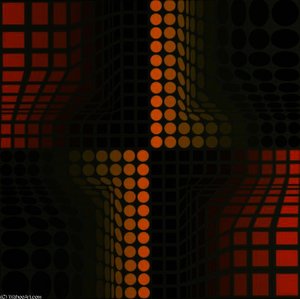
Zagreb
Wymiary reprodukcji
“Zagreb,” created by Victor Vasarely, is a quintessential example of Op Art (Optical Art), a movement that emerged in the early 1960s. The artwork doesn’t depict a recognizable subject in the traditional sense; instead, it focuses entirely on creating visual illusions through geometric forms and color relationships. Vasarely was a pioneer of this style, aiming to move beyond representational art towards pure abstraction that engages the viewer's perception directly. "Zagreb" exemplifies his commitment to exploring how shapes, lines, and colors can interact to generate dynamic optical effects.
The composition of “Zagreb” is based on a grid-like structure composed primarily of squares and rectangles. These shapes are meticulously arranged, overlapping and interplaying with one another to create an illusion of depth and movement. Vasarely’s technique typically involved screen printing or lithography, allowing for precise color separation and clean lines – essential elements in achieving the desired optical effect. The colors themselves are bold and saturated, often contrasting sharply to enhance the sense of dynamism. The layering creates a complex visual field where shapes appear to advance and recede, despite the flatness of the surface.
Op Art arose during a period of rapid technological advancement and societal change in the 1960s. It reflected an interest in scientific principles like optics and perception, as well as a fascination with new technologies that could create dynamic visual experiences. While "Zagreb" lacks explicit symbolic meaning, its geometric patterns can be interpreted as representing urban structures or complex systems – reflecting the increasingly interconnected nature of modern life. The title itself, referencing the Croatian capital city, might allude to the ordered and structured environment of a metropolis.
“Zagreb,” like much of Vasarely’s work, evokes a sense of energy and movement despite its abstract nature. The interplay of colors and shapes creates a visually stimulating experience that engages the viewer's eye and challenges their perception. Vasarely sought to create art that was accessible and universally appealing, and "Zagreb" embodies this goal with its vibrant colors and dynamic composition. His pioneering work in Op Art has had a lasting influence on subsequent generations of artists working in fields such as graphic design, architecture, and digital media.


1906 - 1997 , Chorwacja
Explore the mesmerizing world of Victor Vasarely. Discover how his Bauhaus-inspired Op Art masters the science of perception through geometric abstraction and vibrant color. A sophisticated guide for discerning art collectors seeking to understand the legacy of optical illusion.

Embark on a visual journey through the mesmerizing world of Op Art. Discover the masters of optical illusion, explore geometric abstraction, and learn how to curate high-impact kinetic works for your private collection with expert guidance from art professionals.

Explore the profound spiritual depth of geometric abstraction. From Malevich's Suprematism to modern masters, our expert guide reveals how pure form and color command presence in fine art collections.

 Podgląd w skali
 Wyślij jako kartkę
 Udostępnij
 Szczegóły dzieła

 Pobierz
 Podobne obiekty
 RTG
RTG Pokaz slajdów
 Rozwiń treść




































 Opcja ze szkłem jest dostępna wyłącznie w rozmiarach poniżej 110 cm