DARMOWA KONSULTACJA ARTYSTYCZNA

x
Zamów reprodukcję Zamów reprodukcjęKup cyfrowy obraz Kup cyfrowy obraz UdostępnijUdostępnij
Szczegóły dziełaSzczegóły dzieła Dodaj do ulubionych Dodaj do ulubionych PobierzPobierz Podobne obiektyPodobne obiekty RTGRTG Pokaz slajdówPokaz slajdów

VB - VB ROUGE

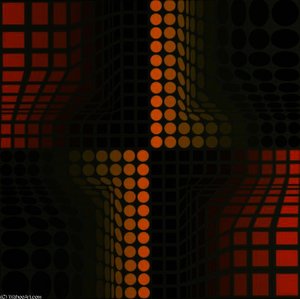
Zaprezentuj dzieło Victora Vasarely'ego – VB ROUGE! Abstrakcyjne malowanie trzech czerwonych kul o różnych kształtach i rozmiarach, tworzące fascynujące iluzje optyczne inspirowane Op Art.

Victor Vasarely (1906-1997) – pionier op-art i sztuki kinetycznej. Jego geometryczne abstrakcje, iluzje optyczne i wpływ na współczesny design są niezapomniane.

Giclée / Wydruk artystyczny

Druk giclée lub płótno o jakości muzealnej z szybką realizacją i szerokim wyborem opcji wykończenia.

P118B $10
P118H $10
P118W $10
P438Z $10
P508JH $12
P508YH $12
P805H $10
P805Z $10
P919BZ $10
P919G $10
P919XJ $10
P959ZH $10
P968JZ $12
W106C $8
W218G $10
W218JH $8
W218Y $10
W307PJ $10
W316G $10
W316PJ $8
W316Y $10
W398PJ $8
W4111J $10
W500HY $15
W500JH $15
W692G $12
W849H $8
W940BG $15
W953PJ $8

Standard
custom
CM
INCH

Wybierz spośród naszych predefiniowanych rozmiarów, które zachowują oryginalne proporcje dzieła sztuki.

szerokość
wysokość

Możesz wprowadzić własne wymiary, aby dopasować dzieło do konkretnej ramy lub przestrzeni. Jeśli wybrany rozmiar nie będzie odpowiadał proporcjom oryginalnego obrazu, przytniecie dzieło lub rozszerzymy obraz za pomocą odbicia lustrzanego lub jednolitego wypełnienia krawędzi. Przed rozpoczęciem produkcji prześlemy cyfrową wizualizację do Twojej akceptacji.
Prosimy pamiętać, że podgląd na ekranie nie odzwierciedla faktycznego przycinania ani rozszerzania. Tylko wizualizacja dokładnie pokaże końcową kompozycję.
Mimo dostępności niestandardowych rozmiarów, zalecamy wybór wymiaru z listy zdefiniowanej, aby zachować oryginalne proporcje.

Dostawa na cały świat () w ciągu 2 tygodni zamiast standardowych 4/5 tygodni. (4 Lipiec)

why_choose_icon
Bezpłatna ekspresowa wysyłka na cały świat
why_choose_icon
Wysokiej jakości płótno lniane
why_choose_icon
Pełne ubezpieczenie przesyłki
why_choose_icon
Gwarancja zwrotu należności celnych
why_choose_icon
Gwarancja pełnego zgodności kolorystycznej
why_choose_icon
Polityka 60-dniowego zwrotu (tylko w przypadku wad)
why_choose_icon
Gwarancja 100% zwrotu pieniędzy
why_choose_icon
Zniżka przy większych zamówieniach

Suma całkowita

-

reproduction

VB - VB ROUGE

Giclée / Wydruk artystyczny

Wymiary reprodukcji

-

Cena całkowita

-

Szybkie fakty

  • Notable elements or techniques: Geometric abstraction, optical illusion
  • Title: VB - VB ROUGE
  • Location: Private Collection
  • Influences: Bauhaus
  • Medium: Painting
  • Movement: Op Art

Opis obiektu kolekcjonerskiego

VB - VB ROUGE: A Symphony of Geometric Illusion

Victor Vasarely’s “VB – VB ROUGE” isn't merely a painting; it’s an invitation to experience visual perception in ways previously unimaginable. Created sometime between 1960 and 1965, this striking artwork embodies the core principles of Op Art—Optical Art—a movement that revolutionized artistic expression during the mid-20th century. The piece immediately captivates with its bold simplicity: three luminous red spheres suspended against a subtly textured crimson grid. Yet, beneath this apparent ease lies a complex system designed to stimulate the eye and challenge our assumptions about how we see.

The Genesis of Geometric Abstraction

Vasarely’s artistic journey began in Budapest, where he initially pursued medical studies before discovering his true passion for visual art. Influenced profoundly by Bauhaus principles – emphasizing functional design alongside geometric abstraction – Vasarely honed his craft at Sándor Bortnyik’s Műhely workshop. This formative experience instilled within him a meticulous approach to form and color, prioritizing mathematical precision over representational accuracy. He sought to distill the essence of visual perception into its fundamental elements: circles, squares, and lines—shapes that resonate with universal harmony and order.

Decoding the Visual Illusion

The brilliance of “VB – VB ROUGE” resides in its masterful manipulation of optical illusion. Vasarely’s technique involved applying a process he termed ‘dynamique géométrique,’ which utilized silkscreen printing to achieve astonishing effects. Each sphere is meticulously positioned within the grid, creating an interplay of light and shadow that generates movement and depth where none exists physically. The viewer's eye wanders across the surface, perceiving shifting patterns and variations in hue—a phenomenon known as Trompe l’œil—that defy conventional visual experience. This deliberate distortion isn’t intended to deceive but rather to heighten awareness of how our brains actively construct reality.

Historical Context & Artistic Significance

“VB – VB ROUGE” emerged during a period of significant artistic experimentation and intellectual ferment following World War II. Op Art flourished alongside Minimalism and Conceptual Art, rejecting traditional aesthetics in favor of exploring the relationship between art and perception. Vasarely’s work aligned perfectly with this zeitgeist, reflecting the broader cultural fascination with scientific discoveries concerning visual neuroscience—particularly Hermann von Helmholtz's research on adaptation to illumination. By presenting a seemingly effortless yet intellectually stimulating image, Vasarely championed the democratization of artistic experience, making complex ideas accessible through striking visual forms.

Emotional Resonance & Contemporary Appeal

Despite its mathematical rigor, “VB – VB ROUGE” possesses an undeniable emotional impact. The vibrant red hue evokes feelings of passion and energy, while the geometric patterns convey a sense of calm contemplation. More than just decoration, this artwork speaks to our innate desire for order and beauty—a timeless aesthetic that continues to inspire designers and collectors alike. Reproductions crafted with meticulous attention to detail offer an opportunity to bring Vasarely’s groundbreaking vision into any interior space, celebrating the enduring legacy of Op Art and its profound contribution to modern art history.

Podobne dzieła sztuki


Biografia artysty

A Life Forged in Geometry: The World of Victor Vasarely

Victor Vasarely (węg. Vásárhelyi Győző), (ur. 9 kwietnia 1906, Pecz, Węgry, zm. 15 marca 1997, Paryż, Francja) – artysta węgierskiego pochodzenia, który tworzył i pracował we Francji aż do śmierci. Jeden z czołowych przedstawicieli abstrakcji geometrycznej. Uważany za prekursora i przedstawiciela nurtu op-art. Tworzył poprzez komponowanie układów, wykorzystując geometryczne kształty (najbardziej charakterystyczne są kompozycje w kształcie kostki). Tworzył iluzję przestrzennej głębi na powierzchniach dwuwymiarowych, wykorzystując do tego jedynie abstrakcyjne plamy barwne. Pierwotnie w jego pracach dominowała czarno-biała kolorystyka, którą znacznie urozmaicił w swojej późniejszej działalności. Pierwotnie studiował medycynę, jednak po dwóch latach zmienił kierunek na malarstwo. Vasarely działał w węgierskim oddziale Bauhausu (Muhely) w Budapeszcie pod koniec lat 20. XX wieku. Here, Vasarely absorbed the tenets of functional design and geometric abstraction, seeds that would blossom into his signature style. These formative years weren't simply about acquiring technique; they were about dismantling traditional artistic conventions and embracing a new visual language rooted in logic and precision. From Early Abstraction to the Dawn of Op ArtThe late 1920s and early 1930s witnessed Vasarely’s gradual departure from representational art, as he delved deeper into the realm of geometric abstraction. Works like “Blue Study” and “Green Study,” created in 1929, exemplify this transition – a deliberate shedding of narrative content in favor of pure form and color relationships. While influenced by masters such as Piet Mondrian and Kazimir Malevich, Vasarely wasn’t content to simply emulate their styles. He sought to transcend the static compositions of his predecessors, aiming for a dynamism that would actively engage the viewer's perception. This quest led him to Paris in 1930, where he established himself as a graphic designer and advertising artist, honing his skills while continuing to develop his unique artistic vision. It was during this period that he began experimenting with techniques that would later become hallmarks of Op Art – manipulating shapes and colors to create illusions of movement and depth. The seeds were sown for a revolution in visual experience.

The Systematic Illusion: Defining a Movement

By the 1960s, Victor Vasarely had fully emerged as a leading figure in the burgeoning Op Art movement. Unlike many artists who relied on intuition and spontaneous expression, Vasarely approached his work with a distinctly systematic methodology. He employed grids and mathematical principles to generate patterns that created powerful optical illusions – visual vibrations, swirling effects, and sensations of depth where none physically existed. This wasn’t about trickery; it was about revealing the inherent dynamism within perception itself. He believed in reproducibility and mass appeal, aiming to democratize art by making it accessible beyond the confines of galleries and museums. His work challenged viewers to question their own visual experience, forcing them to actively participate in the creation of meaning. He wasn't merely painting pictures; he was constructing experiences.

Historical Significance

Vasarely’s contribution to art history is multifaceted. He moved beyond traditional painting techniques to create works that actively engage the viewer’s perception. His systematic approach challenged conventional notions of artistic creativity and paved the way for computer-generated art and digital design. By embracing reproducibility and commercial applications, Vasarely blurred the boundaries between fine art and popular culture, leaving an enduring mark on both. He wasn't simply creating aesthetically pleasing objects; he was conducting visual experiments that revealed fundamental truths about how we see the world. His work continues to resonate today, reminding us of the power of abstraction, the beauty of geometry, and the endless possibilities of human creativity.

Influences and Development

Vasarely’s artistic journey began with a medical education in Budapest, but he quickly realized his true passion lay in visual expression. His enrollment at Sándor Bortnyik’s workshop – Műhely – profoundly shaped his early style, exposing him to the principles of functional design and geometric abstraction deeply rooted in the Bauhaus movement. This environment fostered a critical approach to traditional art forms, encouraging him to dismantle established conventions and develop a new visual language based on logic and precision. His time in Paris solidified this shift, as he honed his skills as a graphic designer and advertising artist while continuing to experiment with abstract forms and color relationships. The influence of Piet Mondrian’s reductive style and Kazimir Malevich's Suprematist explorations are evident in Vasarely’s early works, yet he ultimately sought to transcend mere imitation, aiming for a dynamic visual experience that engaged the viewer’s perception directly.

Major Achievements

Vasarely’s legacy extends far beyond his paintings. He pioneered techniques of optical illusion and kinetic art, creating works that challenged our understanding of space and movement. His collaboration with Rosenthal porcelain resulted in the iconic “Suomi” tableware series, demonstrating his ability to integrate artistic principles into everyday objects. Perhaps most remarkably, Vasarely’s work was selected for display aboard the French-Soviet spacecraft Salyut 7 in 1982 – a testament to its universal appeal and groundbreaking nature. His Fondation Vasarely in Aix-en-Provence continues to preserve and promote his extensive body of work, ensuring that his innovative vision endures.
Wiktór Wasaryli

Wiktór Wasaryli

1906 - 1997 , Chorwacja

Kluczowe informacje

  • Artistic Movement Or Style: Op Art, Kinoart
  • Artists Or Movements Influenced By This Artist: ['Projektowanie graficzne']
  • Artists Who Influenced This Artist:
    • Mondrian
    • Malevich
  • Date Of Birth: 9 kwietnia 1906
  • Date Of Death: 15 marca 1997
  • Full Name: Victor Vasarely
  • Nationality: Węgiersko-Francuz
  • Notable Artworks:
    • Blue Study
    • Green Study
  • Place Of Birth: Pécs, Chorwacja
Odkryj dzieła sztuki uporządkowane według tematów, stylów i cech charakterystycznych.