Dzieło sztuki prezentowane na tej stronie podlega ochronie prawem autorskim, co oznacza, że nie mamy prawa do tworzenia ani sprzedaży jego identycznej reprodukcji. Ochrona ta jest egzekwowana na mocy umów międzynarodowych, takich jak Konwencja berneńska oraz przez przepisy prawa krajowego, w tym te określone w Prawo autorskie USA – Tytuł 17.
Metoda ta jest w pełni zgodna z przepisami prawa autorskiego, ponieważ nie polega na kopiowaniu ani powielaniu chronionego dzieła. Stanowi ona kreatywną reinterpretację – nowy obraz, który czerpie inspirację z oryginału, ale nie jest z nim tożsamy.
Wydruki giclée lub płótna o jakości muzealnej, szybka realizacja i szeroki wybór opcji wykończenia. ( Zamów ręcznie malowaną reprodukcję Przejdź do wersji cyfrowej)
Wybierz spośród naszych standardowych rozmiarów, które zachowują oryginalne proporcje dzieła sztuki.

Wpisz wymaganą szerokość i wysokość, aby dopasować grafikę do ramy lub ściany. Wydruk można jedynie przyciąć, nigdy nie powiększając go poza oryginalny obraz, dlatego format o innych proporcjach spowoduje utratę części kompozycji. Przed rozpoczęciem druku prześlemy Ci cyfrowy podgląd do zatwierdzenia. Obraz wyświetlany na tej stronie nie pokazuje rzeczywistego przycięcia — jedynie podgląd oddaje ten efekt.
Dostawa na cały świat () w ciągu 2 tygodni zamiast standardowych 4/5 tygodni. (11 Listopad)
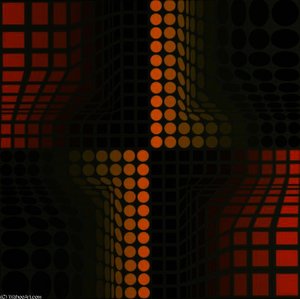
Soeloe
Wymiary reprodukcji
The artwork "Soeloe," presented here as a meticulously crafted hand-painted reproduction, offers an immersive journey into the visionary world of Victor Vasarely – a pivotal figure in the development of Op Art and a key innovator within the broader movement towards geometric abstraction. Born Károly Vaszary in 1906 in Pécs, Croatia (then part of Austria-Hungary), Vasarely’s artistic trajectory was initially far removed from the canvas; his early studies in medicine hinted at a different path before he decisively embraced the power of visual expression in 1927. This decision, fueled by an intense fascination with perception and form, led him to enroll in the Podolini-Volkmann Academy and ultimately into the influential workshop of Sándor Bortnyik – Műhely – where the principles of functional design and the Bauhaus movement profoundly shaped his artistic sensibilities. “Soeloe” embodies this legacy perfectly, showcasing a deliberate orchestration of hexagonal shapes that challenges our very understanding of space and visual experience.
“Soeloe” is inextricably linked to the broader context of Op Art, a movement that emerged in the 1960s – though Vasarely’s work predates it significantly – aiming to stimulate optical illusions through carefully arranged patterns. Vasarely's exploration extended beyond mere visual trickery; he sought to understand and manipulate how our eyes perceive depth, movement, and spatial relationships. His work isn't simply about creating beautiful shapes; it’s an investigation into the fundamental principles of human perception. The tightly packed arrangement of hexagons in “Soeloe” deliberately exploits this perceptual phenomenon, inviting the viewer to actively engage with the artwork and experience its effects firsthand.
Interestingly, “Soeloe” deliberately avoids overt symbolism or figurative representation. Vasarely was primarily interested in exploring the formal qualities of color and shape for their own sake – a pure aesthetic pursuit. However, this lack of explicit meaning doesn’t diminish the artwork's emotional impact. The controlled chaos of the composition generates a sense of visual tension and excitement, inviting contemplation and stimulating the viewer’s imagination. The sheer density of the forms creates an immersive experience, drawing the eye across the surface and fostering a feeling of dynamic movement.
Note: This hand-painted reproduction captures the essence of Vasarely's groundbreaking work, offering a unique opportunity to own a piece of art history that continues to challenge and inspire.Pod względem postrzeganej jasności, „Soeloe” – Wiktór Wasaryli jest shadow.
„Soeloe” – Wiktór Wasaryli łączy w sobie geometric abstraction, optical illusions, color field art, hexagonal patterns, digital design, modern art, vibrant colors z Modern atmosferą.
„Soeloe” przedstawia geometric abstraction, optical illusions, color field art, hexagonal patterns, digital design, modern art, vibrant colors, podczas gdy powracające motywy u Wiktór Wasaryli to op art pioneer, systematic abstraction, design & visuals, early digital art, mondrian's geometry, kinetic art roots, bauhaus principles, optical perception. Porównanie tych dwóch elementów ukazuje, jak dzieło nawiązuje do typowej dla tego artysty tematyki.

1906 - 1997 , Chorwacja

Explore the profound spiritual depth of geometric abstraction. From Malevich's Suprematism to modern masters, our expert guide reveals how pure form and color command presence in fine art collections.
Explore the mesmerizing world of Victor Vasarely. Discover how his Bauhaus-inspired Op Art masters the science of perception through geometric abstraction and vibrant color. A sophisticated guide for discerning art collectors seeking to understand the legacy of optical illusion.
 Wyślij jako kartkę
 Udostępnij
 Szczegóły dzieła
 Przewodnik

 Pobierz obraz
 Podobne obiekty
 Pokaz slajdów
 Pytania i odpowiedzi
 Statystyki

 Rozwiń treść






































 Opcja ze szkłem jest dostępna wyłącznie w rozmiarach poniżej 110 cm