Dzieło sztuki prezentowane na tej stronie podlega ochronie prawem autorskim, co oznacza, że nie mamy prawa do tworzenia ani sprzedaży jego identycznej reprodukcji. Ochrona ta jest egzekwowana na mocy umów międzynarodowych, takich jak Konwencja berneńska oraz przez przepisy prawa krajowego, w tym te określone w Prawo autorskie USA – Tytuł 17.
Metoda ta jest w pełni zgodna z przepisami prawa autorskiego, ponieważ nie polega na kopiowaniu ani powielaniu chronionego dzieła. Stanowi ona kreatywną reinterpretację – nowy obraz, który czerpie inspirację z oryginału, ale nie jest z nim tożsamy.
Wydruki giclée lub płótna o jakości muzealnej, szybka realizacja i szeroki wybór opcji wykończenia. ( Zamów ręcznie malowaną reprodukcję Przejdź do wersji cyfrowej)





























Wybierz spośród naszych standardowych rozmiarów, które zachowują oryginalne proporcje dzieła sztuki.

Wpisz wymaganą szerokość i wysokość, aby dopasować grafikę do ramy lub ściany. Wydruk można jedynie przyciąć, nigdy nie powiększając go poza oryginalny obraz, dlatego format o innych proporcjach spowoduje utratę części kompozycji. Przed rozpoczęciem druku prześlemy Ci cyfrowy podgląd do zatwierdzenia. Obraz wyświetlany na tej stronie nie pokazuje rzeczywistego przycięcia — jedynie podgląd oddaje ten efekt.
Dostawa na cały świat () w ciągu 2 tygodni zamiast standardowych 4/5 tygodni. (9 Listopad)
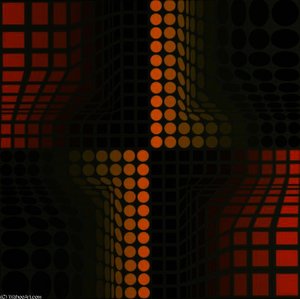
Kwadrat X
Wymiary reprodukcji
Victor Vasarely’s “Quadrature ”X” stands as a cornerstone of Op Art, an artistic movement that emerged in the mid-1960s and captivated audiences with its mesmerizing ability to deceive the eye. More than just a visual spectacle, this painting embodies a profound exploration into how our perception shapes reality – a concept central to Vasarely’s lifelong fascination with mathematics and optics.
Born Károly Vaszary in 1906 in Pécs, Croatia (then Austria-Hungary), Vasarely initially pursued medical studies at Eötvös Loránd University before abandoning his ambitions for healing in favor of artistic creation. This pivotal decision propelled him toward the Bauhaus school’s influential workshop – Műhely –, where he honed his skills in geometric abstraction and functional design.
“Quadrature ”X” exemplifies Vasarely's distinctive approach: a meticulously crafted composition featuring four circles arranged within a square frame. Each circle is rendered in a vibrant hue—red, green, blue, and yellow—creating an immediate visual impact. However, the true magic lies not merely in color but in its deliberate placement to generate an illusion of movement. The circles subtly shift and overlap, producing a dynamic effect that defies conventional perspective.
Vasarely’s technique involved applying pigment onto canvas using a method he termed “hydrostatic printing.” This innovative process utilized a stencil matrix – essentially a perforated plate – to transfer ink onto the surface of the painting. The resulting prints possessed remarkable uniformity and precision, guaranteeing consistent color saturation and textural consistency across multiple reproductions.
Beyond its technical mastery, “Quadrature ”X” resonates with deeper symbolic meanings rooted in Vasarely’s belief that geometry could represent fundamental truths about the universe. The square frame symbolizes stability and order, while the circles embody dynamism and infinite expansion—a visual paradox reflecting the artist's philosophical quest for harmony between opposing forces.
The painting’s emotional impact is undeniable: it invites contemplation and stimulates sensory perception. Viewers are drawn into a captivating dance of color and form, experiencing a fleeting glimpse of an alternate reality where visual illusions transcend boundaries. “Quadrature ”X” continues to inspire artists and designers alike, serving as a testament to Vasarely's enduring legacy as one of the most influential figures in 20th-century art.
Spokój emocja dzieła „Kwadrat X” współgra z jego stylem Geometric Abstraction.
"Kwadrat X" łączy nurt Geometric Abstraction z Chorwacja poprzez miejsce urodzenia jego twórcy.
„Kwadrat X” budzi Spokój emocje. Ton emocjonalny opisuje wrażenie, jakie wywołuje to dzieło.

1906 - 1997 , Chorwacja

Explore the profound evolution of Neo-Abstract art. Discover how bold geometric forms, vibrant chromatic depth, and tactile textures redefine modern expression for the discerning collector seeking sophisticated, high-impact masterpieces for contemporary interiors.
Explore the mesmerizing world of Victor Vasarely. Discover how his Bauhaus-inspired Op Art masters the science of perception through geometric abstraction and vibrant color. A sophisticated guide for discerning art collectors seeking to understand the legacy of optical illusion.

Embark on a visual journey through the mesmerizing world of Op Art. Discover the masters of optical illusion, explore geometric abstraction, and learn how to curate high-impact kinetic works for your private collection with expert guidance from art professionals.

Explore the profound spiritual depth of geometric abstraction. From Malevich's Suprematism to modern masters, our expert guide reveals how pure form and color command presence in fine art collections.

Discover the profound beauty of abstract art. Our expert guide explores geometric abstraction, Op Art, and Expressionism, offering connoisseurs deep insights into collecting and curating powerful, non-representational masterpieces for sophisticated interiors.
 Podgląd w skali 1:1
 Wyślij jako kartkę
 Udostępnij
 Szczegóły dzieła
 Przewodnik

 Pobierz obraz
 Podobne obiekty
 RTG
RTG Pokaz slajdów
 Pytania i odpowiedzi
 Statystyki
 Rozwiń treść









 Opcja ze szkłem jest dostępna wyłącznie w rozmiarach poniżej 110 cm