Dzieło sztuki prezentowane na tej stronie podlega ochronie prawem autorskim, co oznacza, że nie mamy prawa do tworzenia ani sprzedaży jego identycznej reprodukcji. Ochrona ta jest egzekwowana na mocy umów międzynarodowych, takich jak Konwencja berneńska oraz przez przepisy prawa krajowego, w tym te określone w Prawo autorskie USA – Tytuł 17.
Metoda ta jest w pełni zgodna z przepisami prawa autorskiego, ponieważ nie polega na kopiowaniu ani powielaniu chronionego dzieła. Stanowi ona kreatywną reinterpretację – nowy obraz, który czerpie inspirację z oryginału, ale nie jest z nim tożsamy.
Wydruki giclée lub płótna o jakości muzealnej, szybka realizacja i szeroki wybór opcji wykończenia. ( Zamów ręcznie malowaną reprodukcję Przejdź do wersji cyfrowej)





























Wybierz spośród naszych standardowych rozmiarów, które zachowują oryginalne proporcje dzieła sztuki.

Wpisz wymaganą szerokość i wysokość, aby dopasować grafikę do ramy lub ściany. Wydruk można jedynie przyciąć, nigdy nie powiększając go poza oryginalny obraz, dlatego format o innych proporcjach spowoduje utratę części kompozycji. Przed rozpoczęciem druku prześlemy Ci cyfrowy podgląd do zatwierdzenia. Obraz wyświetlany na tej stronie nie pokazuje rzeczywistego przycięcia — jedynie podgląd oddaje ten efekt.
Dostawa na cały świat () w ciągu 2 tygodni zamiast standardowych 4/5 tygodni. (10 Listopad)
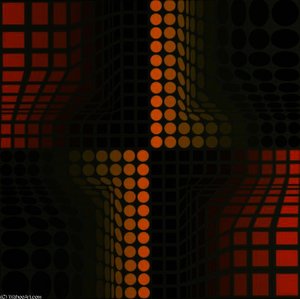
Abstract 4
Wymiary reprodukcji
Victor Vasarely's "Abstract 4" is more than just a painting; it’s an invitation to question the very nature of visual reality. This striking artwork, dominated by a vibrant interplay of red and grey, exemplifies the groundbreaking Op Art movement that emerged in the mid-20th century. Born Károly Vaszary in 1906 in Pécs, Croatia – then part of Austria-Hungary – Vasarely’s artistic trajectory began with an unexpected detour into medicine before he ultimately embraced a lifelong pursuit of geometric abstraction, profoundly influenced by the Bauhaus principles and his time within Bortnyik's "Műhely" workshop.
The painting’s power lies in its deceptively simple composition. Close inspection reveals a complex network of overlapping circles, squares, and lines – all rendered with a remarkable precision. The dominant red hues are strategically placed to create areas of visual emphasis, while the grey tones provide a grounding counterpoint, enhancing the sense of depth and movement. Vasarely’s use of color isn't merely decorative; it’s integral to the artwork’s optical effect. The subtle variations in tone and saturation contribute significantly to the illusionary depth and dynamism that characterize Op Art.
"Abstract 4" was created during a period of immense artistic and technological change. Following World War II, artists were increasingly interested in exploring new ways to represent reality, moving away from traditional representational styles. The rise of mass media – particularly film and advertising – also influenced the development of Op Art, as designers sought to create visually arresting images that would capture attention. Vasarely’s work is considered a pivotal contribution to this movement, solidifying his place as one of the most important pioneers of geometric abstraction and kinetic art.
Beyond its technical brilliance, "Abstract 4" evokes a sense of wonder and intrigue. The artwork challenges our assumptions about how we perceive the world, inviting us to engage in a playful dialogue with visual information. A hand-painted reproduction offers an exceptional opportunity to bring this iconic piece into your home or office – a testament to Vasarely’s innovative spirit and a captivating addition to any art collection. Its dynamic composition and bold color palette make it ideal for modern interiors, adding a touch of intellectual stimulation and artistic flair.
„Abstract 4” – Wiktór Wasaryli jest klasyfikowane jako WallArt. Kategoria ta określa rodzaj dzieła, jakim jest oryginał.
Inne znane nazwiska Wiktór Wasaryli, twórcy "Abstract 4", to Győző Vásárhelyi.
Kompozycja kolorystyczna „Abstract 4” – Wiktór Wasaryli łączy w sobie Balanced kontrast z Unified Palette harmonią.

1906 - 1997 , Chorwacja

Discover the profound beauty of abstract art. Our expert guide explores geometric abstraction, Op Art, and Expressionism, offering connoisseurs deep insights into collecting and curating powerful, non-representational masterpieces for sophisticated interiors.
Explore the mesmerizing world of Victor Vasarely. Discover how his Bauhaus-inspired Op Art masters the science of perception through geometric abstraction and vibrant color. A sophisticated guide for discerning art collectors seeking to understand the legacy of optical illusion.

Embark on a visual journey through the mesmerizing world of Op Art. Discover the masters of optical illusion, explore geometric abstraction, and learn how to curate high-impact kinetic works for your private collection with expert guidance from art professionals.

Explore the profound spiritual depth of geometric abstraction. From Malevich's Suprematism to modern masters, our expert guide reveals how pure form and color command presence in fine art collections.
 Podgląd w skali 1:1
 Wyślij jako kartkę
 Udostępnij
 Szczegóły dzieła
 Przewodnik

 Pobierz obraz
 Podobne obiekty
 RTG
RTG Pokaz slajdów
 Pytania i odpowiedzi
 Statystyki

 Rozwiń treść









 Opcja ze szkłem jest dostępna wyłącznie w rozmiarach poniżej 110 cm