


 Olej na płótnieSztuka ściennaHigh Renaissance
 1520Renesans
 76.0 x 57.0 cm
 Scottish National Gallery of Modern Art
Kup wysokiej rozdzielczości, ulepszony obraz cyfrowy o znacznie wyższej jakości niż podgląd online.
Każdy plik jest starannie przygotowywany przez naszych specjalistów przy użyciu zaawansowanych narzędzi oraz profesjonalnej, ręcznej retuszy. Dbamy o to, aby każdy obraz cechował się wyjątkową ostrością, precyzyjnym odwzorowaniem kolorów i subtelnymi detalami.
Ostateczny plik dostarczany jest drogą mailową w ciągu 72 godzin, zoptymalizowany do natychmiastowego wykorzystania w profesjonalnych zastosowaniach redakcyjnych i poligraficznych. To ta sama jakość, której ufają czołowe studia projektowe, wydawnictwa oraz galerie sztuki.
Pobierz plik o wysokiej rozdzielczości do osobistego wyświetlania, druku oraz projektów kreatywnych. ( Zamów wydruk Zamów ręcznie malowaną reprodukcję)
Wybierając WahooArt.com, nie otrzymujesz jedynie obrazu – otrzymujesz profesjonalnie udoskonalone cyfrowe dzieło sztuki, stworzone z najwyższą precyzją i objęte gwarancją satysfakcji. Oto wszystko, co automatycznie dołączane jest do Twojego zamówienia:

Plik z obrazem cyfrowym w wysokiej rozdzielczości zostanie przesłany na Twój adres e-mail w ciągu 72 godzin od złożenia zamówienia – gotowy do natychmiastowego użycia.

Twoja grafika została profesjonalnie zoptymalizowana przy użyciu zaawansowanych narzędzi AI oraz ręcznej edycji, co zapewnia maksymalną szczegółowość, klarowność i wierność kolorów.

Przypadkowo usunąłeś lub zgubiłeś swój plik? Bez obaw – prześlemy go Tobie ponownie w dowolnym momencie, bez żadnych opłat.

Ciesz się swoją sztuką natychmiast, bez żadnych opłat celnych, należności ani kosztów dostawy – pliki cyfrowe są zawsze wolne od podatku.

Dzięki zastosowaniu profesjonalnych narzędzi i procesów zarządzania barwą zapewniamy, że Twoje cyfrowe zdjęcie odzwierciedla oryginalne kolory tak wiernie, jak to tylko możliwe.

Jeśli nie będziesz zadowolony ze swojego cyfrowego obrazu, poprawimy go lub zwrócimy 100% kosztów w ciągu 100 dni – bez zbędnych pytań.

Nie jesteś zadowolony? Otrzymaj pełny zwrot kosztów w ciągu 100 dni od otrzymania pliku cyfrowego – bez zbędnych pytań.

Kup 3 obrazy, oszczędź 10% - Kup 5, oszczędź 15% - Kup 10+, oszczędź 20%. Idealne do projektów kreatywnych, galerii i agencji.
The painting "Venus Anadyomene," created by Titian Ramsay Peale II around 1520, is more than a mere depiction of the goddess; it's a carefully constructed dialogue between classical ideals and burgeoning American identity. Peale, deeply influenced by the artistic legacy of Venice and his father’s prominent role in early American portraiture, crafted this oil on canvas masterpiece not simply as a beautiful image, but as a testament to his own skill and a reflection of the era's fascination with antiquity. The work, currently residing at the Scottish National Gallery of Modern Art in Edinburgh, offers a captivating glimpse into a world where Renaissance principles were being reinterpreted through a distinctly American lens.
At its core, “Venus Anadyomene” embodies the classical narrative of Venus emerging from the sea – a potent symbol of rebirth, beauty, and fertility. Peale masterfully captures this moment, depicting the goddess in a dynamic pose, her long hair cascading down her body as she appears to either gaze at it with contemplation or playfully scratch her head. This seemingly simple gesture—a subtle shift in focus—injects an unexpected intimacy into the scene, drawing the viewer into a private, almost vulnerable moment. The background, subtly rendered with mountainous forms and a serene blue sky, provides depth and context without overwhelming the central figure. The careful use of light and shadow enhances the three-dimensionality of the painting, creating a sense of realism that was highly valued during the High Renaissance.
Peale’s technical skill is immediately evident in the meticulous detail with which he renders every element of the composition. The texture of Venus's hair, the folds of her drapery, and even the subtle reflections on the water are all rendered with remarkable precision. He employs a technique known as *sfumato*, blurring the edges and creating soft transitions between colors, contributing to the painting’s ethereal quality. Noticeably, the composition is balanced, drawing the eye naturally from the goddess's face to her flowing hair and then back to the serene background. The strategic placement of the seashell at the base of the scene subtly reinforces the mythological narrative, grounding the image in its classical origins.
Beyond the immediate depiction of Venus rising from the sea, “Venus Anadyomene” is rich with symbolic meaning. The goddess herself represents not only beauty but also love, desire, and prosperity – qualities highly valued in Renaissance society. The act of scratching her head can be interpreted as a gesture of self-awareness or even vulnerability, suggesting that even the divine are subject to earthly concerns. Furthermore, Peale’s decision to depict Venus in this particular pose—a departure from earlier depictions—reflects the evolving artistic tastes of the era. The painting aligns with the broader trend of portraying female figures with greater psychological depth and emotional complexity.
Crucially, “Venus Anadyomene” emerged during a period of significant cultural change in America. Peale’s work reflects his deep connection to both European artistic traditions and the nascent American identity. He was part of a generation that sought to establish a distinctively American art scene, one rooted in classical ideals but informed by the unique experiences and perspectives of the New World. His father, Charles Willson Peale, played a pivotal role in establishing America’s first museum, demonstrating a commitment to both artistic expression and scientific inquiry – values that are powerfully embodied in “Venus Anadyomene.”
Today, "Venus Anadyomene" stands as a testament to Titian Ramsay Peale II’s artistry and his place within the broader history of American art. The Scottish National Gallery of Modern Art provides an exceptional setting for this masterpiece, allowing visitors to appreciate its beauty and significance in a contemporary context. For those seeking to experience the allure of this iconic painting firsthand, WahooArt.com offers meticulously crafted oil painting reproductions that faithfully capture the original’s detail and atmosphere. These handmade reproductions provide a tangible connection to a remarkable work of art, ensuring that the legacy of “Venus Anadyomene” continues to inspire and captivate for generations to come.
Explore exquisite oil painting reproductions of "Venus Anadyomene" at WahooArt.com
Experience the beauty of “Venus Anadyomene” with a handmade oil painting reproduction from WahooArt.com.
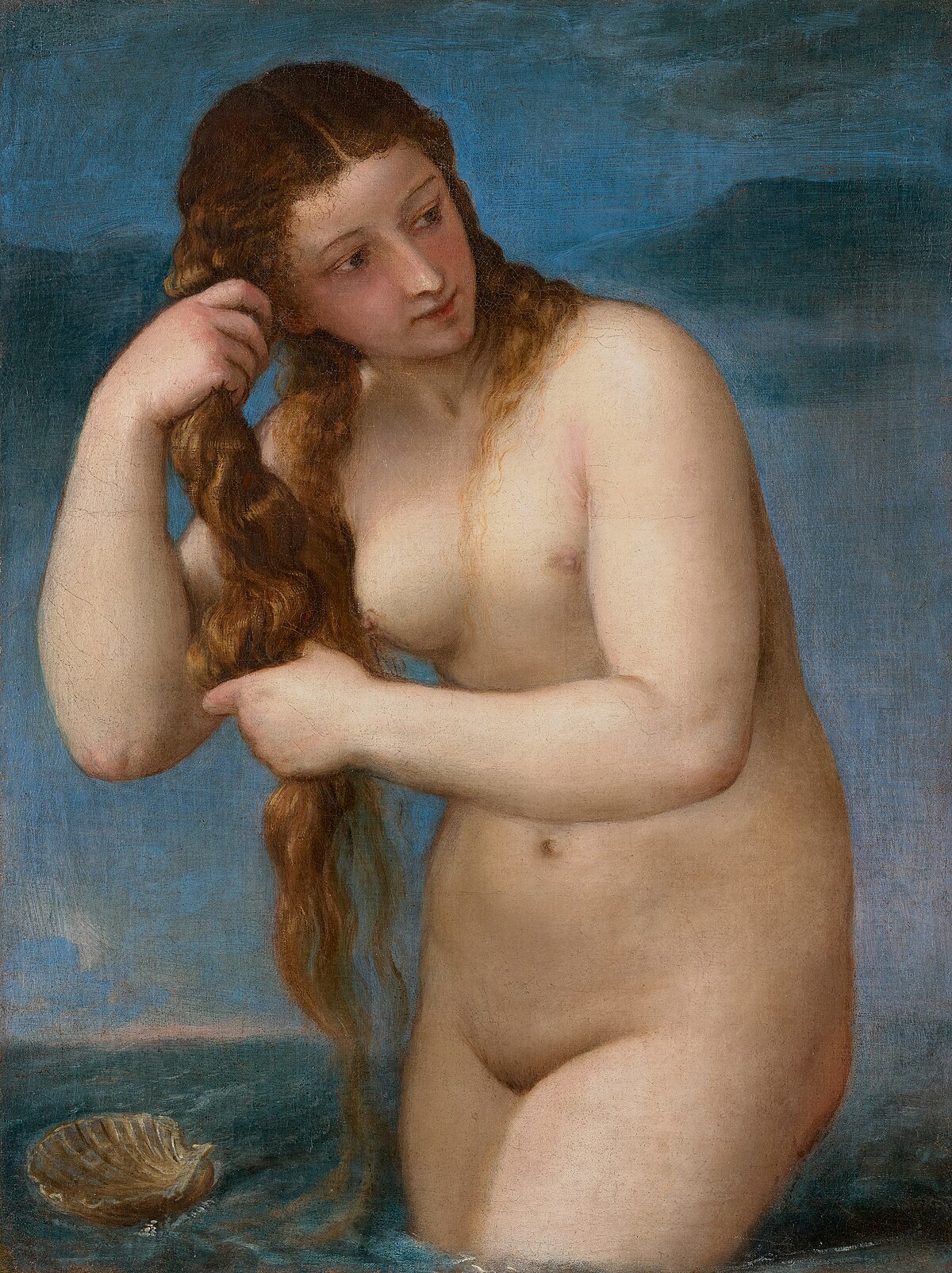
Photo Description: The painting is a portrait of a woman with long hair, possibly Venus Anadyomene. She appears to be looking at her hair or scratching her head. The woman's hair is in a braid that extends down the right side of her body. In the background, there are mountains visible, adding depth and context to the scene. The painting is set against a blue sky, which further enhances the overall atmosphere of the image.
Size: 76 x 57 cm
Date: 1520


1799 - 1885 , Stany Zjednoczone

 Podgląd w skali
 Wyślij jako kartkę
 Udostępnij
 Szczegóły dzieła

 Pobierz
 Podobne obiekty
 RTG
RTG Pokaz slajdów
 Rozwiń treść


