Zobacz w skali 1:1 Zobacz w AR Kup ręcznie malowany obraz Przełącz na wersję cyfrową Wyślij
Szczegóły Guide Dodaj do ulubionych Pobierz plik obrazu Podobne obiekty RTG Pokaz slajdów Statystyki

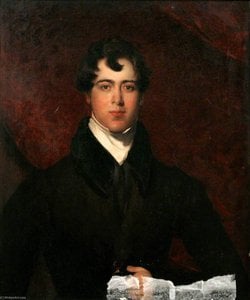
Henry Peter Brougham, Baron Brougham and Vaux

Thomas Phillips’s masterful portrait of Henry Peter Brougham embodies Romantic grandeur, showcasing dramatic chiaroscuro and meticulous detail—a testament to Victorian artistic tradition. Explore this iconic depiction of British power and intellect.

Thomas Phillips (1770-1845) – wybitny brytyjski malarz portretowy, znany z precyzji i oddania charakteru znanych postaci, m.in. Lorda Byrona. #SztukaBrytyjska #Portrety

Giclée / Wydruk artystyczny

Wydruki giclée lub płótna o jakości muzealnej, szybka realizacja i szeroki wybór opcji wykończenia. ( Kup ręcznie malowany obraz Przełącz na wersję cyfrową)

P118B $10
P118H $10
P118W $10
P438Z $10
P508JH $12
P508YH $12
P805H $10
P805Z $10
P919BZ $10
P919G $10
P919XJ $10
P959ZH $10
P968JZ $12
W106C $8
W218G $10
W218JH $8
W218Y $10
W307PJ $10
W316G $10
W316PJ $8
W316Y $10
W398PJ $8
W4111J $10
W500HY $15
W500JH $15
W692G $12
W849H $8
W940BG $15
W953PJ $8

Standardowy
na zamówienie
CM
INCH

Wybierz spośród naszych standardowych rozmiarów, które zachowują oryginalne proporcje dzieła sztuki.

szerokość
wysokość

Możesz wprowadzić własne wymiary, aby dopasować dzieło do konkretnej ramy lub przestrzeni. Jeśli wybrany rozmiar nie będzie odpowiadał proporcjom oryginalnego obrazu, przytniecie dzieło lub rozszerzymy obraz za pomocą odbicia lustrzanego lub jednolitego wypełnienia krawędzi. Przed rozpoczęciem produkcji prześlemy cyfrową wizualizację do Twojej akceptacji.
Prosimy pamiętać, że podgląd na ekranie nie odzwierciedla faktycznego przycinania ani rozszerzania. Tylko wizualizacja dokładnie pokaże końcową kompozycję.
Mimo dostępności niestandardowych rozmiarów, zalecamy wybór wymiaru z listy zdefiniowanej, aby zachować oryginalne proporcje.

Dostawa na cały świat () w ciągu 2 tygodni zamiast standardowych 4/5 tygodni. (21 Wrzesień)

why_choose_icon
Bezpłatna ekspresowa wysyłka na cały świat
why_choose_icon
Wysokiej jakości płótno lniane
why_choose_icon
Pełne ubezpieczenie transportowe
why_choose_icon
Gwarancja zwrotu należności celnych i podatków importowych
why_choose_icon
Gwarancja idealnego odwzorowania barw
why_choose_icon
100-dniowy okres na zwrot dzieła w przypadku wykrycia wad produkcyjnych
why_choose_icon
Gwarancja 100% zwrotu pieniędzy
why_choose_icon
Oferta przy zakupie wielu sztuk

Cena całkowita

$ 68

reproduction

Henry Peter Brougham, Baron Brougham and Vaux

Giclée / Wydruk artystyczny

Rozmiar reprodukcji

-

Suma do zapłaty

$ 68

Kluczowe informacje

  • Medium: Oil on canvas
  • Notable elements or techniques: Detailed portraiture; Subtle shading
  • Year: 1790
  • Movement: Neoclassicism
  • Subject or theme: Political Portrait
  • Title: Henry Peter Brougham, Baron Brougham and Vaux
  • Location: Parliamentary Art Collection

A Vision of Intellectual Might

In the grand tradition of British portraiture, few works capture the intersection of political gravity and intellectual fervor as profoundly as Thomas Phillips’s Henry Peter Brougham, Baron Brougham and Vaux. Created around 1807, this masterpiece serves as more than a mere likeness; it is a psychological study of a man destined to shape the course of Victorian history. As the viewer encounters the subject, they are immediately struck by a commanding presence that transcends the canvas. Phillips does not simply paint a statesman; he sculpts an icon of the Romantic era, presenting Brougham with a gaze that seems to pierce through the veil of time, reflecting the unwavering conviction of a man dedicated to parliamentary reform and the abolition of slavery.

The portrait functions as a window into the soul of an era defined by debate and moral evolution. Through the dignified posture and the intense, luminous eyes, Phillips communicates the weight of responsibility carried by the nineteenth-century intellectual elite. For the discerning collector or interior designer, this piece offers a profound sense of gravitas, making it an ideal centerpiece for spaces that demand an atmosphere of sophistication, wisdom, and historical depth.

The Mastery of Light and Shadow

Technically, the portrait is a triumph of the academic style, showcasing Phillips’s extraordinary ability to manipulate chiaroscuro. The artist employs dramatic contrasts between deep, receding shadows and brilliant highlights to give Brougham’s features a three-dimensional vitality. This interplay of light does not merely illuminate the subject; it defines his very character. The meticulous application of thin oil glazes creates a velvety texture on the skin, while the subtle reflections in the eyes suggest a sharp, analytical mind at work.

Every brushstroke reveals the artist's rigorous training, from the precise rendering of the subject's facial hair to the heavy, dignified folds of his attire. The background, a rich and dramatic crimson, serves a dual purpose: it provides a striking color contrast that pushes the figure forward toward the viewer, and it symbolizes the passion and political turbulence of Brougham’s life. This masterful use of color and light ensures that the painting possesses a rhythmic energy, drawing the eye across the composition in a continuous loop of discovery.

An Enduring Legacy for the Modern Collector

To possess a reproduction of this work is to invite a piece of British heritage into one's environment. The portrait of Baron Brougham and Vaux resonates with anyone who appreciates the power of storytelling through art. It embodies the spirit of an age where ideas were forged in the fires of rhetoric and reform. For those seeking to curate a collection that speaks of erudition and strength, this painting provides an unparalleled emotional impact.

Whether placed in a private library, a formal study, or a contemporary living space, the artwork acts as a silent interlocutor, sparking conversation and inspiring reflection. It is a testament to the enduring allure of the human spirit and the timeless beauty of classical portraiture—a perfect acquisition for those who value art that possesses both historical significance and aesthetic splendor.


Biografia artysty

Early Life and Artistic Foundations

Thomas Phillips, born in Dudley, Worcestershire, in 1770, emerged from relatively modest beginnings to become a prominent figure in the British art scene of the late 18th and early 19th centuries. His initial artistic training wasn’t within the traditional confines of painting, but rather in the craft of glass-painting under Francis Eginton in Birmingham. This foundational experience instilled in him a meticulous attention to detail and an understanding of color and light – skills crucial for capturing the nuances of human expression – that would later characterize his portraiture. The intricate designs and vibrant hues of stained glass demanded precision and a keen eye for composition, qualities Phillips readily applied to his future work on canvas. A pivotal moment arrived in 1790 when Phillips journeyed to London, armed with an introduction to Benjamin West, a leading artist of the time and a key figure in the Royal Academy. West’s guidance proved invaluable, securing him employment on the painted-glass windows of St George's Chapel at Windsor Castle – a project that allowed him to hone his skills within a grand architectural context and provided exposure to large-scale decorative work. This early immersion in elaborate designs undoubtedly shaped his compositional sensibilities and appreciation for narrative storytelling in art, influencing the dramatic lighting and carefully arranged elements often found in his portraits. In 1791, Phillips formally enrolled as a student at the Royal Academy, marking the beginning of his formal artistic education and his integration into the established art world.

A Rising Portraitist: Style and Subject Matter

Phillips quickly found his niche in portraiture, though not without navigating a competitive landscape already populated by renowned artists like Thomas Lawrence and John Hoppner. Initially, his sitters were largely unknown individuals – members of the gentry, clergymen, and local notables – but through dedication and skill, he steadily ascended the social ladder, attracting increasingly prominent figures to his studio. His style was characterized by a meticulous realism, reflecting both the influence of his early training in glass-painting and the prevailing artistic tastes of the era. He possessed an ability to capture not just physical likeness, but also something of the sitter’s character and intellect – a subtle expression of their personality that went beyond mere representation. This talent proved particularly valuable when portraying the “men of genius” – scientists, writers, poets, and explorers – who became a recurring theme in his work. He was known for his ability to convey not just outward appearance but also inner thoughts and emotions through carefully observed details: the furrowed brow suggesting contemplation, the twinkle in the eye hinting at wit and intelligence. His portraits were often imbued with a sense of dignity and gravitas, reflecting the status and accomplishments of their subjects.

Royal Patronage and Academic Recognition

The year 1804 marked a significant turning point in Phillips’ career with his election as an associate of the Royal Academy, alongside William Owen. This recognition solidified his position within the artistic establishment and signaled growing confidence in his abilities. Shortly thereafter, he relocated to 8 George Street, Hanover Square, a prestigious address that would remain his home and studio for the next four decades – a symbol of his rising status and access to influential circles. His clientele continued to expand, encompassing members of the royal family, including Prince William IV, as well as prominent figures from Parliament, the military, and the literary world. He painted portraits of the Prince of Wales (later George IV), the Marchioness of Stafford, and Lord Thurlow, among others – each portrait a testament to his skill and ability to capture the essence of his subjects. In 1824, Phillips achieved full academician status, presenting his diploma work *Venus and Adonis*, considered one of his most imaginative compositions, demonstrating a departure from purely portraiture into more ambitious narrative painting. The subject matter – inspired by the classical poet—showcased his evolving artistic vision and his willingness to experiment with allegorical themes.

Later Years: Professorship and Legacy

Phillips’s contributions to the art world extended beyond his own paintings. In 1825, he was appointed Professor of Painting at the Royal Academy, succeeding Henry Fuseli – a position he held until 1832. This role allowed him to share his knowledge and expertise with aspiring artists, shaping the next generation of British painters. He published *Lectures on the History and Principles of Painting* in 1833, offering insights into his artistic philosophy and pedagogical approach—a valuable resource for students eager to understand the foundations of art. His lectures emphasized careful observation, meticulous technique, and a deep understanding of composition and color theory. While his later years saw a slight decline in public acclaim – partly due to shifts in artistic taste – Phillips remained a respected figure within the art community until his death in 1845. His legacy lies not only in the numerous portraits he created – capturing the likenesses of many notable figures of his time—but also in his dedication to artistic education and his contribution to the development of British portraiture. He left behind a body of work that reflects both the technical skill and the intellectual curiosity of an artist deeply engaged with the cultural landscape of his era, demonstrating a remarkable ability to capture not just outward appearance but also inner thoughts and emotions. His attention to detail, combined with a sensitivity to character, ensures his place as a significant figure in 19th-century British art.
Thomas Phillips

Thomas Phillips

1770 - 1845 , Wielka Brytania

Najważniejsze informacje

  • Artistic Movement Or Style: Romanticizm
  • Artists Or Movements Influenced By This Artist: ['Benjamin West']
  • Artists Who Influenced This Artist: ['Benjamin West']
  • Date Of Birth: 1770
  • Date Of Death: 1845
  • Full Name: Thomas Phillips
  • Nationality: Brytyjski
  • Notable Artworks:
    • Venus i Adonis
    • Lord Byron
  • Place Of Birth: Dudley, UK