


Druk giclée lub płótno o jakości muzealnej, szybka realizacja i szeroki wybór opcji wykończenia. ( Zamów ręcznie malowaną reprodukcję Kup obraz wysokiej rozdzielczości)





























Wybierz spośród naszych standardowych rozmiarów, które zachowują oryginalne proporcje dzieła sztuki.

Możesz wprowadzić własne wymiary, aby dopasować dzieło do konkretnej ramy lub przestrzeni. Jeśli wybrany rozmiar nie będzie odpowiadał proporcjom oryginalnego obrazu, przytniecie dzieło lub rozszerzymy obraz za pomocą odbicia lustrzanego lub jednolitego wypełnienia krawędzi. Przed rozpoczęciem produkcji prześlemy cyfrową wizualizację do Twojej akceptacji.
Prosimy pamiętać, że podgląd na ekranie nie odzwierciedla faktycznego przycinania ani rozszerzania. Tylko wizualizacja dokładnie pokaże końcową kompozycję.
Mimo dostępności niestandardowych rozmiarów, zalecamy wybór wymiaru z listy zdefiniowanej, aby zachować oryginalne proporcje.
Dostawa na cały świat () w ciągu 2 tygodni zamiast standardowych 4/5 tygodni. (6 Wrzesień)


A Man Called Mr. Wood, the Dancing Master
Wymiary reprodukcji
In the quiet, dignified presence of “A Man Called Mr. Wood, the Dancing Master,” we encounter more than just a portrait; we step into the refined atmosphere of the mid-1s70s British aristocracy. Painted around 1757 by the incomparable Thomas Gainsborough, this work serves as a profound psychological window into the character of a gentleman. Mr. Wood is captured in a moment of poised contemplation, his gaze meeting the viewer with an air of self-assuredness that borders on a subtle, knowing amusement. There is an undeniable magnetism in his expression, a flicker of wit that suggests a man deeply engaged with both his surroundings and his own intellect. As he sits beside a chair and a wall clock, the painting invites us to share in his world of measured grace and social sophistication.
The composition is masterfully balanced, utilizing objects not merely as props but as silent narrators of a life well-lived. The inclusion of the clock serves as a poignant memento mori, a gentle reminder of the relentless passage of time, while the chair anchors the subject in a space of stability and domestic comfort. Gainsborough’s ability to weave these elements into a cohesive narrative allows the viewer to feel the weight of history and the stillness of the moment. For the discerning collector or interior designer, this piece offers a sense of timelessness, making it an ideal centerpiece for spaces that value heritage, intellectual depth, and a touch of classical grandeur.
Technically, this portrait is a testament to Gainsborough’s unique position within the English landscape and portrait traditions. Eschewing the heavy, dramatic shadows often found in the works of his contemporary Sir Joshua Reynolds, Gainsborough employs a luminous palette and a gentle diffusion of light. His technique is characterized by soft, fluid brushstrokes that lend an ethereal, almost dreamlike quality to the scene. Through the skillful application of glazing, he achieves a remarkable depth of tone, particularly evident in the rich textures of Mr. Wood’s blue coat and the subtle highlights on his white hair and beard.
This delicate handling of light creates a sense of atmosphere that is both airy and substantial. The way the light grazes the gold buttons of his attire and illuminates the surfaces within the room demonstrates a mastery of naturalism. It is this very softness—this refusal to rely on harsh contrasts—that imbues the painting with its characteristic serenity. To possess a reproduction of such a work is to bring a sense of calm, sophisticated light into one's own environment, providing an aesthetic anchor that feels both historically significant and eternally fresh.
To understand this portrait is to understand the spirit of the Enlightenment. During this era, the values of intellectual curiosity, social decorum, and naturalism were at the forefront of British culture. Gainsborough’s work perfectly encapsulates these ideals, moving away from the rigid conventions of the Baroque toward a more humanistic and psychologically realistic approach. The painting does not merely document a face; it celebrates the dignity of the individual and the quiet pleasures of an observant life.
For those looking to curate a collection or decorate a room with intention, “A Man Called Mr. Wood” offers unparalleled inspiration. It embodies a lifestyle of understated grandeur—a luxury that does not shout but whispers through quality, texture, and character. Whether placed in a study, a formal dining room, or a curated gallery wall, this masterpiece continues to radiate an aura of confidence and grace, making it a timeless investment for any lover of fine art.


1727 - 1788 , Wielka Brytania

Explore the life & work of Thomas Hudson, a leading 18th-century British portraitist. Discover his mastery of the 'Grand Manner,' influential style, and lasting impact on British art. Learn about his notable portraits like Judge William Noel & Alexander Van Aken.

Odkryj świat barokowego przepychu! Porady ekspertów jak wprowadzić elegancję i dramat do Twojego wnętrza. Inspiracje, charakterystyka stylu i praktyczne wskazówki.

Odkryj dramatyczny świat baroku! Poznaj historię sztuki kontrreformacji, mistrzów chiaroscuro i weneckich arcydzieł. Reprodukcje najwyższej jakości na WahooArt.com.
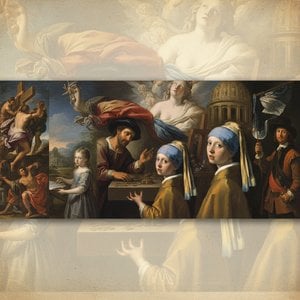
Odkryj 10 arcydzieł baroku! Caravaggio, Rembrandt, Rubens i inni artyści, którzy zdefiniowali epokę. Poznaj historie, techniki i inspiracje tych niezwykłych obrazów. Reprodukcje najwyższej jakości na WahooArt.com – idealne do Twojego wnętrza!

Explore the dramatic world of Baroque art! Discover iconic masters like Caravaggio & Rembrandt, their techniques, and the movement's lasting impact. Expert insights for collectors & enthusiasts at WahooArt.

 Podgląd w skali
 Wyślij jako kartkę
 Udostępnij
 Szczegóły dzieła

 Pobierz
 Podobne obiekty
 RTG
RTG Pokaz slajdów


 Rozwiń treść







 Opcja ze szkłem jest dostępna wyłącznie w rozmiarach poniżej 110 cm


