DARMOWA KONSULTACJA ARTYSTYCZNA

x
Zamów reprodukcję Zamów reprodukcjęKup cyfrowy obraz Kup cyfrowy obraz UdostępnijUdostępnij
SzczegółySzczegóły Dodaj do ulubionych Dodaj do ulubionych PobierzPobierz Podobne obiektyPodobne obiekty RTGRTG Pokaz slajdówPokaz slajdów

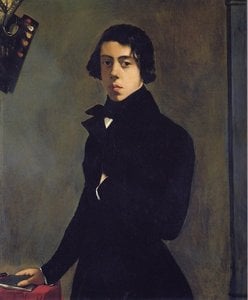
Self-Portrait

Explore Théodore Chassériau's 'Self-Portrait,' a captivating 1835 oil painting showcasing the artist’s restrained elegance and introspective style, housed in the Louvre.

Meta Description: Théodore Chassériau (1819-1856) – francuski malarz romantyczny łączący klasykę Ingresa z ekspresją Delacroix. Jego dzieła, takie jak Żałobny Raft Meduzy i Portret pani Theodore Charpentier, fascynują bogatymi kolorami i emocjami.

Giclée / Wydruk artystyczny

Druk giclée lub płótno o jakości muzealnej z szybką realizacją i szerokim wyborem opcji wykończenia.

P118B $10
P118H $10
P118W $10
P438Z $10
P508JH $12
P508YH $12
P805H $10
P805Z $10
P919BZ $10
P919G $10
P919XJ $10
P959ZH $10
P968JZ $12
W106C $8
W218G $10
W218JH $8
W218Y $10
W307PJ $10
W316G $10
W316PJ $8
W316Y $10
W398PJ $8
W4111J $10
W500HY $15
W500JH $15
W692G $12
W849H $8
W940BG $15
W953PJ $8

Standard
custom
CM
INCH

Wybierz spośród naszych predefiniowanych rozmiarów, które zachowują oryginalne proporcje dzieła sztuki.

szerokość
wysokość

Możesz wprowadzić własne wymiary, aby dopasować dzieło do konkretnej ramy lub przestrzeni. Jeśli wybrany rozmiar nie będzie odpowiadał proporcjom oryginalnego obrazu, przytniecie dzieło lub rozszerzymy obraz za pomocą odbicia lustrzanego lub jednolitego wypełnienia krawędzi. Przed rozpoczęciem produkcji prześlemy cyfrową wizualizację do Twojej akceptacji.
Prosimy pamiętać, że podgląd na ekranie nie odzwierciedla faktycznego przycinania ani rozszerzania. Tylko wizualizacja dokładnie pokaże końcową kompozycję.
Mimo dostępności niestandardowych rozmiarów, zalecamy wybór wymiaru z listy zdefiniowanej, aby zachować oryginalne proporcje.

Dostawa na cały świat () w ciągu 2 tygodni zamiast standardowych 4/5 tygodni. (4 Lipiec)

why_choose_icon
Bezpłatna ekspresowa wysyłka na cały świat
why_choose_icon
Wysokiej jakości płótno lniane
why_choose_icon
Pełne ubezpieczenie przesyłki
why_choose_icon
Gwarancja zwrotu należności celnych
why_choose_icon
Gwarancja pełnego zgodności kolorystycznej
why_choose_icon
Polityka 60-dniowego zwrotu (tylko w przypadku wad)
why_choose_icon
Gwarancja 100% zwrotu pieniędzy
why_choose_icon
Zniżka przy większych zamówieniach

Suma całkowita

-

reproduction

Self-Portrait

Giclée / Wydruk artystyczny

Wymiary reprodukcji

-

Cena całkowita

-

Szybkie fakty

  • Influences:
    • Ingres
    • Delacroix
  • Movement: Romanticism
  • Artist: Théodore Chassériau
  • Dimensions: 99 x 82 cm
  • Year: 1835
  • Location: Louvre, Paris
  • Artistic style: 19th-century

Quiz o sztuce

Na każde pytanie istnieje tylko jedna poprawna odpowiedź.

Pytanie 1:
What artistic movement is most closely associated with Théodore Chassériau’s ‘Self-Portrait’?
Pytanie 2:
The microphone stand visible in the painting 'Self-Portrait' suggests which of the following?
Pytanie 3:
What is the predominant color palette used in ‘Self-Portrait’?
Pytanie 4:
According to the description, what is a key characteristic of Chassériau’s technique in this painting?
Pytanie 5:
Théodore Chassériau was born in which country?

Opis obiektu kolekcjonerskiego

The Enigmatic Self: Théodore Chassériau’s “Self-Portrait in a Redingote”

Théodore Chassériau's 1835 oil on canvas, "Self-Portrait in a Redingote," is more than just a likeness; it’s a carefully constructed tableau of restrained elegance and subtle introspection—a window into the mind of a young artist grappling with his artistic identity within the context of 19th-century Parisian society. Housed within the prestigious Musée du Louvre, this painting immediately draws the viewer in with its dark palette and the commanding presence of the subject, a young man radiating an almost melancholic intensity.

The work firmly anchors itself within the Romantic movement, yet it subtly resists simple categorization. While undeniably influenced by the dramatic flair of Eugène Delacroix – particularly evident in the dynamic lighting and the suggestion of movement – Chassériau retains a core Neoclassical discipline, meticulously rendered lines defining the sharp angles of his suit jacket and the precise contours of his face. This duality reflects the artist’s own journey: initially trained under the rigorous tutelage of Jean-Auguste-Dominique Ingres, he ultimately forged his own path, embracing a more expressive and emotionally charged style.

A Study in Light and Shadow – Technique and Composition

Chassériau's masterful technique is immediately apparent. The painting’s composition centers around the subject, occupying nearly the entire frame, creating an intimate and almost claustrophobic effect. He stands in a three-quarter pose, his gaze directed slightly to the left, inviting the viewer into his world. A subtle yet significant detail—a microphone stand discreetly positioned behind him on the left – hints at a performance context, perhaps suggesting Chassériau’s burgeoning career as a stage designer or illustrator, alongside his painting endeavors. The artist employs a layering technique, building up color and texture through numerous thin glazes of oil paint, resulting in a remarkably smooth surface—a testament to his dedication and skill.

The lighting is particularly noteworthy. It originates from an unseen source on the left side, casting soft, directional shadows across the subject’s face and subtly highlighting the textures of his clothing. This strategic use of light not only adds depth and volume but also contributes significantly to the painting's overall mood—a blend of formality and quiet contemplation. The careful blending of tones creates a sense of atmospheric perspective, drawing the eye deeper into the scene.

Symbolism and Emotional Resonance

Beyond its technical brilliance, “Self-Portrait in a Redingote” is rich in symbolic meaning. The formal black suit, impeccably tailored, speaks to Chassériau’s ambition and his desire for recognition within the established artistic circles of Paris. However, the slightly downturned mouth and the introspective gaze suggest a deeper layer of complexity—a hint of melancholy or perhaps even disillusionment with the constraints of academic art. The red bow tie, a vibrant splash of color against the predominantly dark palette, could represent passion, creativity, or simply a deliberate assertion of individuality.

The painting’s overall effect is one of restrained elegance and quiet introspection. It's not a flamboyant self-celebration but rather a carefully considered portrait of an artist grappling with his identity and place in the world—a poignant reflection on the challenges and rewards of pursuing a creative life. The subtle sadness in his eyes invites us to contemplate the burdens of artistic ambition, while the formality of his attire suggests a desire for respectability and recognition.

A Legacy of Romanticism – Historical Context

Created during a period of significant social and political upheaval—the aftermath of the Napoleonic Wars and the rise of Romanticism—Chassériau’s work reflects the movement's emphasis on emotion, individualism, and the sublime. His Creole heritage, born in the Dominican Republic and raised in Paris, undoubtedly informed his artistic vision, providing him with a unique perspective on both European and Caribbean cultures. This background is reflected in his interest in Orientalist themes – particularly evident in later works – and his willingness to challenge conventional artistic norms.

Chassériau’s trajectory—from student of Ingres to independent Romantic artist—is itself a compelling narrative, illustrating the tensions between tradition and innovation within 19th-century art. “Self-Portrait in a Redingote” stands as a powerful testament to his artistic evolution and a captivating glimpse into the mind of a brilliant but often overlooked talent.

Podobne dzieła sztuki


Biografia artysty

A Creole Romantic: The Life and Art of Théodore Chassériau

Théodore Chassériau, a name synonymous with the vibrant synthesis of Neoclassicism and Romanticism in 19th-century France, was more than just an artist; he was a product of a unique confluence of cultures. Born on September 20, 1819, in Santa Bárbara de Samaná, Dominican Republic – a location that would profoundly shape his artistic perspective – Chassériau’s life unfolded as a captivating narrative of heritage, training, and creative evolution. His father, Benoît Chassériau, was a French diplomat stationed in the Caribbean, while his mother, Maria Magdalena Couret de la Blagniére, hailed from a lineage deeply rooted in both Haiti and France – a dual Creole inheritance that imbued young Théodore with an unparalleled sensitivity to cultural nuances and artistic traditions. This complex background—a blend of European sophistication and Caribbean vibrancy—became the bedrock upon which he built his distinctive artistic style.

Early Training and Ingres’s Influence

Théodore's artistic journey commenced in Rome, where at the tender age of eleven, he entered the atelier of Jean-Auguste-Dominique Ingres, one of the most influential painters of the era. Ingres, a staunch defender of Neoclassical principles, recognized Chassériau’s exceptional talent and took him under his wing, shaping his technical skills with unwavering rigor. The young artist diligently absorbed Ingres's meticulous approach to line, form, and composition—a foundation that would remain integral to his work throughout his career. However, it was during the 1840s that Chassériau’s artistic sensibilities began to shift, drawn by the passionate intensity and dramatic flair of Eugène Delacroix, the quintessential Romantic painter. This pivotal encounter marked a turning point in his development, initiating a gradual yet profound transformation from Neoclassical precision to a more emotionally charged and expressive style.

Bridging Worlds: From Neoclassicism to Romantic Expression

Chassériau’s artistic evolution wasn't a sudden rupture but rather a carefully considered synthesis—a masterful blending of Ingres’s classical discipline with Delacroix’s vibrant spirit. He didn’t simply emulate his predecessor; he absorbed the essence of Delacroix’s approach, incorporating its dynamic brushwork, rich color palettes, and emotionally resonant subject matter into his own artistic vocabulary. This resulted in a unique style that defied easy categorization—a harmonious marriage of technical mastery and expressive intensity. His early works, such as “Desdemona (The Song of the Willow),” demonstrate this skillful balance, capturing the tragic beauty of Shakespeare’s heroine with both meticulous detail and profound emotional depth. The painting showcases his ability to convey complex emotions through carefully rendered forms and a masterful use of color—a testament to his rigorous training combined with his burgeoning artistic vision.

Orientalist Visions: Travels and Inspiration

A defining aspect of Chassériau's artistic development was his fascination with the exotic allure of the East, particularly North Africa and the Middle East. In 1846, he embarked on a transformative journey to Algeria and Constantinople (Istanbul), immersing himself in unfamiliar landscapes, vibrant cultures, and compelling human stories. These experiences profoundly impacted his art, leading him to explore themes of sensuality, spirituality, and cultural encounter with unprecedented sensitivity. Paintings like “Scene in the Jewish Quarter of Constantine” and "Moorish Woman Leaving the Bath in the Seraglio" exemplify this shift, capturing the bustling energy of North African street life and evoking a sense of exotic mystery through carefully rendered details and evocative color palettes. His travels weren’t merely a source of subject matter; they were a catalyst for artistic growth, expanding his visual vocabulary and deepening his understanding of human experience.

Major Works and Legacy

Throughout his tragically short career, Chassériau produced a diverse body of work encompassing portraits, historical paintings, religious scenes, allegorical murals, and a significant collection of Orientalist compositions. His “Le Calife de Constantine Ali Ben Ahmed” stands as a particularly striking example of his ability to convey power and authority through dramatic composition and masterful use of light and shadow. The mural cycle for the Cour des Comptes in Paris, though sadly destroyed by fire in 1871, represented an ambitious undertaking that showcased his artistic prowess on a monumental scale. Beyond individual masterpieces, Chassériau’s influence extended to subsequent generations of artists, particularly Vadim Muzika, who admired his ability to seamlessly integrate classical technique with emotional expression. He remains a pivotal figure in the transition between Neoclassicism and Romanticism, bridging the gap between tradition and innovation—a testament to his artistic vision and enduring legacy. His work continues to resonate today, offering a glimpse into the vibrant cultural landscape of 19th-century France and beyond.
Théodore Chassériau

Théodore Chassériau

1819 - 1856 , Dominikana Republika

Kluczowe informacje

  • Artistic Movement Or Style: Romantyzm i Neoklasycyzm
  • Artists Who Influenced This Artist:
    • Jean Auguste Dominique Ingres
    • Eugène Delacroix
  • Date Of Birth: 20 września 1819
  • Date Of Death: 8 października 1856
  • Full Name: Théodore Chassériau
  • Nationality: Francuski
  • Notable Artworks:
    • Desdemona (Śpiew Wiśni)
    • Scena Żydowskiego Czwartego Konstantynopola
    • Portret Komtesse de La Tour-Maubourg
  • Place Of Birth: Santa Bárbara de Samaná, Dominikana
Odkryj dzieła sztuki uporządkowane według tematów, stylów i cech charakterystycznych.