Zobacz w skali 1:1 Zobacz w AR Przełącz na wersję drukowaną Przełącz na wersję cyfrową Wyślij
Szczegóły Przewodnik Dodaj do ulubionych Pobierz plik obrazu Podobne obiekty RTG Pokaz slajdów Statystyki

Midi Landscape

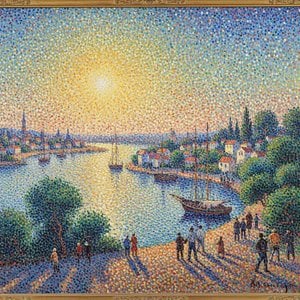
A vibrant Neo-Impressionist seascape featuring a sunlit tree with orange leaves by Theo van Rysselberghe captures the serene essence of 1910 nature, inviting you to bring this tranquil masterpiece into your collection.

Théo van Rysselberghe – pionier Neo-Impressionizmu, znany z żywych obrazów i portretów. Jego twórczość łączyła światło, kolor i symbolizm, wprowadzając innowacje w Belgii.

Ręcznie malowana reprodukcja olejowa

Ręcznie malowany obraz olejny na płótnie, wykonany na zamówienie przez naszych artystów w wybranym przez Ciebie wymiarze i oprawie. ( Przełącz na wersję drukowaną Przełącz na wersję cyfrową)

P118B $10
P118H $10
P118W $10
P438Z $10
P508JH $12
P508YH $12
P805H $10
P805Z $10
P919BZ $10
P919G $10
P919XJ $10
P959ZH $10
P968JZ $12
W106C $8
W218G $10
W218JH $8
W218Y $10
W307PJ $10
W316G $10
W316PJ $8
W316Y $10
W398PJ $8
W4111J $10
W500HY $15
W500JH $15
W692G $12
W849H $8
W940BG $15
W953PJ $8

Standardowy
na zamówienie
CM
INCH

Wybierz spośród naszych standardowych rozmiarów, które zachowują oryginalne proporcje dzieła sztuki.

szerokość
wysokość

Możesz wprowadzić własne wymiary, aby dopasować obraz do konkretnej ramy lub przestrzeni. Jeśli wybrany rozmiar nie będzie odpowiadał proporcjom oryginału, przytniecie dzieło sztuki lub rozszerzymy je o dodatkowe elementy, ręcznie domalowane przez artystę. Przed rozpoczęciem produkcji wyślemy projekt cyfrowy do Twojej akceptacji.
Należy pamiętać, że podgląd na ekranie nie odzwierciedla rzeczywistego przycinania ani rozszerzania obrazu. Tylko projekt dokładnie pokaże ostateczną kompozycję.
Choć oferujemy możliwość zamówienia niestandardowych rozmiarów, zalecamy wybór wymiaru z gotowej listy, aby zachować oryginalne proporcje dzieła.

Przykłady możliwych zmian: Zamień twarz na zdjęcie klienta; Dodaj zwierzę domowe (np. zamień kota na psa); Ukryj wiadomość w tle; Zmień krajobraz lub elementy tła.
Po złożeniu zamówienia zespół WahooArt.com skontaktuje się z klientem drogą mailową w celu uzyskania instrukcji i prześle wizualizację projektu

Dostawa na całym świecie () w ciągu 3–4 tygodni zamiast standardowych 5 tygodni. (25 Wrzesień). Bez kompromisów w kwestii jakości.

why_choose_icon
Bezpłatna ekspresowa wysyłka na cały świat
why_choose_icon
Wysokiej jakości płótno lniane
why_choose_icon
Pełne ubezpieczenie transportowe
why_choose_icon
Gwarancja zwrotu należności celnych i podatków importowych
why_choose_icon
Gwarancja idealnego odwzorowania barw
why_choose_icon
100-dniowy okres na zwrot dzieła w przypadku wykrycia wad produkcyjnych
why_choose_icon
Gwarancja 100% zwrotu pieniędzy
why_choose_icon
Oferta przy zakupie wielu sztuk

Cena całkowita

$ 272

reproduction

Midi Landscape

Technika wykonania

Rozmiar reprodukcji

-

Suma do zapłaty

$ 272

Kluczowe informacje

  • Notable elements or techniques: Vibrant orange leaves, light and color
  • Title: Midi Landscape
  • Year: 1910
  • Subject or theme: Ocean landscape with trees and figures
  • Dimensions: 24 x 19 cm

A Symphony of Light and Serenity

In the delicate dance between land and sea, Theo van Rysselberghe’s Midi Landscape emerges as a breathtaking testament to the tranquility of the natural world. Painted in 1910, this exquisite work invites the viewer into a coastal sanctuary where the vibrant energy of life meets the profound stillness of the ocean. The composition is anchored by a striking tree in the foreground, its leaves ablaze with warm orange hues that provide a brilliant, fiery contrast to the cool, expansive blues of the Mediterranean horizon. This interplay of complementary colors does more than just please the eye; it creates a rhythmic pulse within the frame, capturing a fleeting moment of seasonal transition where the warmth of autumn meets the eternal calm of the sea.

As your gaze wanders through the canvas, the artist reveals a world rich with subtle narratives. Beyond the immediate brilliance of the autumnal foliage, the scene unfolds into a soft, atmospheric distance where two figures linger near the water's edge, their presence adding a touch of human intimacy to the vast landscape. A solitary boat drifts upon the gentle swells, and a lone bird glides through the sky above the tree, weaving together elements of movement and repose. These small, poetic details transform the painting from a mere depiction of scenery into a profound meditation on existence, suggesting a harmonious coexistence between humanity and the untamed beauty of the earth.

The Mastery of Neo-Impressionist Technique

Van Rysselberghe, a master who bridged the gap between traditional realism and the revolutionary spirit of Neo-Impressionism, utilizes his technical prowess to manipulate light itself. In Midi Landscape, one can observe the artist's sophisticated command over color theory. Rather than relying on heavy, opaque strokes, the work breathes through a delicate application of pigment that mimics the shimmering quality of sunlight reflecting off moving water. The technique allows the blue tones of the ocean to feel deep and immersive, while the lush greenery and orange accents appear to glow from within, as if caught in the golden hour of a late afternoon.

For the discerning collector or interior designer, this piece offers an unparalleled opportunity to introduce a sense of sophisticated calm into a living space. The painting’s ability to balance vibrant, energetic colors with a soothing, atmospheric depth makes it a versatile masterpiece for high-end decor. Whether placed in a sun-drenched gallery or a quiet study, a high-quality reproduction of this work serves as a window into a more peaceful era. It is not merely an object of decoration, but an emotional anchor—a piece that commands attention through its brilliance while simultaneously inviting the soul to rest in its serene, sun-soaked embrace.


Biografia artysty

A Pioneer of Light: The Life and Art of Théo van Rysselberghe

Théophile “Théo” van Rysselberghe, born in Ghent, Belgium, in 1862, emerged as a pivotal figure bridging the gap between Impressionism and Neo-Impressionism. His journey wasn’t one of immediate stylistic conviction but rather an evolving exploration sparked by travel, intellectual exchange, and a relentless pursuit of capturing light's essence. Coming from a comfortably bourgeois French-speaking family, van Rysselberghe received his initial artistic training at the Academy of Ghent under Theo Canneel, followed by studies at the prestigious Académie Royale des Beaux-Arts in Brussels. These formative years instilled in him a foundation rooted in traditional realism, evident in early works like *Self-Portrait with Pipe* (1880), characterized by somber tones and meticulous detail—a reflection of the prevailing Belgian artistic climate. However, even within these early pieces, hints of a burgeoning sensitivity to light and color began to surface, foreshadowing his future trajectory.

Moroccan Impressions and the Birth of Les XX

A transformative chapter unfolded with van Rysselberghe’s voyages to Morocco between 1882 and 1888. These extended sojourns immersed him in a world of vibrant colors, intense sunlight, and exotic landscapes—a stark contrast to the subdued tones of his earlier work. Paintings like *Arabian Street Cobbler* (1882), *Arabian Boy* (1882), and *Resting Guard* (1883) demonstrate a growing fascination with capturing the effects of light on form, moving away from strict realism towards a more impressionistic sensibility. The Moroccan experience wasn’t merely about visual observation; it was an immersion into a different culture that broadened his artistic horizons and instilled a lifelong love for travel. He documented these experiences in numerous paintings, seeking to capture not just the appearance but also the atmosphere of the North African world. Upon returning to Brussels, van Rysselberghe became a driving force in the Belgian art scene, co-founding the influential group *Les XX* (The Twenty) in 1883 alongside Octave Maus and Émile Verhaeren. This collective served as a platform for showcasing avant-garde art, introducing new movements like Impressionism and Symbolism to a Belgian audience largely unfamiliar with such innovations. *Arabian Phantasia* (1884), a large-scale exotic painting depicting a Moroccan scene, became his most celebrated work from this period, demonstrating his mastery of light and composition. The group’s aim was to foster artistic experimentation and challenge established norms within the Belgian art world.

Embracing Neo-Impressionism: A Scientific Approach to Color

The true turning point in van Rysselberghe’s artistic development arrived with his encounter with Georges Seurat's *A Sunday on La Grande Jatte* at the eighth Impressionist exhibition in Paris in 1886. Initially skeptical of Seurat’s meticulous “pointillist” technique—the systematic application of tiny dots of pure color—van Rysselberghe gradually came to appreciate its scientific basis and potential for achieving luminous effects. He began experimenting with divisionism, the Neo-Impressionist method of separating colors into their constituent parts and allowing the viewer’s eye to blend them optically. This wasn't simply a technical shift; it represented a fundamental change in his approach to painting—a move towards a more analytical and objective representation of light and color. He forged close friendships with other Neo-Impressionist painters like Paul Signac, traveling with him along the French Riviera and exchanging ideas about technique and theory. Van Rysselberghe distinguished himself within the movement by applying pointillism not only to landscapes but also to portraiture, creating strikingly vibrant and psychologically insightful likenesses of his family and friends—works such as *Madame Charles Maus* (1890) are prime examples. The meticulous layering of tiny dots created a shimmering effect, capturing the nuances of light and atmosphere with remarkable precision.

A Lasting Legacy: Beyond Pointillism

While deeply committed to Neo-Impressionism for a significant period, van Rysselberghe eventually moved beyond its strict tenets in the late 1890s. He sought greater freedom in his brushwork and compositions, exploring new ways to express emotion and atmosphere. He continued to be a prolific artist, working in various media including furniture design, book illustration, and decorative arts. His influence extended far beyond Belgium, impacting artists like Piet Mondrian and Jan Toorop who were inspired by his innovative use of color and light. He also experimented with Symbolist themes, incorporating elements of mysticism and dream imagery into his work. His dedication to exploring the interplay of light, color, and form cemented his place as a true pioneer of modern painting. Van Rysselberghe’s works are now held in prominent museum collections worldwide, including the Musée du Luxembourg in Paris and the Museum voor Schone Kunsten in Ghent, ensuring that his contribution to the history of art continues to be celebrated and appreciated by generations to come. His legacy lies not only in his beautiful paintings but also in his role as a catalyst for artistic change—a champion of modernism who helped introduce new ideas and techniques to the Belgian art world.

Key Works

* *Self-Portrait with Pipe* (1880) * *Child in an Open Spot of the Forest* (1880) * *Arabian Street Cobbler* (1882) * *Arabian Boy* (1882) * *Resting Guard* (1883) * *La Pointe Perkiridec Near Roscoff in Brittany* (1889) * *Madame Charles Maus* (1890) * *Family in the Orchard* (1890)
Teofil van Rysselberghe

Teofil van Rysselberghe

1862 - 1926 , Belgia

Najważniejsze informacje

  • Artistic Movement Or Style: Neo-Impressionizm
  • Artists Or Movements Influenced By This Artist:
    • Piet Mondrian
    • Jan Toorop
  • Artists Who Influenced This Artist:
    • Jean-François Portaels
    • Georges Seurat
    • Paul Signac
  • Date Of Birth: 23 listopada 1862
  • Date Of Death: 13 grudnia 1926
  • Full Name: Théo van Rysselberghe
  • Nationality: Belgijski
  • Notable Artworks:
    • Arabian Phantasia
    • Sevillan Woman
  • Place Of Birth: Ghent, Belgia
Odkryj dzieła sztuki uporządkowane według tematów, stylów i cech charakterystycznych.