


Wydruki giclée lub płótna o jakości muzealnej, szybka realizacja i szeroki wybór opcji wykończenia. ( Zamów ręcznie malowaną reprodukcję Przejdź do wersji cyfrowej)
Wybierz spośród naszych standardowych rozmiarów, które zachowują oryginalne proporcje dzieła sztuki.

Wpisz wymaganą szerokość i wysokość, aby dopasować grafikę do ramy lub ściany. Wydruk można jedynie przyciąć, nigdy nie powiększając go poza oryginalny obraz, dlatego format o innych proporcjach spowoduje utratę części kompozycji. Przed rozpoczęciem druku prześlemy Ci cyfrowy podgląd do zatwierdzenia. Obraz wyświetlany na tej stronie nie pokazuje rzeczywistego przycięcia — jedynie podgląd oddaje ten efekt.
Dostawa na cały świat () w ciągu 2 tygodni zamiast standardowych 4/5 tygodni. (19 Listopad)
The Good Samaritan
Wymiary reprodukcji

Born in Nancy, France, Aimé Morot was a painter and sculptor who began his artistic journey at the age of twelve. His early studies in drawing, painting, and gravure printing took place at the l'Ecole Municipal de Dessin et de Peinture de Nancy. He later attended the workshop of Alexandre Cabanel at the École Nationale Supérieure des Beaux-Arts in Paris. Despite leaving the formal academy after receiving two corrections from Cabanel, Morot pursued independent study in the Jardin des Plantes, where he focused on observing and portraying animals. In 1873, he won the Grand Prix de Rome with his work Babylonian Captivity (Super Flumina Babylonis), which is held in the collection of the École des Beaux-Arts in Paris. This achievement allowed him to reside at the Villa Medici in Rome.
Morot’s diverse body of work includes:
In addition to his studio work, Morot was a professor at the École Nationale Supérieure des Beaux-Arts and a member of the Institute. He was awarded the title of Chevalier in the Legion of Honour in 1883, later becoming an Officier in 1901, and eventually a Commandeur in the Légion d'Honneur in 1912.

1850 - 1913 , France
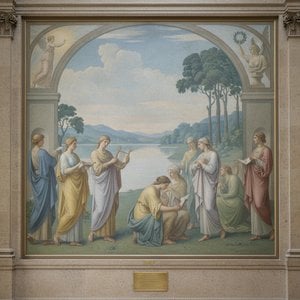
Explore the life & work of Pierre Puvis de Chavannes, a pivotal Symbolist painter renowned for his monumental murals. Discover his aesthetic principles, key artworks like 'Hope,' and lasting influence on modern art. A deep dive into 19th-century French painting.
 Podgląd w skali 1:1

 Wyślij jako kartkę
 Udostępnij
 Szczegóły dzieła
 Przewodnik


 Pobierz obraz
 Podobne obiekty
 RTG
 Pokaz slajdów
 Pytania i odpowiedzi

 Statystyki


 Rozwiń treść






































 Opcja ze szkłem jest dostępna wyłącznie w rozmiarach poniżej 110 cm


