Zobacz w skali 1:1 Zobacz w AR Przełącz na wersję drukowaną Przełącz na wersję cyfrową Wyślij
Szczegóły Przewodnik Dodaj do ulubionych Pobierz plik obrazu Podobne obiekty RTG Pokaz slajdów Statystyki

Sala Niebieska

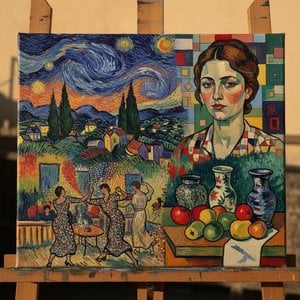
Sala Niebieska - Arcydzieło Suzanne Valadon (1923). Postimpresjonizm, ekspresja kolorystyczna i wyrazisty obraz kobiety w nowoczesnym wnętrzu. Odkryj piękno sztuki francuskiej!

"meta_description": "Suzanne Valadon – pionierka malarstwa postimpresjonistycznego, znana z mocnych portretów kobiet i nudem, która wyłamała się z konwencji i stworzyła unikalną, feministyczną perspektywę w sztuce."

Ręcznie malowana reprodukcja olejowa

Ręcznie malowany obraz olejny na płótnie, wykonany na zamówienie przez naszych artystów w wybranym przez Ciebie wymiarze i oprawie. ( Przełącz na wersję drukowaną Przełącz na wersję cyfrową)

Corner sample of the P118B picture frame: polistyren formowany, 5 cm wide and 3 cm thick
P118B 10
Corner sample of the P118H picture frame: polistyren formowany, 5 cm wide and 3 cm thick
P118H 10
Corner sample of the P118W picture frame: polistyren formowany, 5 cm wide and 3 cm thick
P118W 10
Corner sample of the P438Z picture frame: polistyren formowany, 5.5 cm wide and 3.5 cm thick
P438Z 10
Corner sample of the P508JH picture frame: polistyren formowany, 7 cm wide and 3.5 cm thick
P508JH 12
Corner sample of the P508YH picture frame: polistyren formowany, 7 cm wide and 3.5 cm thick
P508YH 12
Corner sample of the P805H picture frame: polistyren formowany, 5 cm wide and 3.5 cm thick
P805H 10
Corner sample of the P805Z picture frame: polistyren formowany, 5 cm wide and 3.5 cm thick
P805Z 10
Corner sample of the P919BZ picture frame: polistyren formowany, 7 cm wide and 3.5 cm thick
P919BZ 10
Corner sample of the P919G picture frame: polistyren formowany, 7 cm wide and 3.5 cm thick
P919G 10
Corner sample of the P919XJ picture frame: polistyren formowany, 7 cm wide and 3.5 cm thick
P919XJ 10
Corner sample of the P959ZH picture frame: polistyren formowany, 5 cm wide and 3 cm thick
P959ZH 10
Corner sample of the P968JZ picture frame: polistyren formowany, 6 cm wide and 4 cm thick
P968JZ 12
Corner sample of the W106C picture frame: lite drewno, 5 cm wide and 3 cm thick
W106C 8
Corner sample of the W218G picture frame: lite drewno, 5 cm wide and 3 cm thick
W218G 10
Corner sample of the W218JH picture frame: lite drewno, 5 cm wide and 3 cm thick
W218JH 8
Corner sample of the W218Y picture frame: lite drewno, 5 cm wide and 3 cm thick
W218Y 10
Corner sample of the W307PJ picture frame: lite drewno, 6 cm wide and 3 cm thick
W307PJ 10
Corner sample of the W316G picture frame: lite drewno, 6 cm wide and 3 cm thick
W316G 10
Corner sample of the W316PJ picture frame: lite drewno, 6 cm wide and 3 cm thick
W316PJ 8
Corner sample of the W316Y picture frame: lite drewno, 6 cm wide and 3 cm thick
W316Y 10
Corner sample of the W398PJ picture frame: lite drewno, 5 cm wide and 3 cm thick
W398PJ 8
Corner sample of the W4111J picture frame: lite drewno, 6.5 cm wide and 3.5 cm thick
W4111J 10
Corner sample of the W500HY picture frame: lite drewno, 7 cm wide and 5 cm thick
W500HY 15
Corner sample of the W500JH picture frame: lite drewno, 7 cm wide and 5 cm thick
W500JH 15
Corner sample of the W692G picture frame: lite drewno, 8 cm wide and 4 cm thick
W692G 12
Corner sample of the W849H picture frame: lite drewno, 5 cm wide and 3 cm thick
W849H 8
Corner sample of the W940BG picture frame: lite drewno, 7.5 cm wide and 4.5 cm thick
W940BG 15
Corner sample of the W953PJ picture frame: lite drewno, 6 cm wide and 3.5 cm thick
W953PJ 8

Standardowy
na zamówienie
CM
INCH

Wybierz spośród naszych standardowych rozmiarów, które zachowują oryginalne proporcje dzieła sztuki.

szerokość
wysokość

Wpisz wymaganą szerokość i wysokość, aby obraz pasował do Twojej ramy lub ściany. Ponieważ jest to dzieło malowane ręcznie, w przypadku rozmiaru o innym proporcji artysta może domalować nieco więcej wokół obrazu lub przyciąć fragmenty — wybór należy do Ciebie. Przed rozpoczęciem pracy prześlemy Ci cyfrową wizualizację do zatwierdzenia. Obraz widoczny na tej stronie nie przedstawia rzeczywistego efektu — jedynie wizualizacja oddaje realny rezultat.

Przykłady możliwych zmian: Zamień twarz na zdjęcie klienta; Dodaj zwierzę domowe (np. zamień kota na psa); Ukryj wiadomość w tle; Zmień krajobraz lub elementy tła.
Po złożeniu zamówienia zespół WahooArt.com skontaktuje się z klientem drogą mailową w celu uzyskania instrukcji i prześle wizualizację projektu

Dostawa na całym świecie () w ciągu 3–4 tygodni zamiast standardowych 5 tygodni. (21 Październik). Bez kompromisów w kwestii jakości.

Bezpłatna ekspresowa wysyłka na cały świat
Wysokiej jakości płótno lniane
Pełne ubezpieczenie transportowe
Gwarancja zwrotu należności celnych i podatków importowych
Gwarancja idealnego odwzorowania barw
100-dniowy okres na zwrot dzieła w przypadku wykrycia wad produkcyjnych
Gwarancja 100% zwrotu pieniędzy
Oferta przy zakupie wielu sztuk

Cena całkowita

zł 1033

Sala Niebieska

Technika wykonania

Rozmiar reprodukcji

-

Suma do zapłaty

zł 1033

Kluczowe informacje

  • Title: La Chambre bleue
  • Subject or theme: Nuda femenina
  • Movement: Postimpresjonizm
  • Artistic style: Fauwizm
  • Notable elements or techniques: Wyraziste kolory, impasto
  • Location: Musée National d’Art Moderne, Paryż

A Modern Muse: Intimacy and Rebellion in 1923

Suzanne Valadon’s 1923 masterpiece presents a strikingly modern vision of the female nude, departing from traditional academic portrayals and offering a glimpse into the evolving role of women in post-World War I society. This boldly colored interior scene isn't simply a depiction of a reclining figure; it’s a statement about independence, introspection, and the complexities of contemporary life.

Post-Impressionist Innovation & Technique

Executed with Valadon’s signature expressive brushwork, this painting exemplifies Post-Impressionism’s emphasis on subjective vision and emotional resonance. Unlike the smooth finishes favored by earlier artists, Valadon embraces visible strokes and a textured surface, lending a tactile quality to the work. The unconventional color palette – dominated by cool blues contrasted with warm oranges and reds – creates a dynamic tension that draws the viewer in. She masterfully employs broken color, allowing hues to mix optically rather than on the palette, resulting in a vibrant and luminous effect.

A Subversive Gaze: Challenging Artistic Conventions

Valadon, herself a former model for artists like Renoir and Toulouse-Lautrec, subverts the traditional male gaze. Her subject is not an idealized goddess or mythological figure, but a real woman – clothed in pajamas, casually smoking a cigarette, and absorbed in a book. This deliberate choice challenges established artistic conventions and presents a more authentic, relatable portrayal of femininity. The pose itself echoes classical reclining nudes, yet it’s imbued with a sense of world-weariness and quiet contemplation rather than overt sensuality.

Symbolism & Emotional Resonance

The painting is rich in subtle symbolism. The blue room evokes feelings of melancholy and introspection, while the cigarette and book suggest leisure, intellectual curiosity, or perhaps even boredom and dissatisfaction. These elements combine to create a complex emotional landscape – one that resonates with the anxieties and freedoms experienced by women during this period of social change. The slightly off-center composition adds to the sense of unease and prevents the image from feeling static, mirroring the internal complexities of the subject.

Historical Context & Valadon’s Legacy

Suzanne Valadon was a pioneering figure in early 20th-century art, breaking barriers as the first woman admitted to the Société Nationale des Beaux-Arts. Her work reflects her own unconventional life and experiences, offering a unique perspective on Parisian society. “The Blue Room” stands as a testament to her artistic vision and continues to inspire artists and viewers alike with its honesty, boldness, and enduring relevance. Owning a reproduction of this iconic artwork is not merely acquiring a beautiful image; it’s embracing a piece of art history that celebrates female empowerment and artistic innovation.

  • Artist: Suzanne Valadon
  • Birth Year: 1865
  • Death Year: 1938
  • Birth City: Bénesse-sur-Gartempe
  • Birth Country: France

Valadon spent nearly 40 years of her life as an artist. The subjects of her drawings and paintings, such as Joy of Life (1911), included mostly female nudes, portraits of women, still lifes, and landscapes. She never attended the academy and was never confined within a set tradition or style of art.

  • Notable Achievements: Valadon became the first woman painter admitted to exhibit at the Salon de la Société Nationale des Beaux-Arts in 1894
  • Influenced By: Henri Matisse and Early Fauvism

Valadon’s experience as a model added depth to her own images of nude women, which tended to be less idealized than the representations of women by the male post-impressionists.

This painting is housed in Musée National d'Art Moderne, Centre Georges Pompidou.

Pytania i odpowiedzi

W jakim rozmiarze zaleca się wydruk dzieła "Sala Niebieska"?

Zalecany rozmiar wydruku dla „Sala Niebieska” autorstwa Suzanne Valadon to Duży format.

Jak jasny jest Sala Niebieska w ogólnym ujęciu?

Postrzegana jasność dzieła „Sala Niebieska” autorstwa Suzanne Valadon wynosi jasny. Można ją dopasować do oświetlenia w docelowym pomieszczeniu.

Gdzie mogę znaleźć dzieła sztuki podobne do „Sala Niebieska” autorstwa Suzanne Valadon?

Dzieła podobne do „Sala Niebieska” autorstwa Suzanne Valadon zostały zgromadzone na stronie Podobne dzieła danego dzieła.


Biografia artysty

A Life Forged in Montmartre: The Trailblazing Art of Suzanne Valadon

Suzanne Valadon, born Marie-Clémentine Valadon in 1865 amidst the rural landscapes of Bénesse-sur-Gartempe, France, carved a singular path through the late 19th and early 20th century art world. Her story is one of remarkable resilience, defying societal constraints and artistic conventions to emerge as a pioneering Post-Impressionist painter. Unlike many of her contemporaries who benefited from formal training and privileged backgrounds, Valadon’s education was born of observation, necessity, and an unwavering spirit. Growing up in poverty with her mother in Montmartre—a district then blossoming into the bohemian heart of Paris—she navigated a life of hardship, taking on various jobs to survive: waitress, factory worker, even a brief stint as a circus acrobat after a fall ended that career path. This early exposure to the vibrant, often gritty realities of Parisian life would profoundly shape her artistic vision. It was within this milieu that she first entered the art world, not as a creator, but as a muse.

From Model to Master: A Unique Artistic Development

For nearly a decade, Valadon worked as an artist’s model, posing for prominent figures like Pierre-Auguste Renoir, Henri de Toulouse-Lautrec, and Edgar Degas. These sessions weren't merely financial transactions; they were immersive lessons in technique, composition, and the artistic process itself. She absorbed knowledge by watching masters at work, studying their methods, and engaging in conversations about art. Toulouse-Lautrec, recognizing her innate talent and striking presence, encouraged her to pursue drawing, and it was Degas who provided more formal guidance, solidifying her foundational skills. This period of modeling proved pivotal; Valadon wasn’t simply a passive subject but an active observer, dissecting the artistic gaze and internalizing its principles. She began to draw prolifically, initially focusing on scenes from her everyday life—her mother, her son Maurice Utrillo (whose paternity remains uncertain, though Miguel Utrillo later acknowledged him), and intimate domestic settings. Her style quickly developed a distinctive character: bold lines, expressive brushwork, and an unflinching honesty in portraying the human form. She rejected the delicate, idealized depictions of women prevalent at the time, instead offering raw, unvarnished portrayals that captured their strength, vulnerability, and lived experiences. Her early drawings often featured figures in motion, capturing a sense of dynamism and immediacy rarely seen in academic art.

Challenging Conventions and Embracing Boldness

Valadon’s artistic style is immediately recognizable for its directness and emotional intensity. Her paintings are characterized by a masterful use of line and color, creating compositions that are both visually striking and psychologically compelling. She became particularly renowned for her female nudes, which were revolutionary in their time. Unlike the mythological or allegorical nudes favored by many male artists, Valadon’s figures were often depicted with a sense of realism and psychological depth rarely seen before. She presented women not as objects of desire but as complex individuals with their own thoughts, feelings, and desires. Works like Nu à la draperie blanche (Nude with White Drapery) and Nu debout (Standing Nude) exemplify this approach, showcasing the female body with a frankness that challenged prevailing societal norms. Her subject matter extended beyond nudes to include portraits, still lifes, and landscapes, all imbued with her unique perspective and technical skill. She wasn’t afraid to tackle difficult themes—aging, sexuality, loneliness—with an unflinching gaze. Her use of color was often bold and expressive, reflecting the emotional intensity of her subjects. She frequently employed a palette of rich browns, reds, and blues, creating a sense of drama and depth in her paintings.

Influences and Artistic Connections

Valadon’s artistic development was profoundly shaped by her diverse experiences and encounters. Her early years as an artist's model exposed her to the work of some of the most influential artists of the era, including Renoir, Toulouse-Lautrec, Degas, and Puvis de Chavannes. She absorbed their techniques, styles, and approaches to subject matter, incorporating these influences into her own evolving artistic vision. Her relationship with Edgar Degas was particularly significant, as he recognized her talent and provided her with valuable guidance in developing her drawing skills. Furthermore, she found inspiration in the bohemian atmosphere of Montmartre, where she encountered a vibrant community of artists, writers, and performers. She also had a close friendship with Erik Satie, the renowned composer, who appreciated her unconventional spirit and artistic sensibility. The influence of Symbolism is evident in Valadon’s work, particularly in her use of color and symbolism to convey emotional states and ideas.

Legacy and Lasting Impact

Suzanne Valadon's achievements extended beyond her artistic innovations. In 1894, she became the first woman painter admitted to the prestigious Société Nationale des Beaux-Arts, a significant milestone in breaking down barriers for female artists. Her work paved the way for future generations of women to pursue their creative ambitions and challenge the male-dominated art world. Art historians like Patricia Mathews have recognized Valadon’s crucial contribution to the Post-Impressionist movement, highlighting her unique perspective and stylistic originality. She is now considered a precursor to feminist art movements, with her honest and empowering depictions of women resonating deeply with contemporary audiences. Her legacy continues to inspire artists today, not only for her technical skill but also for her courage in defying convention and embracing her own artistic vision. Valadon’s story serves as a powerful reminder that true artistry transcends social boundaries and celebrates the diversity of human experience. She died in 1938, leaving behind a body of work that continues to captivate and challenge viewers, solidifying her place as a truly groundbreaking figure in art history.

Suzanne Valadon

Suzanne Valadon

1865 - 1938 , Francja

Najważniejsze informacje

  • Artistic Movement Or Style: Postimpresjonizm
  • Artists Or Movements Influenced By This Artist: ['Feminist Art']
  • Artists Who Influenced This Artist:
    • Toulouse-Lautrec
    • Degas
  • Date Of Birth: 1865
  • Date Of Death: 1938
  • Full Name: Suzanne Valadon
  • Nationality: Francuska
  • Notable Artworks:
    • Adam i Ewa
    • Dzbanek z kwiatami
    • Nus
  • Place Of Birth: Bénesse-sur-Gartempe, Francja
Odkryj dzieła sztuki uporządkowane według tematów, stylów i cech charakterystycznych.