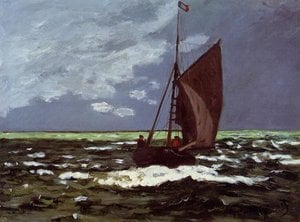
Seascape (1627) autorstwa Claes Claesz. Wou, ręcznie malowana reprodukcja olejowa wykonana przez mistrza
Podgląd w skali 1:1 Podgląd AR Przełącz na wydania drukowane Przejdź do wersji cyfrowej Wyślij jako kartkę
Szczegóły dzieła Przewodnik Dodaj do ulubionych Pobierz obraz Podobne obiekty RTG Pokaz slajdów Pytania i odpowiedzi Pobierz prezentację Statystyki

Seascape Ręcznie malowana reprodukcja obrazu olejnego

Wymiary
38.0 x 66.0cm

A dramatic Baroque seascape by Nicolas Poussin captures a turbulent ocean. Explore this powerful masterpiece at WahooArt today.

A Dutch Baroque painter specializing in stormy seascapes. Discover the powerful maritime works of Claes Claesz. Wou today.

Ręcznie malowana reprodukcja olejowa

Ręcznie malowany obraz olejny na płótnie, wykonany na zamówienie przez naszych artystów w wybranym przez Ciebie wymiarze i oprawie. ( Przełącz na wydania drukowane Przejdź do wersji cyfrowej)

Corner sample of the P118B picture frame: polistyren formowany, 5 cm wide and 3 cm thick
P118B zł10
Corner sample of the P118H picture frame: polistyren formowany, 5 cm wide and 3 cm thick
P118H zł10
Corner sample of the P118W picture frame: polistyren formowany, 5 cm wide and 3 cm thick
P118W zł10
Corner sample of the P438Z picture frame: polistyren formowany, 5.5 cm wide and 3.5 cm thick
P438Z zł10
Corner sample of the P508JH picture frame: polistyren formowany, 7 cm wide and 3.5 cm thick
P508JH zł12
Corner sample of the P508YH picture frame: polistyren formowany, 7 cm wide and 3.5 cm thick
P508YH zł12
Corner sample of the P805H picture frame: polistyren formowany, 5 cm wide and 3.5 cm thick
P805H zł10
Corner sample of the P805Z picture frame: polistyren formowany, 5 cm wide and 3.5 cm thick
P805Z zł10
Corner sample of the P919BZ picture frame: polistyren formowany, 7 cm wide and 3.5 cm thick
P919BZ zł10
Corner sample of the P919G picture frame: polistyren formowany, 7 cm wide and 3.5 cm thick
P919G zł10
Corner sample of the P919XJ picture frame: polistyren formowany, 7 cm wide and 3.5 cm thick
P919XJ zł10
Corner sample of the P959ZH picture frame: polistyren formowany, 5 cm wide and 3 cm thick
P959ZH zł10
Corner sample of the P968JZ picture frame: polistyren formowany, 6 cm wide and 4 cm thick
P968JZ zł12
Corner sample of the W106C picture frame: lite drewno, 5 cm wide and 3 cm thick
W106C zł8
Corner sample of the W218G picture frame: lite drewno, 5 cm wide and 3 cm thick
W218G zł10
Corner sample of the W218JH picture frame: lite drewno, 5 cm wide and 3 cm thick
W218JH zł8
Corner sample of the W218Y picture frame: lite drewno, 5 cm wide and 3 cm thick
W218Y zł10
Corner sample of the W307PJ picture frame: lite drewno, 6 cm wide and 3 cm thick
W307PJ zł10
Corner sample of the W316G picture frame: lite drewno, 6 cm wide and 3 cm thick
W316G zł10
Corner sample of the W316PJ picture frame: lite drewno, 6 cm wide and 3 cm thick
W316PJ zł8
Corner sample of the W316Y picture frame: lite drewno, 6 cm wide and 3 cm thick
W316Y zł10
Corner sample of the W398PJ picture frame: lite drewno, 5 cm wide and 3 cm thick
W398PJ zł8
Corner sample of the W4111J picture frame: lite drewno, 6.5 cm wide and 3.5 cm thick
W4111J zł10
Corner sample of the W500HY picture frame: lite drewno, 7 cm wide and 5 cm thick
W500HY zł15
Corner sample of the W500JH picture frame: lite drewno, 7 cm wide and 5 cm thick
W500JH zł15
Corner sample of the W692G picture frame: lite drewno, 8 cm wide and 4 cm thick
W692G zł12
Corner sample of the W849H picture frame: lite drewno, 5 cm wide and 3 cm thick
W849H zł8
Corner sample of the W940BG picture frame: lite drewno, 7.5 cm wide and 4.5 cm thick
W940BG zł15
Corner sample of the W953PJ picture frame: lite drewno, 6 cm wide and 3.5 cm thick
W953PJ zł8

Standardowy format
personalizowane
CM
INCH

Wybierz spośród naszych standardowych rozmiarów, które zachowują oryginalne proporcje dzieła sztuki.

szerokość
wysokość

Wpisz wymaganą szerokość i wysokość, aby obraz pasował do Twojej ramy lub ściany. Ponieważ jest to dzieło malowane ręcznie, w przypadku rozmiaru o innych proporcjach artysta może domalować nieco więcej wokół obrazu lub przyciąć jego fragmenty — wybór należy do Ciebie. Przed rozpoczęciem pracy prześlemy Ci cyfrową wizualizację do zatwierdzenia. Obraz widoczny na tej stronie nie przedstawia rzeczywistego efektu — jedynie wizualizacja oddaje realny rezultat.

Przykłady możliwych zmian: Zamień twarz na zdjęcie klienta; Dodaj zwierzę domowe (np. zamień kota na psa); Ukryj wiadomość w tle; Zmień krajobraz lub elementy tła.
Po złożeniu zamówienia zespół WahooArt.com skontaktuje się z klientem drogą mailową w celu uzyskania instrukcji i prześle wizualizację projektu

Dostawa na całym świecie () w ciągu 3–4 tygodni zamiast standardowych 5 tygodni. (13 Listopad). Bez kompromisów w kwestii jakości.

Bezpłatna ekspresowa wysyłka na cały świat
Wysokiej jakości płótno lniane
Pełne ubezpieczenie przesyłki
Gwarancja zwrotu należności celnych i podatków importowych
Gwarancja wiernego odwzorowania kolorów
100-dniowa polityka zwrotów (tylko w przypadku wad)
Gwarancja 100% zwrotu pieniędzy
Zniżka przy zakupie wielu sztuk

Suma całkowita

zł 1060

Seascape

Technika reprodukcji

Wymiary reprodukcji

-

Cena całkowita

zł 1060

Najważniejsze informacje

  • Artist: Nicolas Poussin
  • Year: 1627
  • Medium: Oil on canvas
  • Subject or theme: Stormy ocean and sailing vessels

Quiz o sztuce

Do każdego pytania dotyczy tylko jedna poprawna odpowiedź.

Pytanie 1:
What is the primary color palette used in the water of this seascape?
Pytanie 2:
Which technique is used to highlight the peaks of the waves and ship silhouettes?
Pytanie 3:
What type of vessels are depicted struggling against the massive swells?
Pytanie 4:
From what vantage point is the perspective of the painting set?
Pytanie 5:
What is the texture of the painting described as?

The Weight of the Swell

A heavy, dark indigo water rises in diagonal lines across the canvas. Large, cresting waves move with a raw, turbulent energy, pushing toward the viewer from a low vantage point within the sea itself. Deep charcoal grays and blacks dominate the depths of the ocean, while muted whites mark the churning foam at the peaks. The ships appear as dark silhouettes, their sharp, angular masts providing a structural contrast to the organic, undulating shapes of the waves. Light breaks through thick, overcast clouds in a chiaroscuro effect, catching only the highest points of the spray and the edges of the vessels.

The Storm's Breath

The year 1627 marks this moment of maritime peril. The painting utilizes oil on canvas to achieve atmospheric depth and realistic light effects characteristic of Baroque maritime painting. Through delicate brushwork, a sense of mist and salt spray settles over the scene. The composition captures multiple sailing vessels struggling against massive swells, creating a feeling of isolation and the immense power of nature. A pale ochre tint touches the heavy clouds above the dark water.

The sea remains restless.

Pytania i odpowiedzi

Co przedstawia „Seascape” – Claes Claesz. Wou?

„Seascape” – Claes Claesz. Wou przedstawia: waves, ships, sea, clouds, dark blue, white foam, ocean.

Czy dzieło "Seascape" znajduje się w domenie publicznej?

Jeśli chodzi o prawa autorskie, "Seascape" znajduje się w należy do domeny publicznej – autorskie prawa majątkowe wygasły.

Czy mogę przyjrzeć się bliżej dziełu "Seascape"?

"Seascape" można badać warstwa po warstwie na stronie Analiza rentgenowska, która oferuje interaktywny podgląd inspirowany stołem świetlnym konserwatora, prezentujący jedenaście optycznych odczytów obrazu.


Biografia artysty

The Salt and the Grey

In the narrow streets of Amsterdam, where the water meets the stone, Claes Claesz. Wou lived a life tied to the movement of the tides. Born in 1592, he was a man of the city, moving from the quiet outskirts of Buitenveldert to the bustling Prinsengracht near the Laurierstraat. He was more than a painter; he held the position of a waard in 't Groene Woudt, a role that suggests a life deeply embedded in the local community. There was a certain social weight to his presence, though perhaps not a financial one. At the time of his death in 1665, he left behind many debts owed by his fellow artists, a detail that hints at a man who lived closely among his peers, perhaps spending as much time in their company as he did at his easel.

His hands were accustomed to the brush, but his eyes were fixed on the horizon. He did not seek the bright, clear skies of the Mediterranean. Instead, he found his subject in the heavy, churning waters of the North Sea. His work focused on the struggle of ships against the elements, capturing the weight of a storm and the spray of salt against wood.

The Language of the Sea

Wou’s technique was one of restraint and atmosphere. He did not rely on a wide palette to tell his story. Instead, he worked within a restricted range, often using a monochrome grey to build the depth of a storm. He understood how light breaks through a heavy sky to hit the crest of a wave. His compositions were defined by a low horizon, a choice that forces the viewer to look up at the vastness of the sky and the chaos of the water, making the ships appear small and vulnerable against the immense scale of the ocean.

His approach to the sea was shaped by specific technical choices:

  • A preference for low horizons to emphasize the sky.
  • The use of a grey, monochrome palette to convey atmosphere.
  • A focus on stormy, turbulent sea conditions.
  • A stylistic connection to the works of Jan Porcellis.

Legacy and Lineage

The influence of Wou can be seen in the way he translated the movement of water onto a flat surface. He was not a solitary figure in the art world, but one who sat at the center of a circle of makers. It is believed that he may have been the teacher of Jan Abrahamsz. van Beerstraten, another painter who dedicated his life to the same maritime subjects. This connection suggests a continuity of style and a passing down of the specific way to capture a storm. He remained active in his craft from 1612 until his death in 1665, a long life spent observing the way the light changes over the water.

Claes Claesz. Wou

Claes Claesz. Wou

1592 - 1665 , Netherlands

Krótka nota

  • Artistic Movement Or Style: Baroque
  • Artists Or Movements Influenced By This Artist: ['Jan Abrahamsz. van Beerstraten']
  • Artists Who Influenced This Artist: ['Jan Porcellis']
  • Full Name: Claes Claesz. Wou
  • Nationality: Dutch
  • Place Of Birth: Amsterdam, Netherlands
  • Date Of Birth: 1592
  • Date Of Death: 1665