

Dzieło sztuki prezentowane na tej stronie podlega ochronie prawem autorskim, co oznacza, że nie mamy prawa do tworzenia ani sprzedaży jego identycznej reprodukcji. Ochrona ta jest egzekwowana na mocy umów międzynarodowych, takich jak Konwencja berneńska oraz przez przepisy prawa krajowego, w tym te określone w Prawo autorskie USA – Tytuł 17.
Metoda ta jest w pełni zgodna z przepisami prawa autorskiego, ponieważ nie polega na kopiowaniu ani powielaniu chronionego dzieła. Stanowi ona kreatywną reinterpretację – nowy obraz, który czerpie inspirację z oryginału, ale nie jest z nim tożsamy.
Wydruki giclée lub płótna o jakości muzealnej, szybka realizacja i szeroki wybór opcji wykończenia. ( Zamów ręcznie malowaną reprodukcję Przejdź do wersji cyfrowej)
Wybierz spośród naszych standardowych rozmiarów, które zachowują oryginalne proporcje dzieła sztuki.

Wpisz wymaganą szerokość i wysokość, aby dopasować grafikę do ramy lub ściany. Wydruk można jedynie przyciąć, nigdy nie powiększając go poza oryginalny obraz, dlatego format o innych proporcjach spowoduje utratę części kompozycji. Przed rozpoczęciem druku prześlemy Ci cyfrowy podgląd do zatwierdzenia. Obraz wyświetlany na tej stronie nie pokazuje rzeczywistego przycięcia — jedynie podgląd oddaje ten efekt.
Dostawa na cały świat () w ciągu 2 tygodni zamiast standardowych 4/5 tygodni. (10 Listopad)
Invisibile
Wymiary reprodukcji
In 1947, Salvatore Ferragamo introduced "Invisibile," a design that challenged the structural conventions of mid-century footwear. The work, also known as the Invisible Sandal, emerged from the Italian designer's pursuit of anatomical innovation and material experimentation. It features a distinctive under-cut wedge heel, a sculptural form known as the F-heel.
The construction of "Invisibile" by Salvatore Ferragamo relied on the use of transparent nylon monofilament. This material was threaded through the insole to create the upper, a technique that dematerialized the traditional silhouette of the shoe. This specific approach to construction earned the designer the Neiman Marcus Award for Distinguished Services in 1947.
The design relies on a striking interplay between solid structure and transparency. Sleek black leather straps provide a dark, grounded foundation, while silver straps introduce a sense of sophistication through subtle metallic contrast. This interplay is heightened by the use of a continuous length of nylon monofilament. This thread passes through holes in the insole to construct the upper, creating a visual effect that dematerializes the shoe's structure.
The silhouette is defined by a distinctive F-shaped wooden wedge heel. This under-cut sole, inspired by the stern of an ocean liner, provides a sculptural, architectural quality to the footwear. The dimensions of the piece are 14cm in height, 8.5cm in width, and 23.5cm in length.
The construction of the sandal relies on a specialized use of nylon monofilament. A continuous length of this transparent nylon fishing line passes through holes in the insole, creating the upper structure. This technique allows the material to appear nearly invisible, dematerializing the traditional silhouette of the shoe. The upper is further composed of leather, specifically utilizing suede and calfskin to provide substance to the design.
The foundation of the footwear is an under-cut wedge heel, often referred to as the F-heel. This component is carved from wood and takes an undulating shape inspired by the stern of an ocean liner. The integration of rigid wooden elements with the flexible, translucent nylon creates a structural contrast between the solid base and the lightweight upper.
Created during World War II and the immediate post-war period, the design reflects the anxieties of an era defined by scarcity and uncertainty. The use of metallic leather was a deliberate choice to dematerialize the remaining structure of the shoe, creating an illusion of lightness. This approach represented a bold departure from traditional leather construction, utilizing unconventional materials to navigate the limitations of the time.
The work marks a milestone in the history of fashion. By integrating transparent nylon monofilament with sculptural forms, the design challenged established manufacturing practices. It transformed footwear from a purely functional object into a study of structural innovation and material experimentation.
Examples of this design are held in several prominent international institutions. The Brooklyn Museum Costume Collection at The Metropolitan Museum of Art possesses a pair, which was a gift of Mrs. R. L. Gilpatric in 1960. This specific acquisition is part of the Brooklyn Museum Costume Collection.
Other versions of the sandal are preserved in specialized collections. The Victoria and Albert Museum in London holds a pair, while the Kyoto Costume Institute in Kyoto maintains a version of the footwear. These holdings reflect the global presence of Ferragamo's mid-century innovations.
Ferragamo’s output spans various sculptural and functional forms, ranging from early prototypes to later experimental designs. His early career included the creation of the Prototipo di décolleté, dating to about 1929. This period of experimentation continued into the late 1930s with the Prototipo di sandalo in 1938.
The artist's later repertoire includes the 1952 Sandal, which emphasizes high-level craftsmanship. Beyond traditional footwear, his creative scope extended to sculptural objects, such as the Pollicino, a shoe sculpture characterized by Pop Art influences.
„Invisibile” przedstawia leather sandals, silver straps, shoemaking, hollywood glamour, italian design, sculptural shoes, salvatore ferragamo, podczas gdy powracające motywy u Salvatore Ferragamo to italian craftsmanship, hollywood style, luxury footwear, sculptural design, ferragamo legacy. Porównanie tych dwóch elementów ukazuje, jak dzieło nawiązuje do typowej dla tego artysty tematyki.
„Invisibile” – Salvatore Ferragamo ma luminancję na poziomie Luminous. Luminancja określa, jak dużą ilość światła zdają się odbijać kolory.
Strona Podgląd w pomieszczeniu dzieła „Invisibile” pozwala na podgląd obrazu przed złożeniem zamówienia.


1898 - 1960 , Włochy
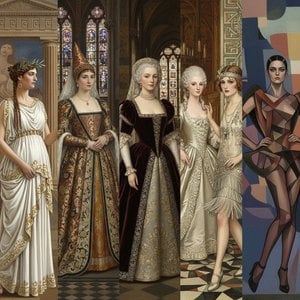
Explore the breathtaking intersection of fine art and high fashion. Discover how iconic masterpieces from Art Deco to Impressionism have shaped the world of luxury couture and timeless design in this curated visual journey.

Discover the exquisite world of fashion illustration art. From Art Deco elegance to bespoke oil reproductions, explore how timeless sartorial beauty transforms luxury interiors through masterfully crafted canvas works and curated historical masterpieces.

Explore the profound beauty of the Italian Renaissance. From Raphael's divine frescoes to Michelangelo's anatomical mastery, discover how this era of classical grandeur and humanistic ideals continues to inspire the world's most sophisticated art collectors and designers.

Discover the unparalleled elegance of Art Deco through the lens of Erté. Explore a masterclass in linear precision, theatrical costume design, and high-fashion illustration that continues to define modern luxury and sophisticated interior aesthetics.

Embark on a visual journey through the evolution of fashion photography. Discover how masters like Gianfranco Ferré blended geometry, surrealism, and texture to redefine high-fashion art for collectors and connoisseurs of luxury imagery.
 Wyślij jako kartkę
 Udostępnij
 Szczegóły dzieła
 Przewodnik

 Pobierz obraz
 Podobne obiekty
 Pokaz slajdów
 Pytania i odpowiedzi
 Statystyki


 Rozwiń treść






































 Opcja ze szkłem jest dostępna wyłącznie w rozmiarach poniżej 110 cm


