Rogier van der Weyden’s *Braque Family Triptych*: A Window into Fifteenth-Century Life
The *Braque Family Triptych*, a remarkable work by Rogier van der Weyden, isn't merely a painting; it’s a meticulously crafted portal to the bustling heart of a medieval town. Completed around 1450, this triptych offers an intimate glimpse into daily life – a vibrant tableau of commerce, community, and the quiet dignity of everyday existence. Van der Weyden, a master of the Early Netherlandish tradition, elevates a simple depiction of a riverside settlement to a profound meditation on humanity and its place within the world. The piece immediately captivates with its astonishing realism, yet it’s the subtle layering of symbolism and emotional depth that truly sets it apart, inviting viewers to contemplate not just what is depicted, but *how* it is depicted.
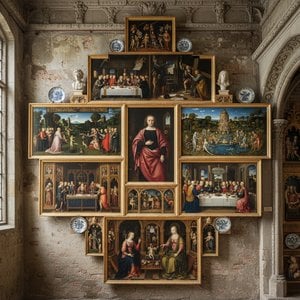
The triptych unfolds like a carefully orchestrated drama. When opened, it reveals three distinct panels, each brimming with detail and narrative. The left panel presents the figures of John the Baptist and Mary Magdalene, their expressions imbued with a poignant blend of solemnity and serenity. In the central panel, we encounter the Virgin Mary cradling the infant Jesus alongside Saint John the Evangelist – a scene radiating grace and devotion. Finally, the right panel showcases Mary Magdalene, her posture suggesting both penitence and acceptance. The arrangement isn’t arbitrary; it establishes a clear visual hierarchy, guiding the viewer's eye through a carefully constructed sequence of spiritual reflection.
Technical Brilliance: A Symphony of Color and Light
Van der Weyden’s genius lies not only in his ability to capture realistic detail but also in his masterful manipulation of color and light. He employed oil paint with unprecedented finesse, building up layers of translucent glazes – a technique known as *glazing* – to achieve an astonishingly rich palette and subtle gradations of tone. This layering creates an almost luminous quality, imbuing the scene with a sense of depth and atmosphere. Notice how the light seems to spill from an unseen source, illuminating faces and highlighting textures with remarkable precision. The artist’s meticulous attention to detail extends beyond mere representation; he sought to evoke *feeling* through his use of color and light, creating a visual experience that is both captivating and emotionally resonant.
The choice of materials themselves speaks volumes about Van der Weyden's skill. He worked on an oak panel, a material prized for its durability and ability to hold pigment exceptionally well. The surface is smooth and polished, reflecting the light with subtle sheen. Furthermore, the artist’s training as a goldsmith – a profession that demanded precision and an understanding of precious materials – undoubtedly informed his approach to painting. This background instilled in him a meticulousness and attention to detail that are evident throughout the *Braque Family Triptych*. The use of gold leaf accents, though not visible in this reproduction, would have further enhanced the work’s luxurious appearance.
Symbolism and Context: A Reflection of Burgundian Society
The *Braque Family Triptych* is more than just a portrait of a town; it's a microcosm of fifteenth-century society. The bustling marketplace, the river teeming with boats, the castle dominating the skyline – all these elements contribute to a vivid depiction of daily life in a thriving Burgundian community. The inclusion of specific details—the types of goods being traded, the clothing worn by the inhabitants—provides valuable insights into the economic and social conditions of the time. The presence of figures engaged in various activities—some strolling along the riverbank, others riding horses—creates a sense of lively movement and communal interaction.
The commission itself offers clues about the work’s significance. Created for Jehan Braque and his wife Catherine de Brabant, it reflects the growing wealth and patronage of the Burgundian court. This period witnessed a flourishing of artistic production, driven by the tastes of a sophisticated aristocracy. Van der Weyden's work embodies this spirit – it is both deeply religious and profoundly humanistic. The triptych, intended for private devotion, would have served as a focal point for prayer and contemplation, offering its owners a visual meditation on faith, family, and mortality. The careful arrangement of figures and the symbolic details within each panel all contribute to this layered meaning.
Bringing the Past to Life: A Reproduction’s Value
Owning a reproduction of Rogier van der Weyden's *Braque Family Triptych* allows you to bring a piece of fifteenth-century artistry into your home. The scene’s serene atmosphere and intricate details make it a captivating focal point for any room, offering a window into a bygone era and a testament to the enduring power of Rogier van der Weyden's artistic vision. This detailed reproduction captures not only the visual beauty of the original but also its profound emotional resonance, allowing you to experience the artistry and symbolism of this remarkable masterpiece in your own space.



 Podgląd w skali
 Przełącz na wydruki
 Wyślij jako kartkę
 Udostępnij
 Szczegóły dzieła

 Pobierz
 Podobne obiekty
 RTG
RTG Pokaz slajdów
 Statystyki


 Rozwiń treść






































 Opcja ze szkłem jest dostępna wyłącznie w rozmiarach poniżej 110 cm