x
Podgląd w skaliPodgląd w skali Podgląd ARPodgląd AR Zamów wydruk Zamów wydrukKup obraz wysokiej rozdzielczości Kup obraz wysokiej rozdzielczości Wyślij jako kartkęWyślij jako kartkę
Szczegóły dziełaSzczegóły dzieła Dodaj do ulubionych Dodaj do ulubionych PobierzPobierz Podobne obiektyPodobne obiekty RTGRTG Pokaz slajdówPokaz slajdów

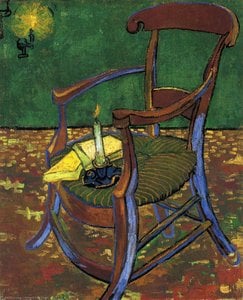
The Green Coat

A whimsical bird perched upon a chair draped in vibrant fabric defines this 1916 masterpiece by British Modernist Robert Polhill Bevan, offering a unique opportunity to bring this elegant oil painting into your collection.

Robert Polhill Bevan (1865–1925): Brytyjski malarz i twórca Grupy Camden Town. Pionier Fauvizmu, znany z żywych krajobrazów oraz obrazów przedstawiających życie codzienne. Jego dzieła wpłynęły na rozwój sztuki nowoczesnej w Wielkiej Brytanii i stanowią ważną część historii sztuki XX wieku.

Ręcznie malowana reprodukcja olejowa

Ręcznie malowany obraz olejny na płótnie, wykonany na zamówienie przez naszych artystów w wybranym przez Ciebie wymiarze i oprawie. (Zamów wydruk Zamów wydrukKup obraz wysokiej rozdzielczości Kup obraz wysokiej rozdzielczości)

P118B $10
P118H $10
P118W $10
P438Z $10
P508JH $12
P508YH $12
P805H $10
P805Z $10
P919BZ $10
P919G $10
P919XJ $10
P959ZH $10
P968JZ $12
W106C $8
W218G $10
W218JH $8
W218Y $10
W307PJ $10
W316G $10
W316PJ $8
W316Y $10
W398PJ $8
W4111J $10
W500HY $15
W500JH $15
W692G $12
W849H $8
W940BG $15
W953PJ $8

Standardowy rozmiar
na wymiar
CM
INCH

Wybierz spośród naszych standardowych rozmiarów, które zachowują oryginalne proporcje dzieła sztuki.

szerokość
wysokość

Możesz wprowadzić własne wymiary, aby dopasować obraz do konkretnej ramy lub przestrzeni. Jeśli wybrany rozmiar nie będzie odpowiadał proporcjom oryginału, przytniecie dzieło sztuki lub rozszerzymy je o dodatkowe elementy, ręcznie domalowane przez artystę. Przed rozpoczęciem produkcji wyślemy projekt cyfrowy do Twojej akceptacji.
Należy pamiętać, że podgląd na ekranie nie odzwierciedla rzeczywistego przycinania ani rozszerzania obrazu. Tylko projekt dokładnie pokaże ostateczną kompozycję.
Choć oferujemy możliwość zamówienia niestandardowych rozmiarów, zalecamy wybór wymiaru z gotowej listy, aby zachować oryginalne proporcje dzieła.

Przykłady możliwych zmian: Zamień twarz na zdjęcie klienta; Dodaj zwierzę domowe (np. zamień kota na psa); Ukryj wiadomość w tle; Zmień krajobraz lub elementy tła.
Po złożeniu zamówienia zespół WahooArt.com skontaktuje się z klientem drogą mailową w celu uzyskania instrukcji i prześle wizualizację projektu

Dostawa na całym świecie () w ciągu 3–4 tygodni zamiast standardowych 5 tygodni. (6 Wrzesień). Bez kompromisów w kwestii jakości.

why_choose_icon
Bezpłatna ekspresowa wysyłka na cały świat
why_choose_icon
Wysokiej jakości płótno lniane
why_choose_icon
Pełne ubezpieczenie przesyłki
why_choose_icon
Gwarancja zwrotu należności celnych i podatków importowych
why_choose_icon
Gwarancja wiernego odwzorowania kolorów
why_choose_icon
Polityka 60-dniowego zwrotu (tylko w przypadku wad)
why_choose_icon
Gwarancja 100% zwrotu kosztów
why_choose_icon
Zniżka przy zamówieniu wielu produktów

Suma całkowita

$ 272

reproduction

The Green Coat

Technika reprodukcji

Wymiary reprodukcji

-

Cena całkowita

$ 272

Szybki podgląd

  • Title: The Green Coat
  • Subject or theme: Still life with everyday objects
  • Artist: Robert Polhill Bevan
  • Medium: Oil on canvas
  • Year: 1916
  • Dimensions: 56 x 46 cm
  • Notable elements: Bird perched on chair, green coat
The painting The Green Coat by Robert Bevan is a fascinating piece of art that showcases the artist's unique style and technique. Created in 1916, this oil on canvas painting measures 56 x 46 cm and features a chair with a green coat draped over it, along with a bird perched on the back of the chair.

Artist Background

Robert Bevan was a British artist known for his contributions to the development of modern art in the UK. His work is characterized by its simplicity and elegance, often featuring everyday objects and scenes. Bevan's style is reminiscent of other notable artists, such as Kazimir Severinovich Malevich, who was a pioneer of the Cubism movement. You can find more information about Malevich's work on WahooArt.com.

The Painting's Significance

The Green Coat is a significant piece in Bevan's oeuvre, as it showcases his ability to create complex and thought-provoking works using simple compositions. The painting features a range of bold colors and intricate details, making it a standout piece in any collection. You can find similar paintings by Bevan on WahooArt.com, including his notable work Under the Hammer.
  • The painting is a great example of Bevan's use of color and composition to create a sense of depth and atmosphere.
  • The inclusion of the bird perched on the back of the chair adds a touch of whimsy and playfulness to the piece.
  • The Green Coat is a testament to Bevan's skill as an artist and his ability to create complex and thought-provoking works using simple compositions.
Handmade oil painting reproductions of The Green Coat are available on WahooArt.com, allowing art lovers to own a piece of history. The Museum School of Oriental And African Studies in London, United Kingdom, is also home to a range of notable artworks, including pieces by Sir George Clausen. You can find more information about the museum and its collection on WahooArt.com.
The Green Coat is a captivating painting that showcases Robert Bevan's unique style and technique. Its significance lies in its ability to create a sense of depth and atmosphere using simple compositions, making it a standout piece in any collection.

O artyście

Robert Polhill Bevan (1865–1925): British Painter & Camden Town Group Founder

Robert Polhill Bevan, born in Hove in 1865, occupies a pivotal yet often understated position within the narrative of early 20th-century British art. Emerging from a Quaker background steeped in banking connections – his parents were Richard Alexander Bevan and Laura Maria Polhill – he defied conventional expectations to become a daring innovator, a key figure in the transition from Impressionism towards more radical explorations of color and form. His journey was one of constant experimentation, absorbing influences from across Europe while forging a distinctly personal artistic vision that would profoundly impact the development of modern art in Britain. Bevan’s early education at Westminster School of Art under Fred Brown provided a solid foundation, but it was his subsequent studies at the Académie Julian in Paris that truly ignited his creative spark. There, he encountered a constellation of rising stars – Paul Sérusier, Pierre Bonnard, Édouard Vuillard, and Maurice Denis – artists who were challenging academic conventions and embracing new approaches to painting. These encounters proved formative, exposing Bevan to the principles of synthetism and laying the groundwork for his future explorations.

Early Influences & Artistic Formation

Bevan’s formative years instilled in him a deep appreciation for meticulous observation and disciplined technique—traits that would characterize his entire artistic career. The Westminster School of Art under Frederick Brown fostered these qualities, equipping him with foundational skills in draughtsmanship and composition. However, it was the Académie Julian in Paris that truly unlocked Bevan's potential, immersing him in the vibrant intellectual and artistic milieu of the Belle Époque. He benefited enormously from the tutelage of influential artists who championed a revolutionary vision of painting—a rejection of naturalistic representation in favor of expressive color and simplified forms. Artists like Paul Sérusier, Pierre Bonnard, Édouard Vuillard, and Maurice Denis actively questioned established aesthetic standards, advocating for a bold embrace of synthetism – a technique that prioritized symbolic content over accurate depiction. This exposure to avant-garde ideas profoundly shaped Bevan’s artistic sensibilities, propelling him toward experimentation with color and form that would distinguish him from many of his peers.

Brittany & The Fauvist Impulse

The allure of Brittany proved irresistible to Bevan, triggering two significant expeditions in 1890 and 1891. He found himself captivated by the landscape’s dramatic light and bold hues—a visual language powerfully articulated by artists like Gauguin who had pioneered a radically new approach to painting. The influence of Gauguin's expressive palette and simplified forms resonated deeply with Bevan, informing his early drawings and prints and establishing a cornerstone for his artistic development. Around 1904, Bevan embarked on a path of experimentation with pure color that anticipated the emergence of Fauvism on the continent—a movement characterized by unrestrained chromatic intensity and a deliberate disregard for traditional tonal values. His painting “Courtyard” stands as a remarkable testament to this proto-Fauvist impulse, demonstrating a willingness to abandon naturalistic representation in favor of emotive color harmonies – a boldness that cemented Bevan’s position at the forefront of British artistic innovation.

The Camden Town Group & Collaborative Vision

Bevan's artistic pursuits extended beyond individual experimentation; he actively sought connection with fellow artists who shared his conviction that art should engage with contemporary social realities. He joined forces with Charles Ginner, Spencer Gore and Joseph Crawhall to form the Camden Town Group—a collective dedicated to depicting urban life in Britain during the Edwardian era. This group’s members were united by a desire to challenge academic conventions and explore new artistic languages—particularly those inspired by Impressionism and Post-Impressionism. Bevan's participation in the Camden Town Group fostered a dynamic exchange of ideas, propelling him toward stylistic developments that reflected the broader cultural currents of his time. The Group’s focus on capturing the atmosphere of London’s industrial landscape—characterized by gritty textures and vibrant colors—represented a decisive break from traditional artistic traditions.

Legacy & Artistic Significance

Robert Polhill Bevan's contribution to British art history is undeniable. He remains a vital figure for understanding the complex evolution of British painting in the early twentieth century, embodying the spirit of innovation and experimentation that defined the era. His landscapes—particularly those depicting the Blackdown Hills and Luppitt—are celebrated for their expressive brushwork and masterful use of color—a legacy that continues to inspire artists today. Bevan’s paintings are housed in prestigious collections across Britain and internationally, ensuring that his artistic vision endures as a testament to his enduring influence on British art. His retrospective exhibition at Colnaghi’s in 1961 served as a crucial moment of recognition, solidifying his place among the foremost painters of his generation—a figure whose pioneering spirit continues to resonate with artists and scholars alike.
Robert Polhill Bevan

Robert Polhill Bevan

1865 - 1925 , Wielka Brytania

Krótka nota

  • Artistic Movement Or Style: Fauvism, Divisionism
  • Artists Who Influenced This Artist:
    • Paul Gauguin
    • Velázquez
    • Goya
    • Renoir
  • Date Of Birth: 1865
  • Date Of Death: 1925
  • Full Name: Robert Polhill Bevan
  • Nationality: British
  • Notable Artworks:
    • The Farmhouse
    • Ploughing on the Downs
    • Queen’s Grove
    • The Cab Horse
  • Place Of Birth: Hove, United Kingdom
Odkryj dzieła sztuki uporządkowane według tematów, stylów i cech charakterystycznych.