DARMOWA KONSULTACJA ARTYSTYCZNA

x
Zamów wydruk Zamów wydrukZamów reprodukcję Zamów reprodukcję UdostępnijUdostępnij
SzczegółySzczegóły Dodaj do ulubionych Dodaj do ulubionych PobierzPobierz Podobne obiektyPodobne obiekty RTGRTG Pokaz slajdówPokaz slajdów

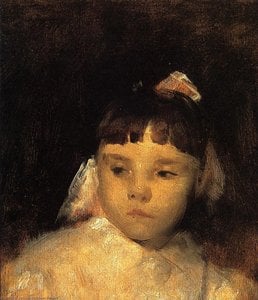
Nelson

Explore Robert Henri's 'Nelson,' a poignant 1914 American Realist portrait capturing a boy's contemplative expression with bold brushstrokes and intimate detail.

Robert Henri (1865-1929) – amerykański malarz realizmu, twórca Ashcan School. Portretował życie codzienne z autentycznością i wrażliwością. Wpływowy nauczyciel sztuki.

Kup wysokiej rozdzielczości, ulepszony obraz cyfrowy, znacznie lepszy niż podgląd online.

Każdy plik jest starannie przygotowywany przez naszych specjalistów przy użyciu zaawansowanych narzędzi oraz profesjonalnej, ręcznej retuszy. Dbamy o to, aby każdy obraz cechował się wyjątkową ostrością, precyzyjnym odwzorowaniem kolorów i subtelnymi detalami.

Ostateczny plik dostarczany jest drogą mailową w ciągu 72 godzin, zoptymalizowany do natychmiastowego wykorzystania w profesjonalnych zastosowaniach redakcyjnych i poligraficznych. To ta sama jakość, której ufają czołowe studia projektowe, wydawnictwa oraz galerie sztuki.

Obraz cyfrowy

Pobierz plik o wysokiej rozdzielczości do osobistego wyświetlania, druku oraz projektów kreatywnych.

Suma do zapłaty

$9.99

Zawarte w każdym zamówieniu na obraz cyfrowy

Profesjonalna dostawa cyfrowa, gwarantowana

Wybierając WahooArt.com, nie otrzymujesz jedynie obrazu – otrzymujesz profesjonalnie udoskonalone cyfrowe dzieło sztuki, stworzone z najwyższą precyzją i objęte gwarancją satysfakcji. Oto wszystko, co automatycznie dołączane jest do Twojego zamówienia:

shipping_icon
Błyskawiczna wysyłka e-mailowa

Plik z obrazem cyfrowym w wysokiej rozdzielczości zostanie przesłany na Twój adres e-mail w ciągu 72 godzin od złożenia zamówienia – gotowy do natychmiastowego użycia.

canvas_icon
Plik cyfrowy wzbogacony przez AI

Twoja grafika została profesjonalnie zoptymalizowana przy użyciu zaawansowanych narzędzi AI oraz ręcznej edycji, co zapewnia maksymalną szczegółowość, klarowność i wierność kolorów.

insurance_icon
Dożywotnia darmowa ponowna dostawa

Przypadkowo usunąłeś lub zgubiłeś swój plik? Bez obaw – prześlemy go Tobie ponownie w dowolnym momencie, bez żadnych opłat.

tax_icon
Bez opłat importowych – zawsze

Ciesz się swoją sztuką natychmiast, bez żadnych opłat celnych, należności ani kosztów dostawy – pliki cyfrowe są zawsze wolne od podatku.

color_icon
Gwarancja wierności kolorów

Dzięki zastosowaniu profesjonalnych narzędzi i procesów zarządzania barwą zapewniamy, że Twoje cyfrowe zdjęcie odzwierciedla oryginalne kolory tak wiernie, jak to tylko możliwe.

return_icon
60-dniowa gwarancja satysfakcji

Jeśli nie będziesz zadowolony ze swojego cyfrowego obrazu, poprawimy go lub zwrócimy 100% kosztów w ciągu 60 dni – bez żadnych pytań.

guarantee_icon
100% Gwarancja zwrotu pieniędzy

Nie zadowoleni? Otrzymaj pełny zwrot kosztów w ciągu 60 dni od otrzymania pliku cyfrowego – bez zbędnych pytań.

discount_icon
Rabaty na zamówienia hurtowe

Kup 3 obrazy, oszczędź 10% - Kup 5, oszczędź 15% - Kup 10+, oszczędź 20%. Idealne do projektów kreatywnych, galerii i agencji.

Szybkie fakty

  • Year: 1914
  • Notable elements or techniques:
    • Bold colors
    • Loose brushstrokes
  • Artistic style: American Realism
  • Artist: Robert Henri
  • Title: Nelson
  • Influences: Impressionists

Quiz o sztuce

Na każde pytanie istnieje tylko jedna poprawna odpowiedź.

Pytanie 1:
Who is the artist of the painting 'Nelson'?
Pytanie 2:
In what year was the artwork 'Nelson' created?
Pytanie 3:
What artistic movement is Robert Henri’s ‘Nelson’ most closely associated with?
Pytanie 4:
According to the image description, what is a prominent characteristic of the brushwork in 'Nelson'?
Pytanie 5:
What does the boy’s gaze in ‘Nelson’ suggest, according to the description?

Opis obiektu kolekcjonerskiego

Nelson: A Glimpse into American Realism

Robert Henri’s "Nelson," painted in 1914, stands as a poignant example of American Realism, capturing the essence of everyday life with striking honesty and emotional depth. This oil on canvas portrait depicts a young boy, his gaze direct and seemingly introspective, inviting viewers to contemplate his inner world. The painting's power lies not just in its skillful execution but also in Henri’s ability to convey a sense of quiet dignity and perhaps even a touch of melancholy through the subject's posture and expression. The deep blue background serves to isolate Nelson, focusing attention on his face and upper body, enhancing the intimacy of the portrait.

The Artist and His Vision: Robert Henri and the Ashcan School

Robert Henri (1865-1929) was a pivotal figure in American art, renowned for his bold style and commitment to portraying urban life with unflinching realism. As a leading member of the Ashcan School, Henri rejected the idealized subjects favored by traditional academic painting, instead choosing to depict scenes from everyday existence – bustling city streets, working-class neighborhoods, and ordinary people. His approach was revolutionary, challenging artistic conventions and paving the way for future generations of American artists. Henri’s influence extended beyond his own paintings; he was a dedicated teacher who encouraged his students to find beauty and significance in the commonplace, fostering a spirit of independent expression and social awareness within the art world. He was also an organizer of "The Eight," a group of artists who protested against the restrictive exhibition practices of the National Academy of Design, further solidifying his reputation as a champion of artistic freedom.

Composition and Technique: Capturing Emotion Through Brushwork

Henri’s technique in “Nelson” is characterized by loose, expressive brushstrokes that imbue the painting with a sense of energy and spontaneity. The visible texture of the paint adds depth and dimension to the portrait, creating a dynamic interplay between light and shadow. The artist's use of color is equally impactful; the warm tones of Nelson’s skin contrast beautifully with the cool blue background, drawing the viewer's eye directly to the subject. The composition itself is deliberately simple, allowing the focus to remain squarely on Nelson’s face and expression. This deliberate restraint amplifies the emotional impact of the portrait, inviting viewers to project their own interpretations onto the young boy’s contemplative gaze. The absence of distracting details further emphasizes the intimacy between the viewer and the subject, creating a powerful sense of connection.

Symbolism and Emotional Resonance

While seemingly straightforward in its depiction, "Nelson" carries layers of symbolic meaning. The boy's posture—arms crossed, head slightly bowed—suggests introspection or perhaps a quiet defiance. His direct gaze challenges the viewer, inviting them to engage with his emotions and experiences. Henri’s choice to portray Nelson not as an idealized figure but as a real boy, complete with subtle imperfections, speaks to his commitment to portraying humanity in all its complexity. The painting evokes a sense of nostalgia and reflection, prompting viewers to consider the lives and stories of those often overlooked by mainstream society. "Nelson" is more than just a portrait; it's a window into a specific moment in time, capturing the spirit of American Realism and offering a glimpse into the heart of an individual.

Biografia artysty

A Turbulent Genesis: The Early Life of Robert Henri

Robert Henri, born Robert Henry Cozad in Cincinnati, Ohio, in 1865, carried within him from the outset a sense of displacement and reinvention that would profoundly shape both his life and art. His childhood was far from idyllic; shadowed by the volatile relationship between his father, John Jackson Cozad—a man of ambition and risk as a gambler and real estate developer—and his mother, Theresa Gatewood Cozad. This instability culminated in a dramatic event in 1882: a fatal shooting over a land dispute that forced the family into flight, adopting new identities to escape retribution. Young Robert became Robert Henri, a deliberate severing from a past fraught with conflict and a symbolic rebirth as an artist. The westward journey through Nebraska and Colorado, culminating in a settling in New York City and then Atlantic City, instilled within him a deep empathy for those living on the fringes of society—an empathy that would become a defining characteristic of his artistic vision. This early experience of upheaval and reinvention fostered a spirit of independence and a commitment to portraying life as it truly was, unburdened by convention or societal expectation.

Forging a New Vision: Artistic Development and Influences

Henri’s formal artistic education began at the Pennsylvania Academy of the Fine Arts in Philadelphia under Thomas Anshutz, where he honed his technical skills. However, it was his subsequent journey to Paris in 1888 that truly ignited his artistic awakening. Initially drawn to the academic tradition at the Académie Julian and influenced by masters like William-Adolphe Bouguereau and François Millet, Henri gradually gravitated towards Impressionism. Yet, he wasn’t content with merely replicating what he saw; he sought a more profound engagement with reality—a way to capture not just the fleeting effects of light but also the raw emotion and vitality of modern life. This quest led him to embrace a bolder, more direct approach, influenced by the Dutch Realist Franz Hals, whose loose brushwork and psychological insight resonated deeply with Henri’s own artistic sensibilities. He began experimenting with *pochades*, small wood panels used for quick sketches, encouraging spontaneity and immediacy in his work. Returning to America, he became a dedicated teacher, imparting not just technique but also a philosophy of art rooted in observation, honesty, and individual expression.

Championing the Real: The Ashcan School and “The Eight”

Robert Henri’s impact on American art extended far beyond his own canvases; he became a catalyst for change, challenging the conservative norms of the established art world. He was a central figure in the emergence of the Ashcan School—a group of artists who dared to depict the gritty realities of urban life, from bustling city streets to crowded tenements. Henri’s commitment to realism and his rejection of academic pretension led him to organize “The Eight” in 1908—a collective of like-minded artists including William Glackens, George Luks, Everett Shinn, and John Sloan—who staged an independent exhibition as a direct protest against the restrictive policies of the National Academy of Design. This act of defiance was a watershed moment in American art history, signaling a shift away from European dominance and towards a uniquely American artistic voice. Henri’s paintings during this period, such as “Woman in Manteau” (1899) and his evocative portraits, captured the dignity and resilience of ordinary people, offering a powerful counterpoint to the idealized representations favored by the establishment.

Legacy and Enduring Influence

Robert Henri’s influence on subsequent generations of American artists is immeasurable. As a teacher, he mentored a remarkable roster of talent, including Joseph Stella, Edward Hopper, Rockwell Kent, George Bellows, Norman Raeben, Louis D. Fancher, and Stuart Davis—artists who would go on to shape the course of 20th-century art. His book, *The Art Spirit*, published posthumously in 1923, remains a seminal text for aspiring artists, offering timeless wisdom on observation, technique, and the importance of artistic integrity. *Henri’s commitment to portraying life with honesty and empathy*, his rejection of convention, and his unwavering belief in the power of art to connect with audiences continue to inspire artists today. His paintings are not merely representations of reality; they are windows into the human condition—testaments to the beauty, struggle, and resilience of the human spirit. He left an indelible mark on American Realism, paving the way for a more democratic and inclusive art world that celebrated the everyday experiences of ordinary people. His legacy endures not only through his own masterful works but also through the countless artists he inspired to find their own voices and tell their own stories.
Robert Henri

Robert Henri

1865 - 1929 , Stany Zjednoczone

Krótka nota

  • Artistic Movement Or Style: Ashcan School, Realizm
  • Artists Or Movements Influenced By This Artist:
    • Edward Hopper
    • The Eight
  • Artists Who Influenced This Artist:
    • William-Adolphe Bouguereau
    • François Millet
  • Date Of Birth: 24 czerwca 1865
  • Date Of Death: 12 lipca 1929
  • Full Name: Robert Henry Cozad
  • Nationality: Amerykański
  • Notable Artworks:
    • Kobieta w mantie
    • La Neige
    • Sissy w żółci
  • Place Of Birth: Cincinnati, USA