 Oil On CanvasWallArtSurrealism
 1947Modern
 53.0 x 66.0 cm
Kup wysokiej rozdzielczości, ulepszony obraz cyfrowy o znacznie wyższej jakości niż podgląd online.
Każdy plik jest starannie przygotowywany przez naszych specjalistów przy użyciu zaawansowanych narzędzi oraz profesjonalnej, ręcznej retuszy. Dbamy o to, aby każdy obraz cechował się wyjątkową ostrością, precyzyjnym odwzorowaniem kolorów i subtelnymi detalami.
Ostateczny plik dostarczany jest drogą mailową w ciągu 72 godzin, zoptymalizowany do natychmiastowego wykorzystania w profesjonalnych zastosowaniach redakcyjnych i poligraficznych. To ta sama jakość, której ufają czołowe studia projektowe, wydawnictwa oraz galerie sztuki.
Pobierz plik o wysokiej rozdzielczości do osobistego wyświetlania, druku oraz projektów kreatywnych. ( Zamów wydruk Zamów ręcznie malowaną reprodukcję)
Wybierając WahooArt.com, nie otrzymujesz jedynie obrazu – otrzymujesz profesjonalnie udoskonalone cyfrowe dzieło sztuki, stworzone z najwyższą precyzją i objęte gwarancją satysfakcji. Oto wszystko, co automatycznie dołączane jest do Twojego zamówienia:

Plik z obrazem cyfrowym w wysokiej rozdzielczości zostanie przesłany na Twój adres e-mail w ciągu 72 godzin od złożenia zamówienia – gotowy do natychmiastowego użycia.

Twoja grafika została profesjonalnie zoptymalizowana przy użyciu zaawansowanych narzędzi AI oraz ręcznej edycji, co zapewnia maksymalną szczegółowość, klarowność i wierność kolorów.

Przypadkowo usunąłeś lub zgubiłeś swój plik? Bez obaw – prześlemy go Tobie ponownie w dowolnym momencie, bez żadnych opłat.

Ciesz się swoją sztuką natychmiast, bez żadnych opłat celnych, należności ani kosztów dostawy – pliki cyfrowe są zawsze wolne od podatku.

Dzięki zastosowaniu profesjonalnych narzędzi i procesów zarządzania barwą zapewniamy, że Twoje cyfrowe zdjęcie odzwierciedla oryginalne kolory tak wiernie, jak to tylko możliwe.

Jeśli nie będziesz zadowolony ze swojego cyfrowego obrazu, dokonamy jego poprawki lub zwrócimy 100% kosztów w ciągu 100 dni – bez żadnych pytań.

Nie jesteś zadowolony? Otrzymaj pełny zwrot kosztów w ciągu 100 dni od otrzymania pliku cyfrowego – bez zbędnych pytań.

Kup 3 obrazy, oszczędź 10% - Kup 5, oszczędź 15% - Kup 10+, oszczędź 20%. Idealne do projektów kreatywnych, galerii i agencji.
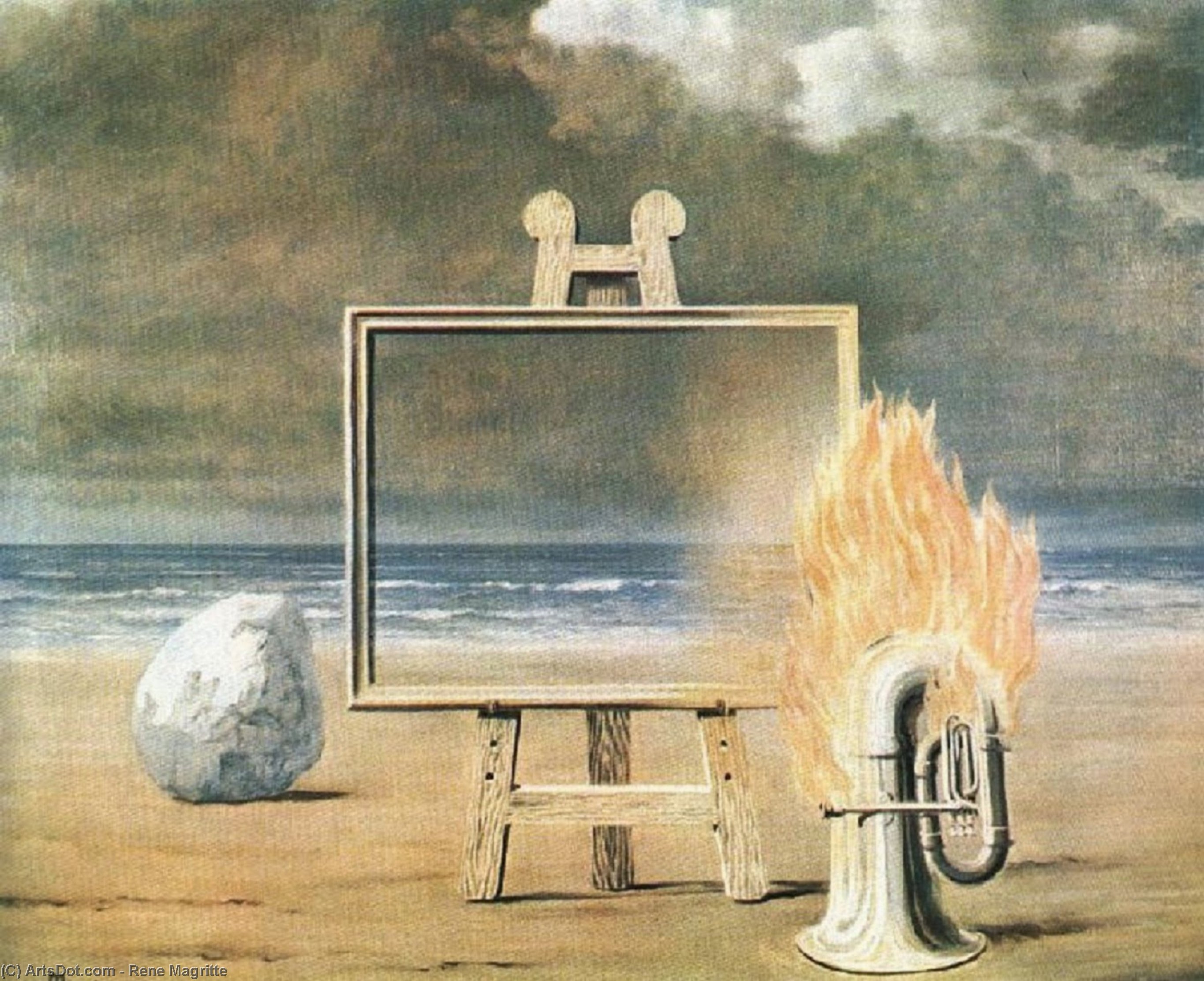
In the realm of Surrealism, few works possess the haunting, quiet gravity found in René Magritte’s 1947 masterpiece, The Fair Captive. At first glance, the viewer is presented with a meticulously rendered beach landscape, yet the scene is far from tranquil. A large, ornate picture frame dominates the foreground, standing seemingly unsupported and, most provocatively, entirely empty. This deliberate void creates an immediate psychological tension, pulling the observer away from the horizon and forcing a confrontation with the frame itself. To the left, a substantial stone rests heavily upon the sand, providing a grounded, tactile contrast to the ethereal, rolling waves that move toward the shore under a heavy, overcast sky. It is a composition designed to unsettle, where the familiar elements of nature are rearranged into a profound visual paradox.
The technical execution of this work exemplifies Magritte’s mature mastery of the oil medium. Eschewing the frantic energy of more expressive movements, Magritte employs a precise, almost hyper-realistic draftsmanship that lends an air of undeniable reality to his illogical subject matter. Every texture is rendered with remarkable fidelity—the weathered grain of the wooden frame, the cold smoothness of the stone, and the subtle, rhythmic undulations of the seawater. This smooth, polished technique serves a specific purpose: by presenting the impossible with such clarity and photographic stillness, Magritte bridges the gap between the waking world and the subconscious, making the dream feel disturbingly tangible.
Beyond its striking visual presence, The Fair Captive serves as a profound meditation on the limitations of art and perception. The empty frame is perhaps the most potent symbol within the piece; it represents an absence of representation, a window that refuses to show us a world, but instead highlights the boundary between what is seen and what is imagined. It suggests that reality cannot be truly captured or contained by mere borders. The title itself introduces a layer of psychological intrigue—does the "captive" refer to the viewer, trapped within their own conventional perceptions, or does it speak to the way we attempt to imprison truth within the confines of a canvas?
For the discerning collector or interior designer, this painting offers more than just aesthetic beauty; it provides a conversational centerpiece that invites deep contemplation. The somber, diffused lighting and the muted, earthy palette create an atmosphere of quiet mystery that can anchor a sophisticated space. Whether placed in a minimalist gallery setting or a richly textured study, the work’s ability to provoke thought makes it a timeless addition to any collection. It is a piece that does not merely decorate a wall but transforms the very energy of a room, offering a window into the enigmatic soul of one of the twentieth century's most influential visionaries.

Magritte's enduring legacy lies in his ability to make us see the familiar anew, to question our assumptions about reality, and to appreciate the power of art to provoke thought and inspire wonder. He wasn’t simply painting images; he was crafting visual paradoxes that continue to resonate with viewers decades after their creation, solidifying his position as a true master of Surrealism and a pivotal figure in 20th-century art.

1898 - 1967 , Belgia

 Podgląd w skali
 Wyślij jako kartkę
 Udostępnij
 Szczegóły dzieła

 Pobierz
 Podobne obiekty
 RTG
RTG Pokaz slajdów
 Rozwiń treść