Druk giclée lub płótno o jakości muzealnej, szybka realizacja i szeroki wybór opcji wykończenia. ( Zamów ręcznie malowaną reprodukcję Kup obraz wysokiej rozdzielczości)





























Wybierz spośród naszych standardowych rozmiarów, które zachowują oryginalne proporcje dzieła sztuki.

Możesz wprowadzić własne wymiary, aby dopasować dzieło do konkretnej ramy lub przestrzeni. Jeśli wybrany rozmiar nie będzie odpowiadał proporcjom oryginalnego obrazu, przytniecie dzieło lub rozszerzymy obraz za pomocą odbicia lustrzanego lub jednolitego wypełnienia krawędzi. Przed rozpoczęciem produkcji prześlemy cyfrową wizualizację do Twojej akceptacji.
Prosimy pamiętać, że podgląd na ekranie nie odzwierciedla faktycznego przycinania ani rozszerzania. Tylko wizualizacja dokładnie pokaże końcową kompozycję.
Mimo dostępności niestandardowych rozmiarów, zalecamy wybór wymiaru z listy zdefiniowanej, aby zachować oryginalne proporcje.
Dostawa na cały świat () w ciągu 2 tygodni zamiast standardowych 4/5 tygodni. (7 Wrzesień)


La catapulte du désert
Wymiary reprodukcji
René Magritte’s “La catapulte du désert,” painted in 1926, stands as a cornerstone of Surrealist art—a deceptively simple image brimming with intellectual complexity and unsettling psychological resonance. More than just a depiction of an object, it's a deliberate provocation to our ingrained assumptions about how we perceive the world, cementing Magritte’s reputation as one of the most influential artists of his era.
The artwork presents a starkly rendered pink rectangle intersected by a horizontal hole—a visual representation of what appears to be a firearm. Positioned against a cloudy sky and flanked by two shadowy figures on the ground, the composition defies immediate interpretation. This seemingly banal scene is imbued with profound symbolic significance, reflecting Magritte’s fascination with paradoxes and his desire to expose the illusionary nature of reality.
Painted during the height of Surrealist experimentation in Paris, “La catapulte du désert” aligns itself with the broader artistic movement’s rejection of academic conventions and embrace of psychoanalytic theories pioneered by Sigmund Freud. Magritte sought to dismantle accepted notions of visual representation, mirroring the intellectual currents of his time—a reaction against the dominant Newtonian worldview that prioritized observable phenomena.
The central element – the pink rectangle with a hole – is arguably the painting’s most potent symbol. Magritte deliberately obscures the function of the object, presenting it as an empty vessel rather than a weapon. This ambiguity underscores the Surrealist preoccupation with questioning accepted truths and exposing hidden anxieties. The cloudy sky serves as a backdrop for this unsettling image, symbolizing obscurity and uncertainty—further emphasizing the artwork's exploration of perceptual deception.
"La catapulte du désert" doesn’t offer answers; it poses questions. Its deliberate lack of clarity compels viewers to confront their own biases and assumptions about how they interpret visual information. Magritte’s masterful execution evokes a feeling of unease and contemplation, prompting us to consider the possibility that what we perceive is not necessarily what truly exists—a timeless message resonating with audiences today.

Magritte's enduring legacy lies in his ability to make us see the familiar anew, to question our assumptions about reality, and to appreciate the power of art to provoke thought and inspire wonder. He wasn’t simply painting images; he was crafting visual paradoxes that continue to resonate with viewers decades after their creation, solidifying his position as a true master of Surrealism and a pivotal figure in 20th-century art.

1898 - 1967 , Belgia

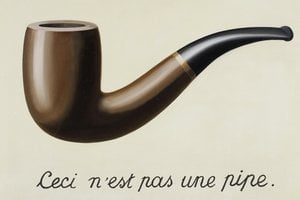
Delve into the profound mysteries of René Magritte’s Surrealism. Explore an expert analysis of 'The Treachery of Images,' decoding the philosophical paradoxes and visual subversions that redefined modern art history for collectors and connoisseurs alike.

 Podgląd w skali
 Wyślij jako kartkę
 Udostępnij
 Szczegóły dzieła

 Pobierz
 Podobne obiekty
 RTG
RTG Pokaz slajdów

 Rozwiń treść







 Opcja ze szkłem jest dostępna wyłącznie w rozmiarach poniżej 110 cm