Zobacz w skali 1:1 Zobacz w AR Kup ręcznie malowany obraz Przełącz na wersję cyfrową Wyślij
Szczegóły Przewodnik Dodaj do ulubionych Pobierz plik obrazu Podobne obiekty RTG Pokaz slajdów Statystyki

Koniec czasu

Magritte w "Końcu Czasu" zderza rzeczywistość z iluzją, tworząc surrealistyczny obraz. Spojrzenie na symbolizm i tajemnicę w stylu mistrza Magritta. Odkryj fascynujący świat jego dzieł!

René Magritte (1898-1967): Belgijski mistrz surrealizmu! Odkryj jego niezwykłe obrazy, takie jak 'Kochankowie', które kwestionują rzeczywistość i percepcję. #Magritte #Surrealizm

Dzieło sztuki prezentowane na tej stronie podlega ochronie prawem autorskim, co oznacza, że nie mamy prawa do tworzenia ani sprzedaży jego identycznej reprodukcji. Ochrona ta jest egzekwowana na mocy umów międzynarodowych, takich jak Konwencja berneńska oraz przez przepisy prawa krajowego, w tym te określone w Prawo autorskie USA – Tytuł 17.

Metoda ta jest w pełni zgodna z przepisami prawa autorskiego, ponieważ nie polega na kopiowaniu ani powielaniu chronionego dzieła. Stanowi ona kreatywną reinterpretację – nowy obraz, który czerpie inspirację z oryginału, ale nie jest z nim tożsamy.

Giclée / Wydruk artystyczny

Wydruki giclée lub płótna o jakości muzealnej, szybka realizacja i szeroki wybór opcji wykończenia. ( Kup ręcznie malowany obraz Przełącz na wersję cyfrową)

Corner sample of the P118B picture frame: polistyren formowany, 5 cm wide and 3 cm thick
P118B zł10
Corner sample of the P118H picture frame: polistyren formowany, 5 cm wide and 3 cm thick
P118H zł10
Corner sample of the P118W picture frame: polistyren formowany, 5 cm wide and 3 cm thick
P118W zł10
Corner sample of the P438Z picture frame: polistyren formowany, 5.5 cm wide and 3.5 cm thick
P438Z zł10
Corner sample of the P508JH picture frame: polistyren formowany, 7 cm wide and 3.5 cm thick
P508JH zł12
Corner sample of the P508YH picture frame: polistyren formowany, 7 cm wide and 3.5 cm thick
P508YH zł12
Corner sample of the P805H picture frame: polistyren formowany, 5 cm wide and 3.5 cm thick
P805H zł10
Corner sample of the P805Z picture frame: polistyren formowany, 5 cm wide and 3.5 cm thick
P805Z zł10
Corner sample of the P919BZ picture frame: polistyren formowany, 7 cm wide and 3.5 cm thick
P919BZ zł10
Corner sample of the P919G picture frame: polistyren formowany, 7 cm wide and 3.5 cm thick
P919G zł10
Corner sample of the P919XJ picture frame: polistyren formowany, 7 cm wide and 3.5 cm thick
P919XJ zł10
Corner sample of the P959ZH picture frame: polistyren formowany, 5 cm wide and 3 cm thick
P959ZH zł10
Corner sample of the P968JZ picture frame: polistyren formowany, 6 cm wide and 4 cm thick
P968JZ zł12
Corner sample of the W106C picture frame: lite drewno, 5 cm wide and 3 cm thick
W106C zł8
Corner sample of the W218G picture frame: lite drewno, 5 cm wide and 3 cm thick
W218G zł10
Corner sample of the W218JH picture frame: lite drewno, 5 cm wide and 3 cm thick
W218JH zł8
Corner sample of the W218Y picture frame: lite drewno, 5 cm wide and 3 cm thick
W218Y zł10
Corner sample of the W307PJ picture frame: lite drewno, 6 cm wide and 3 cm thick
W307PJ zł10
Corner sample of the W316G picture frame: lite drewno, 6 cm wide and 3 cm thick
W316G zł10
Corner sample of the W316PJ picture frame: lite drewno, 6 cm wide and 3 cm thick
W316PJ zł8
Corner sample of the W316Y picture frame: lite drewno, 6 cm wide and 3 cm thick
W316Y zł10
Corner sample of the W398PJ picture frame: lite drewno, 5 cm wide and 3 cm thick
W398PJ zł8
Corner sample of the W4111J picture frame: lite drewno, 6.5 cm wide and 3.5 cm thick
W4111J zł10
Corner sample of the W500HY picture frame: lite drewno, 7 cm wide and 5 cm thick
W500HY zł15
Corner sample of the W500JH picture frame: lite drewno, 7 cm wide and 5 cm thick
W500JH zł15
Corner sample of the W692G picture frame: lite drewno, 8 cm wide and 4 cm thick
W692G zł12
Corner sample of the W849H picture frame: lite drewno, 5 cm wide and 3 cm thick
W849H zł8
Corner sample of the W940BG picture frame: lite drewno, 7.5 cm wide and 4.5 cm thick
W940BG zł15
Corner sample of the W953PJ picture frame: lite drewno, 6 cm wide and 3.5 cm thick
W953PJ zł8

Standardowy
na zamówienie
CM
INCH

Wybierz spośród naszych standardowych rozmiarów, które zachowują oryginalne proporcje dzieła sztuki.

szerokość
wysokość

Wpisz wymaganą szerokość i wysokość, aby dopasować grafikę do ramy lub ściany. Wydruk można jedynie przyciąć, nigdy nie powiększając go poza oryginalny obraz, dlatego format o innym proporcji spowoduje utratę części kompozycji. Przed rozpoczęciem druku prześlemy Ci cyfrowy podgląd do zatwierdzenia. Obraz wyświetlany na tej stronie nie pokazuje rzeczywistego przycięcia — jedynie podgląd oddaje ten efekt.

Dostawa na cały świat () w ciągu 2 tygodni zamiast standardowych 4/5 tygodni. (21 Październik)

Bezpłatna ekspresowa wysyłka na cały świat
Wysokiej jakości płótno lniane
Pełne ubezpieczenie transportowe
Gwarancja zwrotu należności celnych i podatków importowych
Gwarancja idealnego odwzorowania barw
100-dniowy okres na zwrot dzieła w przypadku wykrycia wad produkcyjnych
Gwarancja 100% zwrotu pieniędzy
Oferta przy zakupie wielu sztuk

Cena całkowita

zł 258

Koniec czasu

Giclée / Wydruk artystyczny

Rozmiar reprodukcji

-

Suma do zapłaty

zł 258

Kluczowe informacje

  • Movement: Surrealizm
  • Artist: René Magritte
  • Influences: De Chirico
  • Dimensions: 147 × 98,7 cm
  • Title: The end of time
  • Artistic style: Poetycka tajemnica

Quiz wiedzy o sztuce

Do każdego pytania dotyczy tylko jedna poprawna odpowiedź.

Pytanie 1:
Jaki główny temat przewodni maluje René Magritte w obrazie "The End of Time"?
Pytanie 2:
Jakie elementy dominują w kolorystyce obrazu "The End of Time"?
Pytanie 3:
W kontekście artystycznym, do jakiego nurtu należy René Magritte?
Pytanie 4:
Jakie cechy charakterystyczne dla stylu Magritte można zaobserwować w obrazie "The End of Time"?
Pytanie 5:
Co symbolizuje w obrazie "The End of Time" połączenie pociągu i kominka?

Wprowadzenie do Mrocznej Elegancji: René Magritte i „Koniec Czasu”

W świecie surrealizmu, gdzie granice rzeczywistości stają się płynne, a podświadomość otwiera swoje tajemnice, René Magritte wykreował unikalny język wizualny. Jego obrazy, pełne paradoksów i subtelnych zagadek, prowokują do refleksji nad naturą percepcji, iluzją i tym, co ukrywamy przed sobą. „Koniec Czasu” (La fin du temps), stworzony w 1927 roku, jest doskonałym przykładem jego mistycznej wizji – obrazem, który nie tylko przedstawia, ale przede wszystkim sugeruje, zapraszając widza do osobistego, intelektualnego dialogu.

Magritte, wykształcony w tradycyjnej akademii sztuki, szybko odrzucił konwencje i zaczął poszukiwać nowych sposobów wyrażania siebie. Zafascynowany dziełami Giorgio de Chirico, szczególnie „Piosenką Miłości” (La chanson d'amour), zainspirował się jego wizją niepokojących, fantastycznych krajobrazów. Jednak Magritte nie ograniczył się do naśladowania; on sam stworzył swój własny, unikalny styl – połączenie realizmu z elementami absurdalnymi i symbolicznie obciążonymi.

Technika i Kompozycja: Precyzja w Kontrastie z Nielogicznością

„Koniec Czasu” to obraz o niezwykłej precyzji wykonania. Magritte, znany ze swojej dbałości o detale, zastosował technikę oleju na płótnie, tworząc gładkie, niemal fotograficzne powierzchnie. Zwróć uwagę na dokładne odwzorowanie ornamentu ramy – jej skomplikowane spirali i łuki dodają obrazowi monumentalności i formalnej elegancji. Kontrastuje ona z prostotą i abstrakcyjnością zawartej wewnątrz ramy, tworząc fascynujący efekt wizualny.

Kompozycja jest niezwykle symetryczna, co podkreśla formalność i powagę obrazu. Centralnym punktem jest rima, w której znajduje się owalny element – symboliczny portal do innego świata, alternatywnej rzeczywistości. Zebraście pasy na podłodze, z ich geometryczną strukturą, wprowadzają element dzikości i nieprzewidywalności, rozbijając formalność ramy i sugerując konflikt między porządkiem a chaosem.

Symbolika i Interpretacja: Rozważania o Czasie i Iluzji

„Koniec Czasu” to obraz pełen symboliki, pozostawiający wiele interpretacji. Rima może reprezentować ograniczenia, pułapki, w których uwięziliśmy się w naszym własnym życiu, lub też portal do nieznanego, potencjalnie niebezpiecznego świata. Zebraście pasy, często kojarzone z egzotyką i dzikością, mogą symbolizować chaos i niepewność przyszłości. Nawet subtelny znak „Magritte” w rogu obrazu, ukryty w cieniu, przypomina nam o artystycznej intencji twórcy – o świadomym manipulowaniu percepcją widza.

W kontekście filozoficznym, obraz może być interpretowany jako rozważanie o naturze czasu. Czy czas jest liniowy i nieubłagany, czy też iluzoryczny konstrukt umysłowy? Magritte sugeruje, że granice między rzeczywistością a wyobraźnią są bardzo cienkie, a nasze postrzeganie świata zależy od naszych własnych przekonań i doświadczeń. Obraz zaprasza do refleksji nad tym, co jest prawdziwe, a co tylko iluzją.

Wpływ i Dziedzictwo: Magritte jako Pionier Surrealizmu

„Koniec Czasu” to jeden z najbardziej rozpoznawalnych obrazów René Magritte. Jego wpływ na sztukę XX wieku jest niezaprzeczalny. Magritte zainspirował wielu artystów, w tym członków ruchu pop-artowego i minimalizmu, którzy czerpali inspirację z jego umiejętności tworzenia iluzji i manipulowania percepcją widza. Jego prace są nadal studium przypadku dla artystów i badaczy sztuki.

Obraz ten jest doskonałym przykładem tego, jak Magritte potrafił przekształcić codzienne przedmioty w symbole głębokich znaczeń. „Koniec Czasu” to nie tylko piękny obraz; to również prowokujący do myślenia komentarz na temat ludzkiej natury i naszego miejsca we wszechświecie.

Pytania i odpowiedzi

O czym jest "Koniec czasu"?

Koniec czasu” autorstwa René Magritte przedstawia: surrealism, time, train, fireplace, smoke, mystery, symbolism, juxtaposition.

Jaki rozmiasto wydruku "Koniec czasu" będzie odpowiedni do mojego pokoju?

W pomieszczeniu typu Salon lub strefa dzienna sugerowany jest wydruk dzieła „Koniec czasu” w rozmiarze Format średni.

Jaki jest ogólny nastrój dzieła „Koniec czasu” autorstwa René Magritte?

Nastrój dzieła „Koniec czasu” autorstwa René Magritte opisuje się jako Mistyczny. Klasyfikacja ta może pomóc w dopasowaniu pracy do konkretnego wnętrza.


Biografia artysty

Early Life and the Seeds of Surrealism

René Magritte, born René François Ghislain Magritte on November 21, 1898, in Lessines, Belgium, emerged into a world that would profoundly shape his enigmatic artistic vision. His early years were marked by an unsettling event – the suicide of his mother when he was just thirteen. The image of her body being recovered from the River Sambre, with her dress obscuring her face, became a haunting motif that would subtly permeate his later work, manifesting in veiled figures and a persistent exploration of hidden realities. This early trauma instilled within him a fascination with mystery, loss, and the unsettling power of what remains unseen. While details of his childhood remain somewhat elusive, it’s clear this formative experience laid the groundwork for his lifelong questioning of perception and representation. He began drawing lessons at age ten, revealing an innate inclination towards visual expression, but initially explored Impressionism before embarking on a path that would lead him to become one of the most significant figures in Surrealist art.

Artistic Development and Influences

Magritte’s artistic journey was not immediate or straightforward. He studied at the Académie Royale des Beaux-Arts in Brussels, yet found its traditional methods stifling. His early work experimented with Futurism and Cubism, absorbing elements of these avant-garde movements but ultimately rejecting their purely formal concerns. It wasn't until encountering Giorgio de Chirico’s painting *The Song of Love* in 1922 that Magritte discovered a resonance that would irrevocably alter his artistic course. De Chirico’s dreamlike landscapes and unsettling juxtapositions unlocked within Magritte a new way of seeing – a world where the familiar could be rendered strange, and the ordinary imbued with profound mystery. This encounter sparked his commitment to Surrealism, though he often maintained a unique distance from its more overtly psychological or automatic approaches. He preferred a meticulous, almost clinical precision in his painting, using realistic techniques to depict illogical scenarios.

The Heart of Surrealism: Challenging Reality

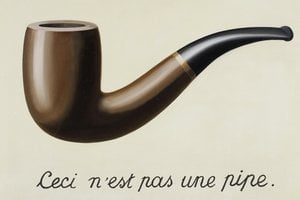
By 1926, Magritte had fully embraced the tenets of Surrealism, producing *Le Jockey Perdu (The Lost Jockey)*, widely considered his first truly surrealist work. However, his brand of Surrealism was distinct. He wasn’t interested in exploring the subconscious through free association or dream imagery in the manner of some of his contemporaries. Instead, Magritte sought to challenge viewers' perceptions of reality by presenting ordinary objects in unexpected contexts, forcing them to question their assumptions about the world around them. Iconic works like *The Treachery of Images (This is not a pipe)* (1929) brilliantly deconstructs the relationship between image and object, reminding us that a representation is never the thing itself. *Les Amants (The Lovers)* (1927-1928), with its shrouded figures, echoes the trauma of his mother’s death while simultaneously exploring themes of concealment and intimacy. *Time Transfixed* (1938) presents a locomotive bursting through a brick wall, disrupting our sense of space and time. And *The Human Condition* (1933), a canvas within a canvas, blurs the boundaries between representation and reality, prompting us to consider how we perceive and interpret the world.

Later Life, Recognition, and Enduring Legacy

Despite initial struggles for recognition, Magritte’s work gradually gained prominence, particularly in the United States with exhibitions in 1936 and later retrospective shows at the Museum of Modern Art (1965) and the Metropolitan Museum of Art (1992). He remained politically engaged throughout his life, advocating for artistic autonomy. He continued to refine his signature style, exploring themes of repetition, illusion, and the power of language in paintings that are both intellectually stimulating and visually arresting. Magritte died on August 15, 1967, leaving behind a body of work that continues to captivate and challenge audiences worldwide. His influence extends far beyond the realm of painting, impacting pop art, minimalist art, conceptual art, and even advertising and film. Today, his paintings are held in major museum collections around the globe, including the Musées royaux des beaux-arts de Belgique in Brussels, which houses the Magritte Museum – dedicated entirely to his work and boasting the world’s largest collection of his creations.
  • Museum Collections: Musées royaux des beaux-arts de Belgique, Brussels; Magritte Museum.

Magritte's enduring legacy lies in his ability to make us see the familiar anew, to question our assumptions about reality, and to appreciate the power of art to provoke thought and inspire wonder. He wasn’t simply painting images; he was crafting visual paradoxes that continue to resonate with viewers decades after their creation, solidifying his position as a true master of Surrealism and a pivotal figure in 20th-century art.

René Magritte

René Magritte

1898 - 1967 , Belgia

Najważniejsze informacje

  • Artistic Movement Or Style: Surrealizm
  • Artists Or Movements Influenced By This Artist:
    • Pop art
    • Minimalist sztuka
  • Artists Who Influenced This Artist: ['Giorgio de Chirico']
  • Date Of Birth: 21 listopada 1898
  • Date Of Death: 15 sierpnia 1967
  • Full Name: René François Ghislain Magritte
  • Nationality: Belgijski
  • Notable Artworks:
    • Les Amants
    • The Treachery of Images
    • Time Transfixed
  • Place Of Birth: Lessines, Belgia
Odkryj dzieła sztuki uporządkowane według tematów, stylów i cech charakterystycznych.