Raphael’s *The Entombment*: A Symphony of Grief and Faith
Raphael Sanzio da Urbino, a name synonymous with Renaissance grace and artistic mastery, gifted the world with an extraordinary collection of works. Among these, *The Entombment* – also known as the *Pala Baglioni* – stands as a profoundly moving testament to his genius, capturing not merely a biblical scene but a complex tapestry of human emotion and spiritual contemplation. Completed in 1507 and currently residing within the hallowed halls of Rome’s Galleria Borghese, this oil on wood panel transcends its simple depiction of Christ’s burial; it's an immersive narrative steeped in personal tragedy and brimming with artistic innovation – a poignant reflection of the era’s burgeoning humanist ideals.
A Descent into Sorrow: Subject and Composition
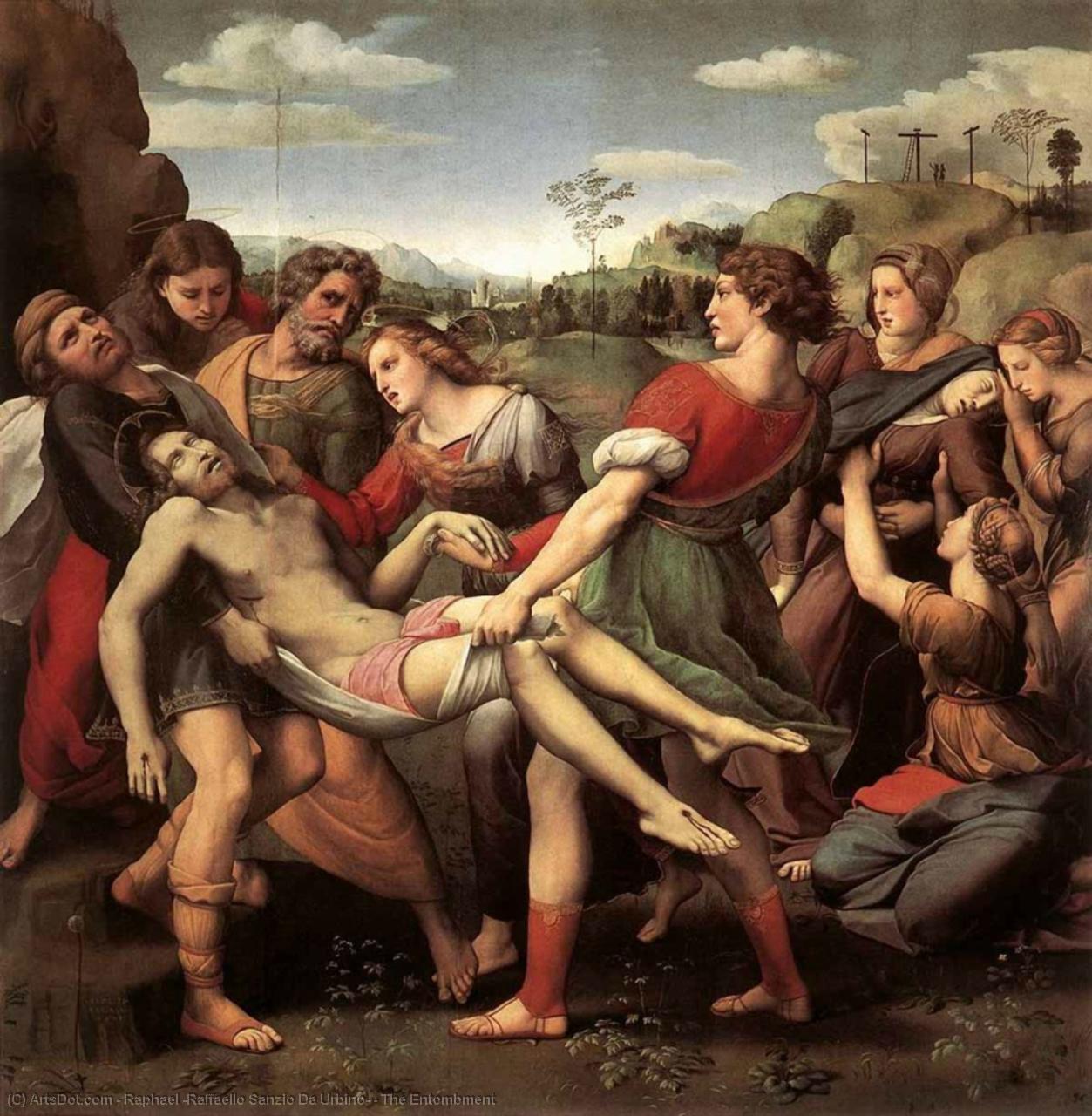
*The Entombment* doesn’t simply show us the deposition of Christ’s body. Instead, Raphael masterfully blends elements of both the *Deposition* (the removal from the cross) and the *Entombment*, creating a dynamic and emotionally charged tableau. Thirteen figures surround the lifeless Christ, each reacting with a spectrum of grief, concern, and reverence – a deliberate choice by the artist to amplify the scene’s dramatic impact. The composition is ingeniously structured around a pyramidal form, drawing the viewer's eye inexorably upwards towards Christ’s pale, vulnerable body – the very apex of this sorrowful triangle. This careful arrangement, combined with the tightly grouped figures, fosters an intimate atmosphere, pulling us directly into the shared mourning and creating a sense of profound empathy for those witnessing this final act.
High Renaissance Brilliance: Artistic Technique and Style
Measuring 184 x 176 cm, *The Entombment* is a breathtaking demonstration of Raphael’s unparalleled technical skill. His mastery of oil paint allows for an astonishing level of detail – from the delicate folds of the draped garments to the exquisitely rendered faces of the mourners. The painting exemplifies the High Renaissance ideal: anatomical accuracy, idealized beauty even in moments of profound sorrow, and a deep understanding of human emotion. Raphael’s signature *chiaroscuro*—the dramatic interplay of light and shadow—further intensifies the emotional impact, sculpting the figures with a remarkable sense of realism and depth. The use of color is equally masterful, employing a harmonious palette that evokes both solemnity and dignity.
A Personal Tragedy: Historical Context and Commission
The painting’s origins are inextricably linked to a deeply personal tragedy. It was commissioned by Atalanta Baglioni of Perugia as a votive offering in memory of her son, Grifonetto, who died violently after being involved in a brutal family feud. This intimate connection imbues the artwork with an added layer of emotional resonance; the grief depicted isn’t merely biblical but is profoundly rooted in Atalanta's own devastating loss. Raphael, at the height of his career and eager to establish himself as a leading artist, skillfully channeled this personal sorrow into a universal meditation on mortality and faith. The fact that he was working within the context of a court deeply invested in humanist ideals – exemplified by Baldassare Castiglione’s *Book of the Courtier* – further shaped his approach, emphasizing grace, balance, and intellectual depth.
Symbolism and Enduring Impact: A Legacy of Emotion
*The Entombment* is rich with symbolic meaning. The figures surrounding Christ represent various facets of grief and faith—Mary Magdalene’s despair, John the Evangelist's supportive presence, Nicodemus and Joseph of Arimathea’s solemn duty to carry out the final rites. The inclusion of a partially visible cross serves as a constant reminder of Christ’s sacrifice and the weight of his death. Raphael doesn’t shy away from portraying raw emotion; the painting evokes feelings of sadness, compassion, and reverence – qualities that have resonated with viewers for centuries. *The Entombment* remains one of Raphael's most celebrated works, profoundly influencing generations of artists with its dramatic composition, emotional intensity, and technical brilliance. It is a timeless masterpiece that continues to captivate and inspire, making it an invaluable addition to any art collection or interior space.
Photo Description: --Overall Impression-- The artwork is a Baroque-style painting depicting the Lamentation of Christ, likely by Raphael. It’s a dynamic composition centered around the lifeless body of Jesus being carried by several figures. The scene unfolds within a hilly landscape under a dramatic sky with scattered clouds and distant trees. The overall mood is one of profound sorrow and grief, conveyed through the gestures and expressions of the characters. Compositionally, it utilizes a pyramidal structure with Christ’s body as its apex, drawing the viewer’s eye upwards towards Christ’s pale body – the apex of this sorrowful triangle. The tightly grouped figures create an intimate atmosphere, pulling us into their shared mourning. Lines are used to define the musculature of the figures and the folds of their drapery, contributing to the realism of the scene. Shapes are predominantly organic – flowing robes, rounded bodies, and naturalistic forms. Textures appear smooth and polished, indicative of oil paint technique, with subtle variations suggesting light and shadow. Lighting is dramatic, originating from an unseen source above and slightly behind the figures, casting deep shadows and highlighting key areas like Christ’s face and hands. Perspective is employed to create a sense of depth, receding into the landscape. The background features a distant cross and trees, further enhancing the spatial illusion. The subject matter directly references a biblical event – the mourning over Jesus’ death. Symbolic elements include the grief-stricken faces, the limp body of Christ, and the surrounding figures representing various witnesses to the event. Emotionally, the painting evokes feelings of sadness, compassion, and reverence. The style is characteristic of Baroque art, emphasizing drama, emotion, and realistic detail. The technique involves meticulous brushwork and careful attention to anatomical accuracy. Materials used are primarily oil paints on canvas.



 Zamów reprodukcję
 Udostępnij
 Udostępnij
 Szczegóły

 Pobierz
 Podobne obiekty
 RTG
RTG Pokaz slajdów

 Rozwiń treść






































 Opcja szkła jest dostępna wyłącznie w rozmiarach poniżej 110 cm