DARMOWA KONSULTACJA ARTYSTYCZNA

x
Zamów reprodukcję Zamów reprodukcjęKup cyfrowy obraz Kup cyfrowy obraz UdostępnijUdostępnij
Szczegóły dziełaSzczegóły dzieła Dodaj do ulubionych Dodaj do ulubionych PobierzPobierz Podobne obiektyPodobne obiekty RTGRTG Pokaz slajdówPokaz slajdów

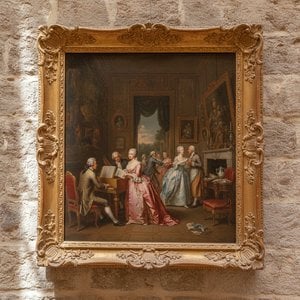
The Tooth Puller

Witness 18th-century Venetian life with Pietro Longhi's genre scene of a tooth puller; capture the intimate drama of daily existence from this exquisite print.

Pietro Longhi (1701-1785) był weneckim malarzem znanym z zabawnych obrazów rodzajowych XVIII wieku, uchwyconych z wdziękiem i delikatną ironią – „Wenecja Hogartha”. Jego twórczość skupia się na życiu codziennym oraz przedstawieniu atmosfery włoskiego miasta Rokoko.

Giclée / Wydruk artystyczny

Druk giclée lub płótno o jakości muzealnej z szybką realizacją i szerokim wyborem opcji wykończenia.

Standard
custom
CM
INCH

Wybierz spośród naszych predefiniowanych rozmiarów, które zachowują oryginalne proporcje dzieła sztuki.

szerokość
wysokość

Możesz wprowadzić własne wymiary, aby dopasować dzieło do konkretnej ramy lub przestrzeni. Jeśli wybrany rozmiar nie będzie odpowiadał proporcjom oryginalnego obrazu, przytniecie dzieło lub rozszerzymy obraz za pomocą odbicia lustrzanego lub jednolitego wypełnienia krawędzi. Przed rozpoczęciem produkcji prześlemy cyfrową wizualizację do Twojej akceptacji.
Prosimy pamiętać, że podgląd na ekranie nie odzwierciedla faktycznego przycinania ani rozszerzania. Tylko wizualizacja dokładnie pokaże końcową kompozycję.
Mimo dostępności niestandardowych rozmiarów, zalecamy wybór wymiaru z listy zdefiniowanej, aby zachować oryginalne proporcje.

Dostawa na cały świat () w ciągu 2 tygodni zamiast standardowych 4/5 tygodni. (6 Lipiec)

why_choose_icon
Bezpłatna ekspresowa wysyłka na cały świat
why_choose_icon
Wysokiej jakości płótno lniane
why_choose_icon
Pełne ubezpieczenie przesyłki
why_choose_icon
Gwarancja zwrotu należności celnych
why_choose_icon
Gwarancja pełnego zgodności kolorystycznej
why_choose_icon
Polityka 60-dniowego zwrotu (tylko w przypadku wad)
why_choose_icon
Gwarancja 100% zwrotu pieniędzy
why_choose_icon
Zniżka przy większych zamówieniach

Suma całkowita

-

reproduction

The Tooth Puller

Giclée / Wydruk artystyczny

Wymiary reprodukcji

-

Cena całkowita

-

Szybkie fakty

  • Subject or theme: Everyday life in Venice
  • Title: The Tooth Puller
  • Artist: Pietro Longhi
  • Artistic style: Genre painting
  • Year: 1746

Quiz o sztuce

Na każde pytanie istnieje tylko jedna poprawna odpowiedź.

Pytanie 1:
What is the primary subject matter depicted in 'The Tooth Puller'?
Pytanie 2:
Which city is the artist, Pietro Longhi, most associated with depicting scenes from?
Pytanie 3:
Pietro Longhi is best known for painting which genre of subject matter?
Pytanie 4:
Approximately what year was 'The Tooth Puller' painted?
Pytanie 5:
Based on the description, what kind of setting appears to be in the painting?

Opis obiektu kolekcjonerskiego

A Glimpse into Venetian Domesticity

To stand before Pietro Longhi’s depiction of The Tooth Puller is not merely to observe an event; it is to slip, quite unexpectedly, into the vibrant, intimate tapestry of 18th-century Venice. This painting transports us beyond the grand pronouncements of mythology or history that often dominated art, offering instead a profoundly human moment—a scene unfolding within what appears to be a richly furnished domestic space. The composition buzzes with life, capturing a gathering around a central dining table. One can almost hear the murmur of conversation mingling with the focused tension surrounding the procedure taking place in the foreground. Longhi masterfully frames this confluence of everyday activity and minor drama, inviting the viewer not as an objective spectator, but as a privileged guest who has stumbled upon a private moment.

The Art of the Everyday Moment

Pietro Longhi is celebrated precisely because he dared to look at the mundane and find it extraordinary. As a chronicler of daily life, his genius lay in elevating genre scenes—the gatherings, the meals, the simple acts of human interaction—to the level of high art. In The Tooth Puller, the sheer number of figures, numbering at least twelve, creates a complex social ecosystem. They are arranged with an almost theatrical naturalism; some stand observing from the periphery, others are seated in close proximity to the action. This density is not chaotic; rather, it suggests the interwoven nature of community life in Venice—a place where public and private spheres constantly overlapped. The black and white quality of this particular rendition lends a timeless, almost photographic quality, allowing us to focus intensely on gesture, expression, and the subtle dynamics between the assembled company.

Technique and Historical Resonance

The technical brilliance evident in Longhi’s hand is palpable. While the original medium would have allowed for rich color, this reproduction captures the delicate brushwork that defined his style—a lightness of touch paired with an acute understanding of human anatomy and costume. The setting itself, suggested by the dining table and surrounding furniture, speaks volumes about the social strata and domestic elegance of the era. Longhi’s ability to render texture, from the folds of clothing to the polished wood of the room, anchors the viewer firmly in the year 1746. It is a masterclass in observational painting, where the artist acts as both chronicler and skilled illusionist.

Symbolism of Community and Vulnerability

At its heart, the scene carries a subtle undercurrent of vulnerability juxtaposed against communal support. The tooth extraction itself is an act of necessary discomfort, a moment of focused pain managed by expertise. Yet, this singular medical event becomes the focal point for an entire social circle. It symbolizes how human experience—even moments of minor distress—are always shared, witnessed, and absorbed by the surrounding community. For the collector or decorator, owning such a piece is acquiring more than just decoration; it is acquiring a narrative device—a conversation starter that speaks to the enduring power of human connection against the backdrop of daily routine.


Biografia artysty

A Venetian Chronicler of Daily Life

Pietro Longhi, born Pietro Falca in Venice on November 5th, 1701, wasn’t painting grand historical narratives or mythological scenes; he was capturing the quiet dramas unfolding within the city's elegant homes and bustling streets. He became renowned for his witty genre paintings – intimate glimpses into the lives of 18th-century Venetians, a departure from the prevailing artistic trends of his time. The son of Alessandro Falca, a silversmith, Longhi’s early training began under the Veronese painter Antonio Balestra, who recognized and nurtured the young artist's talent. This foundation in traditional technique would later serve as a subtle counterpoint to the innovative spirit he brought to his chosen subject matter. He adopted the surname “Longhi” upon beginning his artistic career, a symbolic shedding of his father’s trade for the pursuit of painting.

From Religious Scenes to Venetian Interiors

Longhi's initial works reflected the expectations of the era: altarpieces and religious themes dominated his early portfolio. His 1732 altarpiece for the church of San Pellegrino demonstrates a skillful command of traditional techniques, showcasing broken brushwork and vibrant color glazes characteristic of Venetian painting. These were executed with meticulous attention to detail, mirroring the stylistic conventions of the time—a deliberate contrast to the burgeoning experimentation that would characterize his later career. However, it was in the late 1730s that Longhi truly found his voice, shifting towards the small-scale genre scenes that would define his legacy. This transition wasn’t merely a change in subject matter; it represented a profound engagement with the burgeoning social and cultural shifts of the time. The 18th century witnessed a growing fascination with the private lives of the bourgeoisie, a focus on domesticity and everyday rituals—a trend Longhi expertly captured, offering viewers a window into Venetian society that was both charming and subtly satirical. He married Caterina Maria Rizzi in 1732, and together they had eleven children, though only three survived to adulthood. This personal life, while not overtly depicted in his art, undoubtedly informed his understanding of the human condition—a perspective he conveyed with remarkable sensitivity.

The “Venetian Hogarth” and a Satirical Eye

Longhi quickly earned the moniker "the Venetian William Hogarth," a testament to his ability to infuse seemingly innocuous scenes with layers of social commentary. Like Hogarth, Longhi didn’t shy away from depicting human foibles and societal contradictions—a characteristic that distinguishes him from many of his contemporaries. He possessed an uncanny knack for capturing fleeting expressions and gestures, conveying emotion with remarkable precision. His paintings are populated with masked figures – a vibrant reminder of the Carnival celebrations that captivated Venice—engaged in various activities, from gambling and flirtation to clandestine meetings and dubious transactions. The Concert portrays a group of musicians performing in a richly decorated salon, capturing not only the visual splendor of the setting but also the subtle tensions between performers and patrons. Longhi’s canvases are imbued with an understated irony—a hallmark of his artistic vision—that compels viewers to contemplate deeper questions about human behavior and social dynamics. He wasn't simply recording life as it was; he was offering a perceptive critique of its complexities and contradictions.

Technique, Influence, and Lasting Legacy

Longhi’s technique was as distinctive as his subject matter. He favored small canvases—typically no more than 24 x 19 ½ inches—and meticulously rendered them with a delicate touch and an unwavering commitment to realism. His interiors are bathed in soft light, creating an atmosphere of intimacy and immediacy that draws the viewer into the depicted scene. He achieved this luminous effect through masterful glazing techniques—applying thin layers of translucent pigment over opaque underlayers—resulting in breathtakingly vibrant colors and remarkable textural depth. Longhi’s work was influenced by earlier Venetian masters like Giuseppe Maria Crespi, who championed a humanist approach to painting that prioritized observation and psychological insight. However, Longhi forged his own path, anticipating later developments in genre painting and establishing himself as one of the foremost artists of his era. He served as Director of the Academy of Drawing and Carving from 1763, furthering Venetian artistic tradition and nurturing the talents of aspiring painters. Pietro Longhi passed away on May 8th, 1785, leaving behind a legacy that continues to inspire admiration for its elegance, wit, and profound understanding of human nature—a true testament to the enduring power of Venetian art.
Pietro Longhi

Pietro Longhi

1701 - 1785 , Włochy

Kluczowe informacje

  • Artistic Movement Or Style: Venetian painting, Rococo
  • Artists Or Movements Influenced By This Artist: ['William Hogarth']
  • Artists Who Influenced This Artist:
    • Antonio Balestra
    • Giuseppe Maria Crespi
  • Date Of Birth: November 5, 1701
  • Date Of Death: May 8, 1785
  • Full Name: Pietro Longhi
  • Nationality: Italian
  • Notable Artworks:
    • The Tailor
    • The Baptism
    • Painter in his studio
  • Place Of Birth: Venice, Italy