Początki i Formowanie się Wizji: Droga Pietera Mondriana
Pieter Cornelis Mondriaan, urodzony w 1872 roku w spokojnym holenderskim miasteczku Amersfoort, nie wkroczył na ścieżkę artystyczną jako natychmiastowe objawienie, lecz poprzez stopniowy proces odkrywania. Jego młodość była zanurzona w tradycji; jego wujek, Frits Mondriaan, był już uznanym malarzem i to właśnie rodzinne powiązanie początkowo skierowało go ku malarstwu krajobrazowemu. Te wczesne prace, przypominające szkołę Hagi i holenderski impresjonizm – takie jak *Czerwony Młyn* – ukazują młodego artystę pilnie studiującego naturę, opanowującego technikę, a jednocześnie subtelnie poszukującego czegoś wykraczającego poza samo odwzorowanie rzeczywistości. Już wtedy w jego pociągnięciach pędzla zdawało się kryć tęsknota za uproszczeniem. Nie zadowalał go jedynie wierny odbiór świata; pragnął wydobyć jego istotę. Ten początkowy okres charakteryzował się eksperymentami z puntalizmem i fauwizmem, każdy styl oferując inną perspektywę na kolor i formę, ale żaden nie spełniał w pełni rodzącej się wizji artysty. Był to czas poszukiwań, niezbędny preludium do radykalnej zmiany, która miała zdefiniować jego dziedzictwo.
Paryski Przebudzenie i Narodziny Neoplastycyzmu
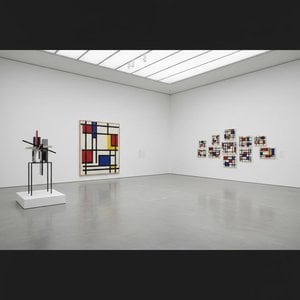
Przełomowy moment nadszedł w 1912 roku wraz z przeprowadzką Mondriana do Paryża. Miasto tętniło awangardową energią, a on znalazł się zanurzony w rewolucyjnym świecie kubizmu. To spotkanie okazało się transformacyjne. Zaczął dekonstruować formy, rozkładać obiekty na geometryczne komponenty, odchodząc od przedstawiania *czego* widzi, ku badaniu *jak* to widzi. Jednak Mondrian nie ograniczał się jedynie do przyjęcia nowego stylu; wyruszył w duchową podróż. Głęboko zainspirowany teozofią – mistyczną filozofią podkreślającą uniwersalne zasady leżące u podstaw rzeczywistości – wierzył, że sztuka może być narzędziem wyrażania tych ukrytych prawd. Ta wiara napędzała jego nieustanne dążenie do abstrakcji, skłaniając go do redukcji koloru i formy do ich najbardziej fundamentalnych elementów. Około 1917 roku ta podróż zakończyła się sformułowaniem neoplastycyzmu, często określanego jako ‘czysta sztuka plastyczna’. Była to radykalna estetyka oparta na podstawowych formach – prostych liniach, kątach prostych – i ograniczonej palecie: kolorach podstawowych (czerwonym, niebieskim, żółtym), czerni, bieli i szarości. Dla Mondriana ta redukcja nie oznaczała pustki; chodziło o ujawnienie ukrytej harmonii wszechświata, wizualną manifestację duchowego porządku. Wspólnie z Theo van Doesburgiem założył ruch *De Stijl* w celu promowania tych idei, umacniając neoplastycyzm jako siłę definiującą współczesną sztukę. Arcydzieła takie jak *Kompozycja z czerwonym, niebieskim i żółtym* oraz *Tableau no. 2 Kompozycja nr V* stanowią świadectwo tego okresu, ikoniczne reprezentacje jego niezachwianego zaangażowania w geometryczną czystość.
Nowojorskie Rytmy: Późnożyciowy Rozkwit
Wybuch II wojny światowej zmusił Mondriana do ucieczki z Europy w 1940 roku, znajdując schronienie w tętniącej życiem metropolii Nowego Jorku. Ta przeprowadzka okazała się niespodziewanie inspirująca. Sztywna siatka miejskiej struktury – wyraźny kontrast do bardziej organicznych krajobrazów, które znał – rezonowała z jego artystycznymi zasadami. Jego późniejsze prace, zwłaszcza *Broadway Boogie Woogie* (1943), odzwierciedlają ten wpływ. Zachowując podstawowe zasady neoplastycyzmu, obraz wprowadza dynamiczną energię, żywy rytm inspirowany pulsującym życiem miasta i muzyką jazzową. Proste linie są nadal obecne, ale teraz tańczą i przecinają się z większą swobodą, tworząc poczucie ruchu i radości. Było to tak, jakby Mondrian znalazł nowy język w swoim ustalonym słownictwie, sposób wyrażania złożoności współczesnej egzystencji miejskiej poprzez prostotę geometrycznej abstrakcji. Kontynuował udoskonalanie swojego stylu aż do śmierci w 1944 roku, pozostawiając po sobie dzieło, które nadal fascynuje i inspiruje.
Trwałe Dziedzictwo: Nieprzemijający Wpływ Mondriana
Wpływ Pieta Mondriana na świat sztuki jest nieoceniony. Nie był jedynie artystą; był wizjonerem, który fundamentalnie zmienił nasze rozumienie abstrakcji i jej potencjału wyrażania uniwersalnych prawd. Jego praca wywarła ogromny wpływ na niezliczonych artystów, ruchy i dyscypliny. Abstrakcyjny ekspresjonizm, minimalizm i malarstwo koloru pola są mu winne swoje pionierskie idee. Ale jego wpływ sięga daleko poza płótno. Zasady neoplastycyzmu – prostota, klarowność, geometryczny porządek – przeniknęły architekturę, projektowanie i modę. Od mebli i tekstyliów po elewacje budynków i układy graficzne, estetyka Mondriana nadal kształtuje nasz świat wizualny. Pozostaje ikoną współczesnej sztuki, symbolem nieustannego dążenia do abstrakcji i trwałej mocy artystycznej innowacji. Jak trafnie zauważył historyk designu Stephen Bayley, Mondrian stał się “totemem dla wszystkiego, co modernizm miał sobą reprezentować.” Jego dziedzictwo to nie tylko estetyczna piękność, ale także intelektualna rygorystyczność, duchowa głębia i niezachwiana wiara w transformacyjny potencjał sztuki.
Wpływy i Kluczowe Dzieła
- Wczesne Wpływy: Szkoła Hagi, holenderski impresjonizm, puntalizm, fauwizm stanowiły podstawę jego początkowych poszukiwań artystycznych.
- Transformacyjny Wpływ: Kubizm w Paryżu był kluczowy dla jego przejścia ku abstrakcji i formom geometrycznym.
- Filozoficzna Podstawa: Teozofia głęboko wpłynęła na jego przekonanie, że sztuka może wyrażać uniwersalne zasady duchowe.
- Kluczowe Dzieła: *Czerwony Młyn* (wczesny okres naturalistyczny), *Kompozycja z czerwonym, niebieskim i żółtym* (kwintesencja neoplastycyzmu), *Tableau no. 2 Kompozycja nr V* (demonstruje redukcję do podstawowych form), *Broadway Boogie Woogie* (późnożyciowy dynamizm inspirowany Nowym Jorkiem).
- Trwały Wpływ: Praca Mondriana nadal inspiruje artystów, architektów i projektantów, kształtując współczesną estetykę w różnych dziedzinach.
Jego zasady estetyczne wykraczały poza malarstwo, wpływając na architekturę, projektowanie i modę. Pozostaje ikoną współczesnej sztuki, reprezentując dążenie do abstrakcji i uniwersalnej harmonii.



 Podgląd w skali
 Zamów ręcznie malowaną reprodukcję
 Wyślij jako kartkę
 Udostępnij
 Szczegóły dzieła

 Pobierz
 Podobne obiekty
 RTG
RTG Pokaz slajdów
 Statystyki
 Rozwiń treść






































 Opcja ze szkłem jest dostępna wyłącznie w rozmiarach poniżej 110 cm