Początki i Formowanie się Wizji Artystycznej
Pierre-Auguste Renoir, urodzony w 1841 roku w Limoges we Francji, był postacią niezwykłą – od skromnych początków jako malarz porcelany do uznania go za jednego z czołowych mistrzów impresjonizmu. Jego życie to opowieść o niezachwianym oddaniu sztuce i głębokiej wrażliwości na piękno otaczającego świata. Wczesne lata Renoir’a naznaczone były przeprowadzką do Paryża wraz z rodziną, w poszukiwaniu lepszych możliwości ekonomicznych. To właśnie tętniące życiem miasto stało się źródłem inspiracji dla jego późniejszych dzieł. Początkowo uczył się malować na porcelanie – konieczność wynikająca z trudnej sytuacji finansowej rodziny – jednak młody Renoir znajdował ukojenie w częstych wizytach w Luwrze, gdzie studiował arcydzieła dawnych mistrzów, chłonąc ich techniki i rozwijając swój własny gust. Te pierwsze doświadczenia rozpaliły w nim pasję, która wykraczała poza rzemiosło; była to misja uchwycenia ulotnej piękności światła i życia na płótnie. Później zapisał się do pracowni Charles’a Gleyre’a, gdzie nawiązał przyjaźnie z innymi aspirującymi artystami – Claude’em Monetem, Alfredem Sisleyem i Frédéric Bazillem – co okazało się kluczowym momentem w kształtowaniu impresjonizmu.
Od Realizmu do Promiennych Wrażeń
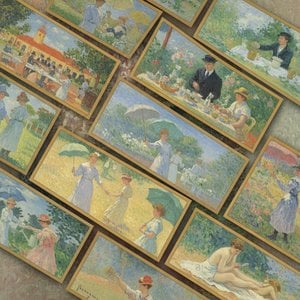
Rozwój artystyczny Renoir’a był fascynującą ewolucją, pod wpływem różnorodnych inspiracji. Początkowo skłaniał się ku realizmowi Gustave’a Courbeta i Édouarda Maneta, ceniąc ich za szczerość i bezpośredniość w przedstawianiu współczesnego życia. Jednak to barwne palety i zmysłowe formy Petera Paula Rubensa i Jeana-Antoine’a Watteau naprawdę go urzekły, wpajając mu głębokie poczucie piękna i skłonność do portretowania scen radości i beztroski. Te wczesne wpływy połączyły się, gdy Renoir zaczął kształtować swój własny unikalny styl, charakteryzujący się żywymi kolorami, rozbitymi pociągnięciami pędzla i koncentracją na uchwyceniu ulotnych efektów światła. Jego udział w pierwszej wystawie impresjonistycznej w 1874 roku był przełomowym momentem, choć początkowo spotkał się z krytyką ze strony tradycyjnych kręgów artystycznych. Ten śmiały krok oznaczał odrzucenie akademickich konwencji i przyjęcie nowej wizji artystycznej – takiej, która starała się uchwycić nie tylko to, co widzi oko, ale także to, jak *czuje* się doświadczenie danej chwili. Obrazy takie jak
Bal w Moulin de la Galette (1876) są tego doskonałym przykładem, zanurzając widzów w tętniącej atmosferze paryskiego nocnego życia z jego rozproszonym światłem słonecznym i radosnymi postaciami.
Uchwycenie Ulotnych Momentów Życia: Kluczowe Dzieła i Motywy
Twórczość Renoir’a to celebracja prostych przyjemności życia – intymnych spotkań, skąpanych w słońcu krajobrazów i promiennej urody ludzkiego ciała.
Luncheon of the Boating Party (1880-81) jest być może jednym z jego najbardziej ikonicznych dzieł, przedstawiającym wesołą grupę cieszącą się leniwym popołudniem na Sekwanie. Obraz to mistrzowski przykład uchwycenia światła i ruchu, z postaciami skąpanymi w ciepłym słońcu i odbiciami mieniącymi się w wodzie.
After the Bath (1885-87) prezentuje wybitny kunszt Renoir’a w portretowaniu kobiecego aktu, podkreślając delikatny odcień skóry i pełne gracji pozy. Jego obrazy nie są jedynie reprezentacjami rzeczywistości; są nasycone ciepłem, intymnością i radością, które głęboko rezonują z odbiorcami. Nie interesowały go wielkie narracje historyczne ani dramatyczne alegorie; zamiast tego skupiał się na uchwyceniu piękna inherentnego w codziennym życiu, podnosząc zwykłe chwile do rangi dzieł sztuki.
Dance at Bougival, kolejne znane dzieło, demonstruje jego zdolność do uchwycenia ulotnych wrażeń i efektów atmosferycznych, tworząc poczucie ruchu i spontaniczności.
Przesunięcie w Kierunku Formy i Struktury: Późniejsze Lata i Dziedzictwo
W latach 90. XIX wieku styl Renoir’a przeszedł znaczącą transformację. Choć nigdy całkowicie nie porzucił impresjonistycznych korzeni, zaczął skłaniać się ku bardziej rzeźbiarskiemu i klasycznemu podejściu, pod wpływem podróży do Włoch i ponownego zainteresowania formą i strukturą. Ta zmiana była częściowo spowodowana ograniczeniami fizycznymi – artretyzm stopniowo ograniczał jego mobilność, zmuszając go do dostosowania techniki. Pomimo tych wyzwań Renoir kontynuował malowanie z niezachwianym oddaniem, tworząc dzieła charakteryzujące się pełniejszymi postaciami i cieplejszą paletą barw. Jego późniejsze obrazy często odzwierciedlają bardziej kontemplacyjny nastrój, zachowując jednak ten sam podstawowy element celebracji piękna, który definiował jego wcześniejsze prace. Poza osiągnięciami artystycznymi, dziedzictwo Renoir’a rozciąga się na jego rodzinę; jego syn, Jean Renoir, został znanym filmowcem, przekazując twórczy duch przez pokolenia. Pierre-Auguste Renoir zmarł w 1919 roku, pozostawiając po sobie trwałe dzieło, które nadal inspiruje i zachwyca odbiorców na całym świecie. Pozostaje jedną z najbardziej ukochanych postaci w historii sztuki, cenioną za zdolność do uchwycenia radości życia i piękna ludzkiego doświadczenia z niezrównaną wrażliwością i gracją.
Trwały Wpływ
- Wpływ Renoir’a na kolejne pokolenia artystów jest niepodważalny. Jego nacisk na światło, kolor i uchwycenie ulotnych momentów utorował drogę wielu nowoczesnym ruchom artystycznym.
- Jego celebracja piękna i zmysłowości nadal rezonuje z odbiorcami dzisiaj, czyniąc jego twórczość powszechnie lubianą.
- Odegrał kluczową rolę w ustanowieniu impresjonizmu jako głównej siły w historii sztuki, kwestionując tradycyjne konwencje i otwierając nowe możliwości ekspresji artystycznej.
- Trwała popularność jego obrazów – odtwarzanych na niezliczonych plakatach, kalendarzach i innych produktach – świadczy o ponadczasowej jakości jego twórczości.



 Podgląd w skali
 Zamów ręcznie malowaną reprodukcję
 Wyślij jako kartkę
 Udostępnij
 Szczegóły dzieła

 Pobierz
 Podobne obiekty
 RTG
RTG Pokaz slajdów
 Statystyki
 Rozwiń treść






































 Opcja ze szkłem jest dostępna wyłącznie w rozmiarach poniżej 110 cm