DARMOWA KONSULTACJA ARTYSTYCZNA

x
Zamów wydruk Zamów wydrukZamów reprodukcję Zamów reprodukcję UdostępnijUdostępnij
Szczegóły dziełaSzczegóły dzieła Dodaj do ulubionych Dodaj do ulubionych PobierzPobierz Podobne obiektyPodobne obiekty RTGRTG Pokaz slajdówPokaz slajdów

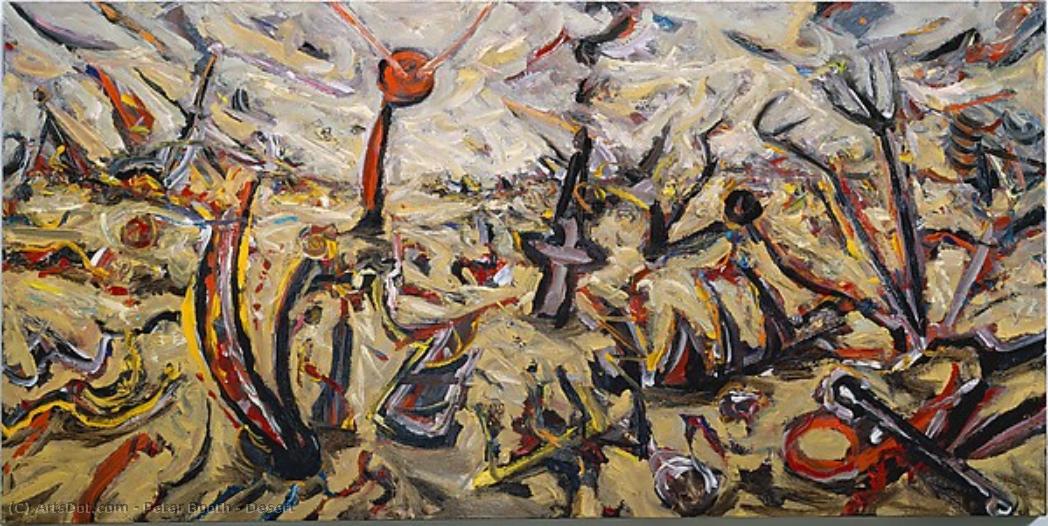
Desert

  • Data powstania1985
  • Wymiary122.0 x 244.0 cm

Explore Peter Booth's haunting Australian surrealist paintings! Dark narratives, symbolism & landscapes reflect childhood memories & anxieties. A key late-20th artist.

Kup wysokiej rozdzielczości, ulepszony obraz cyfrowy, znacznie lepszy niż podgląd online.

Każdy plik jest starannie przygotowywany przez naszych specjalistów przy użyciu zaawansowanych narzędzi oraz profesjonalnej, ręcznej retuszy. Dbamy o to, aby każdy obraz cechował się wyjątkową ostrością, precyzyjnym odwzorowaniem kolorów i subtelnymi detalami.

Ostateczny plik dostarczany jest drogą mailową w ciągu 72 godzin, zoptymalizowany do natychmiastowego wykorzystania w profesjonalnych zastosowaniach redakcyjnych i poligraficznych. To ta sama jakość, której ufają czołowe studia projektowe, wydawnictwa oraz galerie sztuki.

Obraz cyfrowy

Pobierz plik o wysokiej rozdzielczości do osobistego wyświetlania, druku oraz projektów kreatywnych.

Suma do zapłaty

$9.99

Zawarte w każdym zamówieniu na obraz cyfrowy

Profesjonalna dostawa cyfrowa, gwarantowana

Wybierając WahooArt.com, nie otrzymujesz jedynie obrazu – otrzymujesz profesjonalnie udoskonalone cyfrowe dzieło sztuki, stworzone z najwyższą precyzją i objęte gwarancją satysfakcji. Oto wszystko, co automatycznie dołączane jest do Twojego zamówienia:

shipping_icon
Błyskawiczna wysyłka e-mailowa

Plik z obrazem cyfrowym w wysokiej rozdzielczości zostanie przesłany na Twój adres e-mail w ciągu 72 godzin od złożenia zamówienia – gotowy do natychmiastowego użycia.

canvas_icon
Plik cyfrowy wzbogacony przez AI

Twoja grafika została profesjonalnie zoptymalizowana przy użyciu zaawansowanych narzędzi AI oraz ręcznej edycji, co zapewnia maksymalną szczegółowość, klarowność i wierność kolorów.

insurance_icon
Dożywotnia darmowa ponowna dostawa

Przypadkowo usunąłeś lub zgubiłeś swój plik? Bez obaw – prześlemy go Tobie ponownie w dowolnym momencie, bez żadnych opłat.

tax_icon
Bez opłat importowych – zawsze

Ciesz się swoją sztuką natychmiast, bez żadnych opłat celnych, należności ani kosztów dostawy – pliki cyfrowe są zawsze wolne od podatku.

color_icon
Gwarancja wierności kolorów

Dzięki zastosowaniu profesjonalnych narzędzi i procesów zarządzania barwą zapewniamy, że Twoje cyfrowe zdjęcie odzwierciedla oryginalne kolory tak wiernie, jak to tylko możliwe.

return_icon
60-dniowa gwarancja satysfakcji

Jeśli nie będziesz zadowolony ze swojego cyfrowego obrazu, poprawimy go lub zwrócimy 100% kosztów w ciągu 60 dni – bez żadnych pytań.

guarantee_icon
100% Gwarancja zwrotu pieniędzy

Nie zadowoleni? Otrzymaj pełny zwrot kosztów w ciągu 60 dni od otrzymania pliku cyfrowego – bez zbędnych pytań.

discount_icon
Rabaty na zamówienia hurtowe

Kup 3 obrazy, oszczędź 10% - Kup 5, oszczędź 15% - Kup 10+, oszczędź 20%. Idealne do projektów kreatywnych, galerii i agencji.

Opis obiektu kolekcjonerskiego

Peter Booth was born in Sheffield, England, in 1940. The son of a steelworker, he was familiar with the industrial landscape of northern England at an early age. He attended the Sheffield College of Art before his family emigrated to Australia in 1958. There, Booth worked as a laborer for several years and then entered the National Gallery School in Melbourne.In the early 1970s, Booth painted hard-edged abstractions of dark rectangles, primarily in black to signify social alienation. By 1977, however, he had begun working in figurative and landscape imagery as well as abstraction, and he continues to explore both directions to this day. In some works, Booth"s landscapes are peopled by strange mutant-like humanoid figures, which interact in violence or walk alone in isolation. In other works, such as Desert, the landscapes are more abstract, filled with recurring forms that resemble elements in some personal code.Booth"s interest in the individual"s potential both to dream and to destroy has been influenced by several earlier movements in art. One is the nineteenth-century European tradition of visionary Romanticism, as exemplified by the work of Francisco Goya and William Blake. Another is Abstract Expressionism, with its gestural handling and its release of forms from the artist"s subconscious.Booth"s subject matter, however, is unique to his own experience. In Desert, as in many of his landscapes, he looks to the prehistoric terrain of the Australian outback. Here he has interpreted its landscape as an uninhabitable territory marked with dead trees, thorn bushes, rocks, and animal skeletons. A lone cross-shaped form rises from the ground near the center of the composition. The environment of Desert appears apocalyptic, as though we are viewing it in the aftermath of some terrible natural or man-made disaster. As in much of his work, Booth has conjured up a mysterious world between the observed and the imagined.

Biografia artysty

Peter Booth: A Landscape of Dreams and Anxiety

Peter Booth (born November 2, 1940) is an Australian figurative and surrealist painter, considered one of the key late-20th-century Australian artists. His oeuvre is characterized by a profound emotional resonance—often dark narratives interwoven with esoteric symbolism—reflecting formative experiences rooted in Sheffield’s industrial heritage and its scarred history during World War II. From his early years amidst blackened factories and bombed buildings, Booth developed an artistic vision deeply attuned to the anxieties of modernity and the subconscious realm of dreams.

Early Life and Influences

Born in Houghton-le-Spring, Northumberland, England, Peter Booth’s childhood was profoundly shaped by the industrial landscape surrounding Sheffield—a city scarred by wartime bombing raids. This environment instilled within him a sensitivity to decay, disruption, and the lingering impact of trauma, themes that would permeate his artistic explorations throughout his career. His family emigrated to Australia in 1958, where he initially worked as a laborer before pursuing formal artistic training at the National Gallery School in Melbourne. It was here that he honed his skills and began to establish himself as an abstract painter, laying the groundwork for his subsequent shift towards figurative art.

Abstract Beginnings and Surrealist Exploration

Booth’s initial foray into abstraction—characterized by hard-edged rectangles primarily rendered in black—expressed a preoccupation with social alienation during the early 1970s. However, he swiftly moved beyond purely geometric forms, embracing figurative imagery alongside abstraction. This dual approach reflects influences from Romantic painters like Francisco Goya and William Blake, whose visionary art explored themes of psychological intensity and spiritual contemplation. Furthermore, Booth’s engagement with Abstract Expressionism—particularly the gestural handling championed by artists such as Jackson Pollock—provided him with techniques for conveying emotion and releasing imagery from the artist's subconscious.

The Emergence of Figurative Horror

By the late 1970s, Booth turned decisively towards figurative painting, focusing on depictions of disturbing dreams and nightmares. These works are marked by a palpable sense of unease and dread—a visceral reaction to imagined horrors that resonate with primal feelings buried beneath conscious awareness. As he himself describes, “such dreams do not come out of nowhere, but reflect on primal feeling buried in consciousness.” Recurring motifs include grotesque metamorphosing figures and desolate landscapes reminiscent of prehistoric terrains—particularly the Australian outback—where Booth seeks to capture the essence of an uninhabitable environment marked by decay and ruin.

Landscapes Charged with Symbolism

Booth’s landscapes are not merely representations of physical space; they are imbued with symbolic meaning, reflecting memories of his childhood in Sheffield and channeling the anxieties associated with industrial decline. His paintings often depict apocalyptic visions—images of destruction mirroring the devastation experienced during World War II—rendered in menacing forms with agitated brushstrokes that convey a sense of urgency and terror. Consider *Painting 1978*, which exemplifies this stylistic approach: “The dramatic black and red, yellow and white composition suggests both an industrial and a natural wasteland.” The heavy impasto paint texture underscores the artist’s intention to communicate intense emotion and psychological turmoil.

Notable Achievements and Legacy

Peter Booth's distinctive artistic vision—characterized by its exploration of dreamscapes, landscapes imbued with symbolic meaning, and unsettling figurative imagery—has cemented his place as one of Australia’s most important artists of the late 20th century. His retrospective exhibition at the Ian Potter Centre: National Gallery of Victoria in 2003 garnered critical acclaim and solidified his reputation as a master of surrealist expression. Continuing to push boundaries and engage with profound themes—the relationship between humanity and environment, the capacity for creation and destruction—Booth’s work remains powerfully evocative and intellectually stimulating, inviting viewers to confront anxieties about the human condition and contemplate the enduring influence of memory and subconscious experience.
Peter Booth

Peter Booth

1940 - , United Kingdom

Krótka nota

  • Artistic Movement Or Style: Figurative Surrealism
  • Artists Or Movements Influenced By This Artist: ['Abstract Expressionism']
  • Artists Who Influenced This Artist:
    • William Blake
    • Francisco Goya
    • James Ensor
  • Date Of Birth: November 2, 1940
  • Full Name: Peter Booth
  • Nationality: Australian
  • Notable Artworks:
    • Desert
    • Painting 1978
  • Place Of Birth: Sheffield, England