


Wydruki giclée lub płótna o jakości muzealnej, szybka realizacja i szeroki wybór opcji wykończenia. ( Zamów ręcznie malowaną reprodukcję Przejdź do wersji cyfrowej)





























Wybierz spośród naszych standardowych rozmiarów, które zachowują oryginalne proporcje dzieła sztuki.

Wpisz wymaganą szerokość i wysokość, aby dopasować grafikę do ramy lub ściany. Wydruk można jedynie przyciąć, nigdy nie powiększając go poza oryginalny obraz, dlatego format o innych proporcjach spowoduje utratę części kompozycji. Przed rozpoczęciem druku prześlemy Ci cyfrowy podgląd do zatwierdzenia. Obraz wyświetlany na tej stronie nie pokazuje rzeczywistego przycięcia — jedynie podgląd oddaje ten efekt.
Dostawa na cały świat () w ciągu 2 tygodni zamiast standardowych 4/5 tygodni. (11 Listopad)
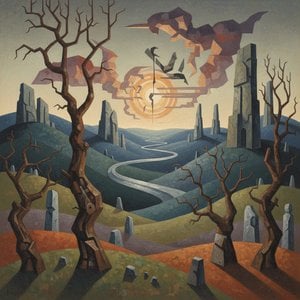
Landscape of Bleached Objects
Wymiary reprodukcji
Landscape of Bleached Objects is an oil on canvas painted by Paul Nash. Created circa 1934, the work emerged during a period when Nash was a central figure in the development of British modernism and the instigator of the Unit One group.
Born in Kensington, United Kingdom, in 1889, Nash established a significant presence in the twentieth-century art scene. His practice often integrated the formal qualities of found objects into symbolic, often surreal, landscapes. He remained active in the arts until his death in 1946.
The composition centers on two found objects situated within a barren, perhaps seaside, landscape. One form resembles a standing stone, while the other takes a phallic shape. These contrasting organic forms are positioned to cast a combined shadow across the ground. This shadow specifically embraces two egg-like shapes, creating a geometric relationship between the objects and their silhouettes.
The arrangement utilizes bleached, bone-like objects to populate an ambiguous setting. The visual weight is distributed through the interaction of these solid forms and the negative space created by their shadows. The subject matter relies on the following elements:
The landscape remains indistinct, providing a muted backdrop for the primary subjects. The interplay of light and shadow defines the spatial relationship between the organic forms and the terrain.
The work exhibits distinct abstract and surrealist tendencies, aligning with the Surrealist movement's interest in the subconscious. As a British surrealist painter and war artist, Nash utilized symbolic landscapes to recontextualize everyday objects. This approach often involved placing found items into an ambiguous setting to grant them a new identity and symbolic weight.
This piece belongs to a specific series in which the artist contemplated the personal beauty of natural elements. By isolating and magnifying these forms, the work moves away from traditional representation toward a more formal, poetic exploration of shape. The artist's practice during this period focused on several key interests:
As the instigator of the short-lived Unit One group, Nash helped bridge the gap between traditional landscape painting and modernist aesthetics. His style emphasizes the tension between the physical reality of natural objects and the dreamlike, illogical juxtapositions characteristic of Surrealism.
Dzieło „Landscape of Bleached Objects” – Paul Nash charakteryzuje się nasyceniem na poziomie Subtle Color oraz intensywnością Balanced.
Kolory dzieła „Landscape of Bleached Objects” – Paul Nash charakteryzują się Subtle Color nasyceniem. Nasycenie określa, jak żywe lub stonowane są barwy.
Paul Nash jest znany/a również pod pseudonimami: Paweł Nash.


1889 - 1946 , Wielka Brytania

Odkryj 25 arcydzieł Paula Klee – od abstrakcji po ekspresjonizm. Poznaj historie, techniki i inspiracje malarza. Reprodukcje obrazów najwyższej jakości na WahooArt.com. Eksploruj pełną kolekcję online!

Odkryj 25 arcydzieł Wassily Kandinskiego – pioniera abstrakcji i ekspresjonizmu! Poznaj historie, techniki i emocje kryjące się za jego kolorowymi kompozycjami. Reprodukcje obrazów najwyższej jakości na WahooArt.com. Eksploruj pełną kolekcję online!

Odkryj 10 arcydzieł abstrakcji geometrycznej! Poznaj historię Mondriana, Kandinskiego i Maleвича. Inspiracje wnętrzarskie z malarstwem abstrakcyjnym – reprodukcje najwyższej jakości na WahooArt.com. Eksploruj kolekcję online!
Explore the evocative landscapes & poignant war art of Paul Nash (1889-1946), a key figure in British Modernism. Discover his unique style and lasting impact on art history with WahooArt.

Odkryj 25 arcydzieł Paula Cézanne'a – od impresjonizmu po postimpresjonizm. Poznaj historie, techniki i inspiracje malarza, który zrewolucjonizował sztukę. Reprodukcje obrazów najwyższej jakości na WahooArt.com!
 Podgląd w skali 1:1
 Wyślij jako kartkę
 Udostępnij
 Szczegóły dzieła
 Przewodnik

 Pobierz obraz
 Podobne obiekty
 RTG
RTG Pokaz slajdów
 Pytania i odpowiedzi
 Statystyki


 Rozwiń treść









 Opcja ze szkłem jest dostępna wyłącznie w rozmiarach poniżej 110 cm


