Otrzymaj plik gotowy do druku, którego jakość znacznie przewyższa podgląd internetowy. Każdy sprzedawany przez nas obraz cyfrowy pochodzi z wysokorozdzielczego pliku wzorcowego w naszej bazie — zazwyczaj o szerokości od 5 000 do 15 000 pikseli — dzięki czemu możesz drukować w dużym formacie, mocno kadrować lub z pełnym przekonaniem odwzorowywać najdrobniejsze detale.
Żaden plik nie opuszcza naszego studia bez odpowiedniej obróbki. Ekspert ds. cyfrowej edycji sprawdza zgodność kolorów z oryginałem i w razie potrzeby je koryguje, a następnie za pomocą profesjonalnych narzędzi do retuszu poprawia ostrość oraz szczegółowość — zawsze zachowując wierność pociągnięciom pędzla i stylowi artysty. Rezultatem jest obraz, który wygląda jak prawdziwe dzieło, a nie jak przefiltrowany skan.
Zatwierdzasz przed finalizacją zamówienia: nasz ekspert prześle obraz drogą mailową w ciągu 72 godzin do Twojego wglądu. Nie jesteś zadowolony? Poproś o poprawki lub korektę, bądź o zwrot kosztów, jeśli jakość nie spełnia oczekiwań.
To jakość, na której polegają wydawcy, studia projektowe, galerie oraz drukarnie.
Pobierz plik o wysokiej rozdzielczości do osobistego użytku, druku oraz projektów kreatywnych. ( Przełącz na wydania drukowane Zamów ręcznie malowaną reprodukcję)
Wybierając WahooArt.com, nie otrzymujesz jedynie obrazu – otrzymujesz profesjonalnie udoskonalone cyfrowe dzieło sztuki, stworzone z najwyższą precyzją i objęte gwarancją satysfakcji. Oto wszystko, co automatycznie dołączane jest do Twojego zamówienia:
Plik z obrazem cyfrowym w wysokiej rozdzielczości zostanie przesłany na Twój adres e-mail w ciągu 72 godzin od złożenia zamówienia – gotowy do natychmiastowego użycia.
Twoja grafika została profesjonalnie zoptymalizowana przy użyciu zaawansowanych narzędzi AI oraz ręcznej edycji, co zapewnia maksymalną szczegółowość, klarowność i wierność kolorów.
Przypadkowo usunąłeś lub zgubiłeś swój plik? Bez obaw – prześlemy go Tobie ponownie w dowolnym momencie, bez żadnych opłat.
Ciesz się swoją sztuką natychmiast, bez żadnych opłat celnych, należności ani kosztów dostawy – pliki cyfrowe są zawsze wolne od podatku.
Dzięki zastosowaniu profesjonalnych narzędzi i procesów zarządzania barwą zapewniamy, że Twoje cyfrowe zdjęcie odzwierciedla oryginalne kolory tak wiernie, jak to tylko możliwe.
Jeśli nie będziesz zadowolony ze swojego cyfrowego obrazu, dokonamy jego poprawki lub zwrócimy 100% kosztów w ciągu 100 dni – bez zbędnych pytań.
Nie jesteś zadowolony? Otrzymaj pełny zwrot kosztów w ciągu 100 dni od otrzymania pliku cyfrowego – bez zbędnych pytań.
Kup 3 obrazy, oszczędź 10% - Kup 5, oszczędź 15% - Kup 10+, oszczędź 20%. Idealne do projektów kreatywnych, galerii i agencji.
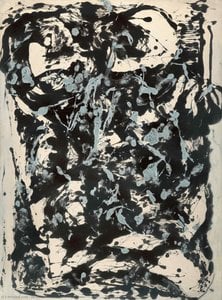
In the realm of Abstract Expressionism, few works capture the raw, unbridled tension of human struggle as poignantly as Paul Jackson Pollock’s “Untitled (Silkscreen I).” This striking black and white lithograph serves as a profound window into a mid-1950s psyche, presenting a scene that feels less like a static image and more like a captured moment of violent upheaval. The composition is densely packed, pulling the viewer into a claustrophobic arena where multiple figures appear locked in a desperate, fragmented encounter. There is no respite for the eye here; instead, one finds themselves navigating a labyrinth of overlapping forms and distorted human shapes that evoke a deep sense of unease and psychological distress.
The power of this piece lies in its ability to translate internal anxiety into external form. Through the use of aggressive, angular lines that dissect the paper, Pollock creates a visual language of disruption. The lack of traditional perspective flattens the space, forcing the struggle to the very surface of the work and amplifying the feeling of being trapped within the conflict. It is an evocative masterpiece for any collector or designer seeking to introduce a sense of dramatic intensity and intellectual depth into a curated space.
While Pollock is world-renowned for his revolutionary drip technique, “Untitled (Silkscreen I)” showcases his ability to translate energy through the meticulous medium of lithography. This process allowed for a remarkable range of tonal variations, where the interplay between deep, obsidian blacks and stark, piercing whites creates a dramatic chiaroscuro effect. The texture of the print is palpable; the varying densities of ink suggest a rhythmic, almost percussive application of material that mirrors the artist's physical engagement with his craft.
The technique employed here bridges the gap between spontaneous action and controlled printmaking. Each etched line and shaded area contributes to a sense of movement, as if the very ink were still settling upon the page. For those looking to adorn a sophisticated interior, this reproduction offers a sophisticated interplay of light and shadow, providing a focal point that is both visually arresting and texturally rich. It stands as a testament to how much emotion can be conveyed through the disciplined manipulation of a single color palette.
Beyond its formal qualities, “Untitled (Silkscreen I)” functions as a profound symbolic exploration of conflict and suffering. The distorted faces and fragmented limbs are not merely abstract shapes; they are emblems of a fractured existence. Influenced by the heavy emotional weight of Expressionist masters like Edvard Munch, Pollock utilizes this work to explore themes of vulnerability and the chaotic nature of human interaction. The piece does not seek to tell a literal story, but rather to evoke a visceral feeling—a resonance that lingers long after the initial viewing.
For the discerning art lover, this artwork offers more than mere decoration; it offers an experience. It invites contemplation on the nature of upheaval and the resilience of the human spirit amidst disorder. Whether placed in a modern gallery setting or as a bold statement piece in a contemporary living space, “Untitled (Silkscreen I)” brings with it an undeniable gravity and a timeless, haunting beauty that continues to fascinate and provoke.
Dzieło „Untitled (Silkscreen I)” – Jackson Pollock charakteryzuje się nasyceniem na poziomie Muted oraz intensywnością Monochromatic.
W ramach nurtu Expressionism, dzieło „Untitled (Silkscreen I)” cechuje się poziomem popularności Iconic.
Nastrój utrwalony w „Untitled (Silkscreen I)” – Jackson Pollock to Dramatic, a jego ton emocjonalny to Tense.

Paul Jackson Pollock, born in Cody, Wyoming, in 1912, was a restless spirit from the outset. His early life was marked by frequent relocation as his father pursued work as a land surveyor across the vast landscapes of the American West. This itinerant existence instilled in young Pollock a deep connection to the natural world and an exposure to diverse cultures, particularly through encounters with Native American art during those surveying trips – impressions that would subtly permeate his artistic vision later in life. Though he never explicitly imitated Indigenous styles, the raw energy and spiritual resonance of these early experiences undoubtedly left their mark.
Pollock’s formal artistic training began at the Manual Arts High School in Los Angeles, followed by studies at the Art Students League of New York under the tutelage of Thomas Hart Benton. Benton, a prominent figure in the Regionalist movement, emphasized rhythmic composition and narrative themes rooted in American life. While Pollock initially absorbed these lessons, his inherent inclination leaned toward more abstract explorations. He was also profoundly impacted by Mexican muralists like José Clemente Orozco, whose powerful depictions of social struggle resonated deeply with him. These early influences laid a foundation, but it was the burgeoning world of Surrealism that truly unlocked Pollock’s artistic potential.
The 1930s saw Pollock experimenting with various techniques, seeking alternatives to traditional brushwork. He began pouring paint, exploring its fluidity and unpredictable nature. However, it was around 1947 that his artistic trajectory underwent a radical transformation. Abandoning the easel altogether, Pollock laid canvases directly on the floor, initiating what would become known as his “drip technique.” He then proceeded to drip, splash, and fling paint onto the canvas from above, orchestrating a dynamic dance between artist, medium, and surface.
This wasn’t merely about applying paint; it was about embodying the act of creation itself. Pollock's canvases became arenas for physical expression, capturing the immediacy of his gestures and emotions. The resulting paintings are characterized by their “all-over” composition – a lack of central focus that invites the viewer to explore the entire surface as a unified field of energy. Intricate networks of lines and colors intertwine, creating a visual complexity that is both captivating and challenging. He employed unconventional tools—sticks, knives, even syringes—to manipulate the paint in unpredictable ways, further emphasizing the spontaneous nature of his process.
Pollock’s approach was deeply influenced by Jungian psychology, seeking to tap into universal symbols and primal energies. The paintings became a record of this performance, imbued with the artist's physical presence and emotional intensity. The dynamic energy that emanates from these canvases is palpable, drawing viewers into a world of pure abstraction.
Pollock’s most celebrated works—such as Number 1, 1950 (Lavender Mist), One: Number 31, 1950, Blue Poles: Number 11, 1952, and Convergence—are testaments to his revolutionary technique. These paintings are not simply images; they are records of a performance, imbued with the artist’s physical presence and emotional intensity. The dynamic energy that emanates from these canvases is palpable, drawing viewers into a world of pure abstraction.
His style transcends mere aesthetics; it's an exploration of process over product. Pollock sought to capture the immediacy of his actions and emotions on canvas, rejecting traditional notions of composition and representation. He delved into Jungian psychology, exploring archetypes and the subconscious in his art, seeking to tap into universal symbols and primal energies.
Pollock’s work quickly gained recognition within the burgeoning Abstract Expressionist movement, challenging established artistic norms and paving the way for future generations of artists. His innovative approach influenced a wide range of painters, including Lee Krasner, his wife and collaborator, who played a crucial role in shaping his artistic vision. Despite initial skepticism from some critics, Pollock’s reputation steadily grew throughout the 1950s, culminating in a landmark retrospective exhibition at the Museum of Modern Art in New York City in 1967. This event solidified his place as one of the most important and influential artists of the 20th century.
His legacy extends beyond the art world, impacting popular culture and inspiring countless individuals to embrace creativity and self-expression. Jackson Pollock’s daring experimentation with materials and techniques continues to resonate today, reminding us of the power of art to transcend boundaries and capture the essence of human experience.

1912 - 1956 , Stany Zjednoczone
 Podgląd w skali 1:1
 Wyślij jako kartkę
 Udostępnij
 Szczegóły dzieła
 Przewodnik

 Pobierz obraz
 Podobne obiekty
 RTG
RTG Pokaz slajdów
 Q&A
Q&A Statystyki

 Rozwiń treść