


 Olej na płótnieSztuka ściennaPost-Impressionism
 1877XIX wiek
 15.0 x 22.0 cm
Ręcznie malowany obraz olejny na płótnie, wykonany na zamówienie przez naszych artystów w wybranym przez Ciebie wymiarze i oprawie. ( Zamów wydruk Kup obraz wysokiej rozdzielczości)





























Wybierz spośród naszych standardowych rozmiarów, które zachowują oryginalne proporcje dzieła sztuki.

Możesz wprowadzić własne wymiary, aby dopasować obraz do konkretnej ramy lub przestrzeni. Jeśli wybrany rozmiar nie będzie odpowiadał proporcjom oryginału, przytniecie dzieło sztuki lub rozszerzymy je o dodatkowe elementy, ręcznie domalowane przez artystę. Przed rozpoczęciem produkcji wyślemy projekt cyfrowy do Twojej akceptacji.
Należy pamiętać, że podgląd na ekranie nie odzwierciedla rzeczywistego przycinania ani rozszerzania obrazu. Tylko projekt dokładnie pokaże ostateczną kompozycję.
Choć oferujemy możliwość zamówienia niestandardowych rozmiarów, zalecamy wybór wymiaru z gotowej listy, aby zachować oryginalne proporcje dzieła.
Dostawa na całym świecie () w ciągu 3–4 tygodni zamiast standardowych 5 tygodni. (7 Wrzesień). Bez kompromisów w kwestii jakości.


Zbieraczina Owoców
Wymiary reprodukcji
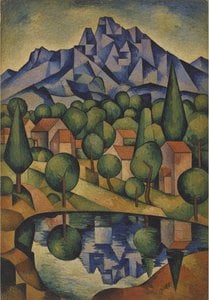
Paul Cézanne's "The Obstpfluckerin" – literally, "The Picker of Fruits" – is more than just a charming depiction of a rural scene; it’s a pivotal work that encapsulates the essence of Post-Impressionism and foreshadowed the radical shifts in art that would define the 20th century. Painted in 1877, this relatively small canvas (measuring only 15 x 22 cm) bursts with an energy and depth that belies its modest size, inviting viewers to step into a world where observation meets profound emotional resonance.
Cézanne’s approach to capturing the everyday was revolutionary for his time. Rather than striving for photographic realism – as many Impressionists did – he sought to distill the *essence* of his subject, focusing on its underlying structure and formal qualities. “The Obstpfluckerin” exemplifies this perfectly. Notice how Cézanne doesn’t simply record the appearance of the figures or the landscape; instead, he builds them up from basic geometric forms—planes of color and overlapping shapes—creating a sense of solidity and presence that feels remarkably tangible. The grassy foreground isn't rendered with delicate brushstrokes mimicking blades of grass; it’s constructed as a series of layered rectangles, suggesting volume and depth. Similarly, the trees are simplified into distinct blocks of green and blue, their branches reaching out like deliberate compositional elements.
To fully appreciate “The Obstpfluckerin,” it’s crucial to understand the context of Post-Impressionism. Emerging in the late 1880s, this movement represented a reaction against the fleeting effects of light and color championed by the Impressionists. Artists like Cézanne, Vincent van Gogh, and Paul Gauguin felt that Impressionism lacked emotional depth and intellectual rigor. They sought to imbue their work with personal expression, exploring themes of memory, symbolism, and subjective experience. Cézanne’s use of bold colors – particularly the vibrant greens and blues – and his deliberate distortion of perspective were direct challenges to traditional artistic conventions.
The painting's composition is dynamic, drawing the eye across the scene. The two figures in the foreground, engaged in their labor, are not idealized or romanticized; they possess a quiet dignity and a sense of groundedness. The horse and rider in the background add another layer of movement and visual interest, creating an interplay between stillness and action. Cézanne’s masterful use of light – dappled and diffused – further enhances this dynamic quality, suggesting the warmth of the sun filtering through the foliage.
While seemingly a straightforward depiction of rural life, “The Obstpfluckerin” is rich in symbolic meaning. The act of fruit picking itself represents labor, sustenance, and connection to the land – themes that resonated deeply with Cézanne’s own values. The figures' faces are deliberately obscured, allowing viewers to project their own emotions and interpretations onto them. This anonymity elevates the scene beyond a mere representation of a specific moment in time, transforming it into a universal meditation on human experience.
Cézanne wasn’t simply painting what he *saw*; he was conveying what he *felt*. “The Obstpfluckerin” is a testament to his ability to capture the essence of life—its beauty, its toil, and its inherent mystery—through a uniquely innovative and profoundly moving artistic vision. It remains a cornerstone of modern art, influencing generations of artists who followed in his footsteps.
The influence of Cézanne’s approach is undeniable. His emphasis on form, color, and subjective experience paved the way for movements like Cubism and Fauvism. Artists such as Vincent van Gogh, who also explored emotional intensity through bold brushstrokes and vibrant colors, owe a significant debt to Cézanne's pioneering work. Today, reproductions of “The Obstpfluckerin” offer a remarkable opportunity to appreciate this masterpiece in your own home or office – bringing a touch of artistic brilliance and contemplative beauty to any space.


1839 - 1906 , Francja
Explore the profound legacy of Paul Cézanne. Discover how his mastery of geometric forms and vibrant color bridged Impressionism and Cubism, offering timeless inspiration for fine art collectors and enthusiasts seeking to understand the foundations of modern art.

Explore the structural genius of Paul Cézanne. Discover how his mastery of geometric form and color bridged Impressionism and Cubism in this definitive guide for art enthusiasts and collectors.

 Podgląd w skali
 Wyślij jako kartkę
 Udostępnij
 Szczegóły dzieła

 Pobierz
 Podobne obiekty
 RTG
RTG Pokaz slajdów
 Rozwiń treść







 Opcja ze szkłem jest dostępna wyłącznie w rozmiarach poniżej 110 cm


