

Wydruki giclée lub płótna o jakości muzealnej, szybka realizacja i szeroki wybór opcji wykończenia. ( Zamów ręcznie malowaną reprodukcję Przejdź do wersji cyfrowej)





























Wybierz spośród naszych standardowych rozmiarów, które zachowują oryginalne proporcje dzieła sztuki.

Wpisz wymaganą szerokość i wysokość, aby dopasować grafikę do ramy lub ściany. Wydruk można jedynie przyciąć, nigdy nie powiększając go poza oryginalny obraz, dlatego format o innych proporcjach spowoduje utratę części kompozycji. Przed rozpoczęciem druku prześlemy Ci cyfrowy podgląd do zatwierdzenia. Obraz wyświetlany na tej stronie nie pokazuje rzeczywistego przycięcia — jedynie podgląd oddaje ten efekt.
Dostawa na cały świat () w ciągu 2 tygodni zamiast standardowych 4/5 tygodni. (7 Listopad)
Pots of Geraniums
Wymiary reprodukcji
Paul Cézanne, a name synonymous with bridging the gap between Impressionism and the nascent Cubist movement, possessed an extraordinary ability to distill the essence of everyday life onto canvas. Among his most celebrated works, "Pots of Geraniums" (c. 1888), housed within the National Gallery of Art in Washington D.C., offers a remarkably intimate glimpse into this artistic genius’s innovative approach to capturing spatial relationships and the subtle poetry of domesticity. More than just a still life, it's a carefully constructed meditation on light, form, and the quiet beauty found in the ordinary – a revelation that continues to resonate with viewers today.
Cézanne’s Post-Impressionist style is immediately apparent in “Pots of Geraniums.” Departing from the fleeting effects of Impressionism's emphasis on capturing light and atmosphere, Cézanne sought to impose a more structured order onto his subjects. Bold, deliberate brushstrokes—often applied in thick, rectangular planes—define the forms of the potted plants, the brown ceramic vessels, and the delicate blossoms within. These aren’t merely representations; they are explorations of geometric shapes, hinting at an underlying structure beneath the surface. The color palette is deliberately muted – earthy browns, soft greens, and subtle pinks – creating a sense of tranquility and grounding the vibrant geraniums against the backdrop of the composition.
The arrangement within “Pots of Geraniums” isn’t accidental; it's a deliberate exercise in spatial illusion. Cézanne masterfully manipulates perspective, creating an impression of depth that defies traditional two-dimensional representation. The foreground pot, rendered with greater detail and tactile texture, seems to advance towards the viewer, while the background plant recedes slightly, suggesting distance. This technique, anticipating Cubism’s fragmentation of form, demonstrates Cézanne's pioneering exploration of how we perceive space – not as a fixed reality, but as an active construction of our minds.
The placement of the vases and bowls is equally significant. They aren’t simply decorative elements; they act as anchors within the composition, providing visual stability while simultaneously contributing to the sense of depth. The arrangement subtly echoes Cézanne's fascination with architectural forms, drawing parallels between the natural world and the structured geometry of buildings. The inclusion of a vase, bowls, and other objects creates a harmonious blend of the man-made and the natural, inviting contemplation on the relationship between humanity and its environment.
While Cézanne’s work often resists straightforward interpretation, “Pots of Geraniums” carries a quiet symbolism. The geraniums themselves are frequently associated with domesticity, tranquility, and even remembrance – their vibrant color offering a welcome contrast to the muted tones of the surrounding objects. The arrangement as a whole evokes a sense of peaceful contemplation within a familiar setting, suggesting a moment of respite from the complexities of modern life. It’s a scene that speaks to the simple pleasures of home and the beauty found in everyday moments.
Cézanne's influence on 20th-century art is immeasurable. His innovative approach to form, color, and perspective paved the way for movements like Cubism, Fauvism, and Expressionism. Artists such as Pablo Picasso and Henri Matisse were profoundly inspired by his work, recognizing in it a radical departure from traditional artistic conventions. “Pots of Geraniums” stands as a testament to Cézanne’s genius – a deceptively simple painting that encapsulates a revolutionary vision of art and its relationship to the world around us. At WahooArt.com, we are proud to offer meticulously crafted oil painting reproductions of this masterpiece, allowing you to bring a piece of art history into your home and experience the quiet beauty of Cézanne’s vision firsthand.
Further Exploration: To delve deeper into Cézanne's oeuvre and the broader context of Post-Impressionism, consider exploring other notable works such as “Landscape with Cows in an Orchard” by Paul Gauguin, “Well by the Winding Road in the Park of Chateau Noir” by Paul Cézanne, “Three Huts, Tahiti” by Paul Gauguin, or visit Pots of Geraniums by Paul Cézanne on WahooArt.com for a detailed view.
For a comprehensive list of Cézanne’s paintings, refer to the List of paintings by Paul Cézanne on Wikipedia.
Dzieło „Pots of Geraniums” – Paul Cézanne pochodzi z okresu Modernizm. Klasyfikacja ta pozwala umiejscowić pracę w kontekście historii sztuki.
Dzieło "Pots of Geraniums" autorstwa Paul Cézanne znajduje się w należy do domeny publicznej – autorskie prawa majątkowe wygasły. Okres ochrony praw autorskich liczony jest od daty śmierci artysty, a Paul Cézanne zmarł(a) w 1906.
Podgląd dzieła „Pots of Geraniums” – Paul Cézanne można znaleźć na stronie Podgląd w pomieszczeniu.


1839 - 1906 , Francja

Discover the ethereal beauty of premium watercolor reproductions and bespoke commissions at WahooArt. From museum-quality landscapes to custom AI-enhanced portraits, our master artists deliver unparalleled craftsmanship and white-glove service for discerning collectors worldwide.
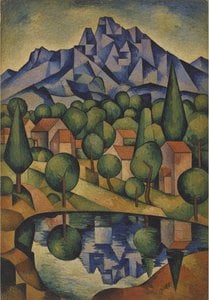
Explore the profound legacy of Paul Cézanne. Discover how his mastery of geometric forms and vibrant color bridged Impressionism and Cubism, offering timeless inspiration for fine art collectors and enthusiasts seeking to understand the foundations of modern art.

Explore the structural genius of Paul Cézanne. Discover how his mastery of geometric form and color bridged Impressionism and Cubism in this definitive guide for art enthusiasts and collectors.

Discover the ethereal beauty of watercolor through an art-historical lens. Master the delicate balance of light, fluidity, and pigment to capture the luminous essence of nature, inspired by the legendary techniques of the Old Masters and Impressionist greats.

Explore the profound evolution of Cubist still life, from Cézanne's structural foundations to the fragmented brilliance of Braque and Léger. Discover how geometric abstraction redefined reality through a sophisticated lens of form, color, and modern artistic mastery.
 Podgląd w skali 1:1
 Wyślij jako kartkę
 Udostępnij
 Szczegóły dzieła
 Przewodnik

 Pobierz obraz
 Podobne obiekty
 RTG
RTG Pokaz slajdów
 Pytania i odpowiedzi
 Statystyki


 Rozwiń treść









 Opcja ze szkłem jest dostępna wyłącznie w rozmiarach poniżej 110 cm


