Podgląd w skali 1:1 Podgląd AR Zamów ręcznie malowaną reprodukcję Przejdź do wersji cyfrowej Wyślij jako kartkę
Szczegóły dzieła Przewodnik Dodaj do ulubionych Pobierz obraz Podobne obiekty RTG Pokaz slajdów Statystyki

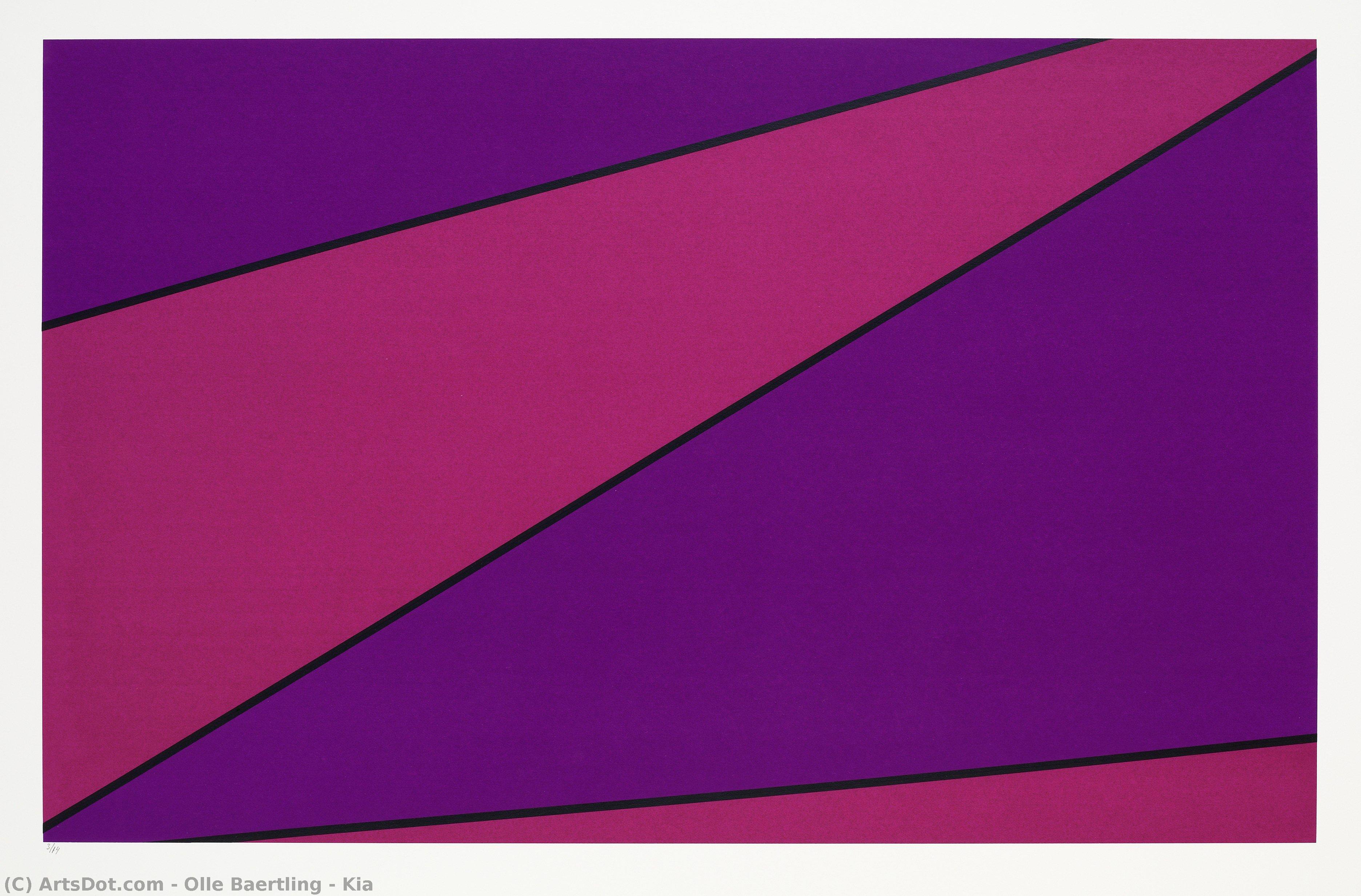
Kia

Experience 'Kia' by Olle Bärting, a striking 1980 geometric abstraction. Explore minimalist forms & vibrant purple/pink hues in this iconic Swedish work.

Discover Olle Baertling: Swedish artist known for geometric abstraction & Concretism. Explore his iconic works, exhibitions at Moderna Museet & international acclaim.

Dzieło sztuki prezentowane na tej stronie podlega ochronie prawem autorskim, co oznacza, że nie mamy prawa do tworzenia ani sprzedaży jego identycznej reprodukcji. Ochrona ta jest egzekwowana na mocy umów międzynarodowych, takich jak Konwencja berneńska oraz przez przepisy prawa krajowego, w tym te określone w Prawo autorskie USA – Tytuł 17.

Metoda ta jest w pełni zgodna z przepisami prawa autorskiego, ponieważ nie polega na kopiowaniu ani powielaniu chronionego dzieła. Stanowi ona kreatywną reinterpretację – nowy obraz, który czerpie inspirację z oryginału, ale nie jest z nim tożsamy.

Giclée / Wydruk artystyczny

Wydruki giclée lub płótna o jakości muzealnej, szybka realizacja i szeroki wybór opcji wykończenia. ( Zamów ręcznie malowaną reprodukcję Przejdź do wersji cyfrowej)

Standardowy format
personalizowane
CM
INCH

Wybierz spośród naszych standardowych rozmiarów, które zachowują oryginalne proporcje dzieła sztuki.

szerokość
wysokość

Wpisz wymaganą szerokość i wysokość, aby dopasować grafikę do ramy lub ściany. Wydruk można jedynie przyciąć, nigdy nie powiększając go poza oryginalny obraz, dlatego format o innych proporcjach spowoduje utratę części kompozycji. Przed rozpoczęciem druku prześlemy Ci cyfrowy podgląd do zatwierdzenia. Obraz wyświetlany na tej stronie nie pokazuje rzeczywistego przycięcia — jedynie podgląd oddaje ten efekt.

Dostawa na cały świat () w ciągu 2 tygodni zamiast standardowych 4/5 tygodni. (26 Październik)

Bezpłatna ekspresowa wysyłka na cały świat
Wysokiej jakości płótno lniane
Pełne ubezpieczenie przesyłki
Gwarancja zwrotu należności celnych i podatków importowych
Gwarancja wiernego odwzorowania kolorów
100-dniowa polityka zwrotów (tylko w przypadku wad)
Gwarancja 100% zwrotu pieniędzy
Zniżka przy zakupie wielu sztuk

Suma całkowita

zł 261

Kia

Giclée / Wydruk artystyczny

Wymiary reprodukcji

-

Cena całkowita

zł 261

Najważniejsze informacje

  • Subject or theme: Exploration of form & color
  • Title: Kia
  • Artistic style: Minimalism, Concretism
  • Notable elements or techniques:
    • Diagonal lines
    • Rectangular blocks
    • Limited palette

Quiz o sztuce

Do każdego pytania dotyczy tylko jedna poprawna odpowiedź.

Pytanie 1:
What is the primary artistic style of Olle Bärting’s ‘Kia’?
Pytanie 2:
Which of the following best describes the color palette used in ‘Kia’?
Pytanie 3:
What is a defining characteristic of the shapes used in ‘Kia’?
Pytanie 4:
Olle Bärting was a significant figure in Swedish art. In what year did he pass away?
Pytanie 5:
Which artistic movement shares similarities with Olle Bärting’s style, particularly in its exploration of shapes and color?

A Study in Geometric Harmony: Olle Bärting's "Kia"

Olle Bärting’s “Kia,” created in 1980, is a captivating exploration of geometric abstraction. This piece exemplifies the artist’s signature style – a minimalist approach that prioritizes form, color, and line to create a visually compelling experience. The artwork presents a structured composition dominated by shades of purple and pink, meticulously arranged within rectangular blocks intersected by bold black diagonal lines. It's a testament to Bärting’s ability to evoke profound impact through seemingly simple elements. The overall effect is one of quiet dynamism; the intersecting lines create a sense of movement while the limited color palette fosters a feeling of balance and order.

Style & Technique: Concretism and Precision

“Kia” firmly resides within the realm of abstract geometric art, drawing strong parallels with movements like Concretism and sharing affinities with artists such as Josef Albers and Sol LeWitt. Bärting’s technique is characterized by its precision and clarity. The clean lines delineating the rectangular blocks and the precise application of color suggest a deliberate process, potentially achieved through either painting with flat planes of acrylic or oil paints on canvas, or utilizing vector graphics in a digital creation. The absence of visible texture—no impasto or brushstrokes—further emphasizes the artwork’s focus on pure form and geometric relationships. This meticulous approach underscores Bärting's commitment to exploring the fundamental elements of visual language.

Historical Context & Artistic Significance

Created in 1980, “Kia” reflects a period when abstract art continued to evolve beyond purely expressive gestures towards more systematic and intellectual explorations. Bärting, already an established figure with significant international recognition—having exhibited at the São Paulo Biennale, Venice Biennale, and Documenta Kassel—was deeply engaged with this shift. His work during this time demonstrated a commitment to rigorous geometric principles while maintaining a distinct aesthetic sensibility. As one of Sweden’s most seminal postwar artists, Bärting's contribution lies in his ability to synthesize intellectual rigor with an accessible visual language, making abstract art both engaging and thought-provoking. His frequent exhibitions at Moderna Museet in Stockholm further cemented his place within the Scandinavian artistic landscape.

Symbolism & Emotional Resonance

While “Kia” is an abstract work devoid of representational imagery, it’s rich with symbolic potential and emotional resonance. The choice of purple and pink—colors often associated with creativity, spirituality, and emotion—imbues the composition with a subtle warmth. The geometric structure itself evokes feelings of calm and order, suggesting a search for harmony within complexity. The interplay of lines and shapes creates a visual rhythm that is both stimulating and soothing. Ultimately, “Kia” invites viewers to contemplate the beauty inherent in pure form and color relationships, offering a moment of quiet contemplation and aesthetic pleasure.

Pytania i odpowiedzi

Czy obraz „Kia” – Olle Baertling można swobodnie reprodukować?

Jeśli chodzi o prawa autorskie, "Kia" znajduje się w nadal objęte ochroną prawa autorskiego.

Czy dostępny jest przewodnik do dzieła „Kia” – Olle Baertling?

Przewodnik po "Kia" to strona Karta informacyjna dla uczniów dzieła sztuki – nadrukowalna karta informacyjna zawierająca opis utworu, informacje o autorstwie oraz tabelę danych (artysta, daty, technika, wymiary oryginału, kolekcja).

W jaki sposób tematyka dzieła "Kia" odnosi się do typowych motywów twórczości Olle Baertling?

Wśród motywów charakterystycznych dla twórczości Olle Baertling – takich jak josef albers’ color interaction studies, sol lewitt’s systematic geometric forms, scandinavian design principles evident, exploration of pure form and color, reflects postwar swedish abstraction, minimalism & concretism's core tenets, part of baertling’s geometric series – dzieło „Kia” wprowadza własne skupienie na abstract, geometric, minimalism, color fields, rectangles, lines, swedish art, concretism.


Biografia artysty

The Genesis of a Visionary

In the quiet landscapes of Halmstad, where Olle Baertling was born in 1911, a different kind of vision was beginning to take shape—one that would eventually transcend the borders of Sweden to redefine the very essence of modern abstraction. His journey was not one of traditional academic training, but rather a profound intellectual evolution. While his days were often occupied by the meticulous world of finance as a currency dealer in Stockholm, his private hours were dedicated to an uncompromising pursuit of pure form. This duality of life—the structured precision of banking paired with the boundless energy of the avant-garde—became the bedrock of a style that would eventually command international acclaim.

His early explorations were far removed from the sharp angles for which he is now famous. In his formative years, Baertling’s work leaned toward the expressive, capturing the shifting light and movement of Stockholm's cityscapes. However, as he absorbed the radical currents of Concretism and Suprematism, a transformation occurred. He began to strip away the representational, seeking instead a visual language composed entirely of lines, planes, and vibrant hues, moving toward an art that did not depict reality but created its own.

The Geometry of Motion

Baertling’s mature style is a visual symphony of angles and color, designed to engage the viewer's intellect and evoke a sense of dynamic energy. Influenced by the monumental legacies of Kazimir Malevich and Piet Mondrian, he developed a method of painting that prioritized structure and rhythm over illusionistic depth. His canvases are often dominated by bold, intersecting triangles and sharp diagonals that seem to vibrate against one another. There is a remarkable tension in his compositions; through the precise application of color, he creates an effect where shapes appear to surge forward or recut into an infinite, unseen horizon.

The technique itself reflects a commitment to clarity and precision. His work often possesses the remarkably flat surface and clean lines characteristic of screen printing, even when executed with a brush. This deliberate flatness challenges traditional notions of perspective, forcing the eye to confront the two-dimensional power of the medium. By utilizing a palette that could range from the softest mint greens to the most piercing purples, Baertling achieved a sense of kinetic energy, where the artwork feels less like a static object and more like a captured moment of cosmic movement.

A Legacy of International Distinction

The significance of Baertling’s contribution to the postwar art movement is cemented by his presence on the world's most prestigious stages. He did not merely participate in the discourse of geometric abstraction; he helped define its Swedish identity for a global audience. His career was marked by several monumental milestones:

  • Solo Exhibitions at Moderna Museet: Showcasing his distinctive style to the heart of the Swedish art world.
  • The 1959 São Paulo Biennale: A pivotal moment that established his reputation within international art discourse.
  • Documenta Kassel (1977): Providing a crucial platform for engaging with the leading contemporary artists of his era.

Ultimately, Olle Baertling remains a towering figure in the history of Modernism. His ability to translate complex mathematical rhythms into profound emotional experiences ensures that his work continues to resonate. He left behind a legacy where art is not a window into another world, but a construction of a new, infinite space, built from nothing more than the pure, unyielding strength of a single line or a splash of color.

Olle Baertling

Olle Baertling

1911 - 1981 , Sweden

Krótka nota

  • Full Name: Olle Baertling
  • Nationality: Swedish
  • Date Of Birth: 1911
  • Date Of Death: 1981
  • Place Of Birth: Halmstad, Sweden
  • Notable Artworks:
    • Geometric Composition
    • Deno
    • Kia
  • Artistic Movement Or Style: Geometric Abstraction & Concretism
  • Artists Who Influenced This Artist:
    • Constructivism
    • Suprematism