Podgląd w skali 1:1 Podgląd AR Przełącz na wydania drukowane Przejdź do wersji cyfrowej Wyślij jako kartkę
Szczegóły dzieła Przewodnik Dodaj do ulubionych Pobierz obraz Podobne obiekty RTG Pokaz slajdów Statystyki

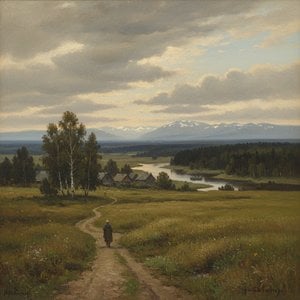
Droga Gigantów

Odkryj "Droga Gigantów" – oszałamiającą malowidło stworzone przez Nikołasa Roericha! Podziwiaj piękno natury i symboliczne przesłanie tego ikonicznego arcydzieła.

h2>A Life Immersed in Art and Spirit</h2> Nicholas Roerich

Ręcznie malowana reprodukcja olejowa

Ręcznie malowany obraz olejny na płótnie, wykonany na zamówienie przez naszych artystów w wybranym przez Ciebie wymiarze i oprawie. ( Przełącz na wydania drukowane Przejdź do wersji cyfrowej)

Corner sample of the P118B picture frame: polistyren formowany, 5 cm wide and 3 cm thick
P118B zł10
Corner sample of the P118H picture frame: polistyren formowany, 5 cm wide and 3 cm thick
P118H zł10
Corner sample of the P118W picture frame: polistyren formowany, 5 cm wide and 3 cm thick
P118W zł10
Corner sample of the P438Z picture frame: polistyren formowany, 5.5 cm wide and 3.5 cm thick
P438Z zł10
Corner sample of the P508JH picture frame: polistyren formowany, 7 cm wide and 3.5 cm thick
P508JH zł12
Corner sample of the P508YH picture frame: polistyren formowany, 7 cm wide and 3.5 cm thick
P508YH zł12
Corner sample of the P805H picture frame: polistyren formowany, 5 cm wide and 3.5 cm thick
P805H zł10
Corner sample of the P805Z picture frame: polistyren formowany, 5 cm wide and 3.5 cm thick
P805Z zł10
Corner sample of the P919BZ picture frame: polistyren formowany, 7 cm wide and 3.5 cm thick
P919BZ zł10
Corner sample of the P919G picture frame: polistyren formowany, 7 cm wide and 3.5 cm thick
P919G zł10
Corner sample of the P919XJ picture frame: polistyren formowany, 7 cm wide and 3.5 cm thick
P919XJ zł10
Corner sample of the P959ZH picture frame: polistyren formowany, 5 cm wide and 3 cm thick
P959ZH zł10
Corner sample of the P968JZ picture frame: polistyren formowany, 6 cm wide and 4 cm thick
P968JZ zł12
Corner sample of the W106C picture frame: lite drewno, 5 cm wide and 3 cm thick
W106C zł8
Corner sample of the W218G picture frame: lite drewno, 5 cm wide and 3 cm thick
W218G zł10
Corner sample of the W218JH picture frame: lite drewno, 5 cm wide and 3 cm thick
W218JH zł8
Corner sample of the W218Y picture frame: lite drewno, 5 cm wide and 3 cm thick
W218Y zł10
Corner sample of the W307PJ picture frame: lite drewno, 6 cm wide and 3 cm thick
W307PJ zł10
Corner sample of the W316G picture frame: lite drewno, 6 cm wide and 3 cm thick
W316G zł10
Corner sample of the W316PJ picture frame: lite drewno, 6 cm wide and 3 cm thick
W316PJ zł8
Corner sample of the W316Y picture frame: lite drewno, 6 cm wide and 3 cm thick
W316Y zł10
Corner sample of the W398PJ picture frame: lite drewno, 5 cm wide and 3 cm thick
W398PJ zł8
Corner sample of the W4111J picture frame: lite drewno, 6.5 cm wide and 3.5 cm thick
W4111J zł10
Corner sample of the W500HY picture frame: lite drewno, 7 cm wide and 5 cm thick
W500HY zł15
Corner sample of the W500JH picture frame: lite drewno, 7 cm wide and 5 cm thick
W500JH zł15
Corner sample of the W692G picture frame: lite drewno, 8 cm wide and 4 cm thick
W692G zł12
Corner sample of the W849H picture frame: lite drewno, 5 cm wide and 3 cm thick
W849H zł8
Corner sample of the W940BG picture frame: lite drewno, 7.5 cm wide and 4.5 cm thick
W940BG zł15
Corner sample of the W953PJ picture frame: lite drewno, 6 cm wide and 3.5 cm thick
W953PJ zł8

Standardowy format
personalizowane
CM
INCH

Wybierz spośród naszych standardowych rozmiarów, które zachowują oryginalne proporcje dzieła sztuki.

szerokość
wysokość

Wpisz wymaganą szerokość i wysokość, aby obraz pasował do Twojej ramy lub ściany. Ponieważ jest to dzieło malowane ręcznie, w przypadku rozmiaru o innych proporcjach artysta może domalować nieco więcej wokół obrazu lub przyciąć jego fragmenty — wybór należy do Ciebie. Przed rozpoczęciem pracy prześlemy Ci cyfrową wizualizację do zatwierdzenia. Obraz widoczny na tej stronie nie przedstawia rzeczywistego efektu — jedynie wizualizacja oddaje realny rezultat.

Przykłady możliwych zmian: Zamień twarz na zdjęcie klienta; Dodaj zwierzę domowe (np. zamień kota na psa); Ukryj wiadomość w tle; Zmień krajobraz lub elementy tła.
Po złożeniu zamówienia zespół WahooArt.com skontaktuje się z klientem drogą mailową w celu uzyskania instrukcji i prześle wizualizację projektu

Dostawa na całym świecie () w ciągu 3–4 tygodni zamiast standardowych 5 tygodni. (25 Październik). Bez kompromisów w kwestii jakości.

Bezpłatna ekspresowa wysyłka na cały świat
Wysokiej jakości płótno lniane
Pełne ubezpieczenie przesyłki
Gwarancja zwrotu należności celnych i podatków importowych
Gwarancja wiernego odwzorowania kolorów
100-dniowa polityka zwrotów (tylko w przypadku wad)
Gwarancja 100% zwrotu pieniędzy
Zniżka przy zakupie wielu sztuk

Suma całkowita

zł 1044

Droga Gigantów

Technika reprodukcji

Wymiary reprodukcji

-

Cena całkowita

zł 1044

Najważniejsze informacje

  • Title: Way of Giants
  • Artistic style: Realizm, Impresjonizm
  • Influences:
    • Sztuka Rosyjska
    • Wizje Roericha
  • Year: 1914
  • Medium: Painting

Quiz o sztuce

Do każdego pytania dotyczy tylko jedna poprawna odpowiedź.

Pytanie 1:
Jaką główną tematykę przedstawia obraz "Lake of the Moon"?
Pytanie 2:
W jakim roku został namalowany obraz "Lake of the Moon"?
Pytanie 3:
Kto jest artystą odpowiedzialnym za stworzenie tego obrazu?
Pytanie 4:
Co symbolizuje księżyc na obrazie, według interpretacji Roeriha?
Pytanie 5:
Jaką technikę malarską stosował Roerich przy tworzeniu tego obrazu?

An Echo of Spirit: The World of Nicholas Roerich

Nicholas Roerich’s work transcends mere representation; it is a portal to a deeply felt spiritual landscape. Born in 1874 amidst the intellectual ferment of Imperial Russia, Roerich’s life was inextricably linked to his art. He wasn’t simply painting what he saw; he was translating an inner vision, informed by archaeological expeditions, philosophical inquiry, and a profound belief in the interconnectedness of humanity and nature. His artistic journey began with formal training at St. Petersburg University and the Imperial Academy of Arts, yet it quickly evolved into something far more ambitious – a quest to capture not just the visual beauty of the world but its underlying spiritual essence. This pursuit led him on extensive travels across Asia and South America, immersing him in ancient cultures and fostering a unique perspective that profoundly shaped his artistic output.

The Painting's Subject: A Lunar Reverie

"Lake of the Moon," painted circa 1914, presents a breathtaking vista of a tranquil lake reflecting the ethereal glow of a full moon. The composition is dominated by the shimmering surface of the water, meticulously rendered with layers of translucent paint to evoke the play of light and shadow. Towering mountains frame the scene in the distance, their peaks shrouded in mist, adding a sense of scale and mystery. A small boat rests gently on the lake’s edge, suggesting human presence within this vast, natural setting – a poignant reminder of our place within the grand scheme of things. The artist's deliberate choice to depict a moonlit scene speaks to a fascination with cycles, transformation, and the hidden realms of consciousness.

Technique and Style: A Fusion of Realism and Symbolism

Roerich’s technique is characterized by its remarkable detail and luminous quality. He employed a layering method – *glazing* – building up thin washes of color over dry underlayers, creating an effect of incredible depth and atmospheric perspective. This meticulous approach, combined with his mastery of color theory, results in a painting that seems to radiate light itself. While rooted in realism, Roerich’s work is infused with symbolic elements. The moon, a recurring motif in his oeuvre, represents intuition, the subconscious mind, and spiritual enlightenment. The mountains symbolize strength, stability, and connection to the earth, while the boat embodies humanity's journey of self-discovery. His style can be categorized as part of the Russian Symbolist movement, blending naturalistic observation with subjective emotional expression.

Symbolism and Spiritual Resonance

Beyond its aesthetic beauty, “Lake of the Moon” is rich in symbolic meaning. Roerich was deeply interested in esoteric traditions and believed that art could be a vehicle for spiritual transformation. The painting’s serene atmosphere evokes a sense of tranquility and contemplation, inviting the viewer to connect with their own inner world. The reflection of the moon on the water symbolizes the duality of existence – the interplay between light and darkness, consciousness and unconsciousness. It's believed that Roerich imbued his works with protective symbols, intended to ward off negative energies and promote harmony. The precise interpretation of these symbols remains a subject of ongoing scholarly debate, adding another layer of intrigue to this captivating artwork.

Historical Context: A Moment of Transition

Painted in 1914, just before the outbreak of World War I, “Lake of the Moon” reflects a period of profound social and intellectual upheaval. The rise of modernism challenged traditional artistic conventions, while spiritual movements offered alternative paths to meaning. Roerich’s work can be seen as a response to these changes – a reaffirmation of timeless values and a celebration of nature's enduring beauty. The painting’s quiet contemplation offers a poignant reminder of the importance of seeking solace and inspiration in the face of adversity.

Pytania i odpowiedzi

Do którego etapu kariery Nikola Roerich należy dzieło „Droga Gigantów” (1914)?

Biorąc pod uwagę datę powstania (1914), dzieło „Droga Gigantów” wpisuje się w Mature Period twórczości Nikola Roerich.

Ile lat miał Nikola Roerich, gdy powstało dzieło „Droga Gigantów”?

Gdy w 1914 roku powstało dzieło „Droga Gigantów”, Nikola Roerich – urodzony/a w 1874 – miał/a 40 lat.

Jaki nastrój emocjonalny budzi „Droga Gigantów” – Nikola Roerich?

„Droga Gigantów” – Nikola Roerich emanuje Sielankowy emocjonalnym nastrojem.


Biografia artysty

A Life Immersed in Art and Spirit

Nicholas Roerich, born October 9, 1874, in the vibrant cultural heart of Saint Petersburg, Russia, was a figure whose life transcended the boundaries of artistic expression. He wasn’t merely a painter; he was an archaeologist, a writer, a philosopher, and a tireless advocate for peace and cultural preservation. His upbringing, steeped in both intellectual rigor – his father was a notary public – and artistic appreciation thanks to his mother, laid the foundation for a remarkably multifaceted career. Roerich simultaneously pursued studies in law and art at St. Petersburg University and the Imperial Academy of Arts beginning in 1893, demonstrating an early commitment to a broad understanding of the world. This dual path wasn’t contradictory for him; rather, it reflected a belief that artistic vision needed grounding in historical context and intellectual discipline. He received his artist designation in 1897 and completed his law degree the following year, setting the stage for a life dedicated to both creative exploration and reasoned action.

The Allure of Symbolism and Theatrical Innovation

Roerich’s artistic development was profoundly shaped by the currents of Russian Symbolism, a movement that sought to evoke emotional and spiritual depths through evocative imagery and suggestive forms. He quickly became involved with Sergei Diaghilev's influential “World of Art” society, eventually assuming its presidency from 1910 to 1916. This association proved pivotal, exposing him to a network of innovative artists, composers, and thinkers who were redefining the landscape of Russian art. His early work revealed a fascination with archaeology and stage design, leading to groundbreaking collaborations with Diaghilev’s Ballets Russes. Roerich's designs for productions like Alexander Borodin's *Prince Igor* (1909) and, most famously, Igor Stravinsky’s revolutionary *The Rite of Spring* (1913), were not simply backdrops; they were integral components of the theatrical experience. He blended meticulous historical research with a bold imaginative vision, creating visually stunning environments that amplified the emotional power of the music and choreography. These designs weren't merely decorative; they were attempts to evoke primordial forces and ancient rituals, reflecting the Symbolist interest in myth and spirituality. His work was also influenced by apocrypha and medieval sectarian writings like the Dove Book, adding layers of esoteric meaning to his artistic creations.

A Journey Towards Mysticism and Himalayan Visions

As Roerich’s career progressed, his paintings underwent a significant transformation, increasingly embracing mystical and spiritual themes. This shift was fueled by his growing interest in Theosophy and Eastern religions, philosophies that emphasized the interconnectedness of all things and the pursuit of inner wisdom. His *Architectural Studies* series (1904–1905) showcased not only his architectural skill but also a deep commitment to preserving cultural heritage, foreshadowing his later advocacy for protecting art during times of conflict. Recurring motifs began to emerge in his work: majestic landscapes, ancient cities shrouded in mystery, and figures imbued with spiritual significance like St. Panteleimon and Kuan Yin. He embarked on extensive travels throughout Central Asia, conducting archaeological research and documenting ancient cultures, experiences that deeply informed his artistic vision and reinforced his belief in the importance of cultural understanding. These journeys to remote regions profoundly shaped his worldview, leading him to believe in a universal spiritual consciousness and the interconnectedness of humanity with nature.

Key Works & Continuing Relevance

  • Saint Nicholas: A detailed monochrome mural showcasing medieval art and heraldic symbolism.
  • City: Evocative depictions of ancient urban landscapes, reflecting his archaeological interests.
  • Lake of the Nagas: A tempera painting blending symbolism and nature, exemplifying his unique artistic vision.
Roerich’s legacy continues to resonate today. In an era marked by cultural conflict and environmental concerns, his advocacy for preservation feels more relevant than ever. His art invites us to contemplate the mysteries of existence, the power of spirituality, and the importance of safeguarding our shared human heritage. He left behind a body of work that is not only visually stunning but also deeply meaningful, offering a timeless message of peace, understanding, and respect for all cultures.

Legacy of Preservation and Enduring Influence

Nicholas Roerich was a dedicated activist for protecting art and architecture during times of war. Recognizing the vulnerability of cultural treasures, he spearheaded the creation of the Roerich Pact in 1935 – an international treaty designed to safeguard cultural objects from destruction. This initiative earned him multiple nominations for the Nobel Peace Prize, underscoring his profound humanitarianism. His tireless efforts demonstrated a belief that preserving cultural heritage was essential not only for understanding the past but also for building a more peaceful future. Today, Roerich’s work is celebrated in prominent museum collections worldwide, including the Astrakhan State Picture Gallery and, notably, the Nicholas Roerich Museum in New York City. His impact on Russian art and culture remains immeasurable. He bridged the gap between artistic expression and spiritual exploration, influencing generations of artists and thinkers with his visionary approach. He is remembered not only as a painter but as a scholar, a humanitarian, and a beacon of hope for cultural preservation.

Nikola Roerich

Nikola Roerich

1874 - 1947 , Rosja

Krótka nota

  • Artistic Movement Or Style: Символизм, духовное искусство
  • Artists Or Movements Influenced By This Artist: ['Русский символизм']
  • Artists Who Influenced This Artist: ['Сергей Дягилев']
  • Date Of Birth: 9 октября 1874
  • Date Of Death: 13 декабря 1947
  • Full Name: Nicholas Roerich
  • Nationality: Русский
  • Notable Artworks:
    • Святой Николай
    • Город
    • Озеро Нага
  • Place Of Birth: Санкт-Петербург, Россия
Odkryj dzieła sztuki uporządkowane według tematów, stylów i cech charakterystycznych.