Transition – A Reflection of Egyptian Identity Amidst Change
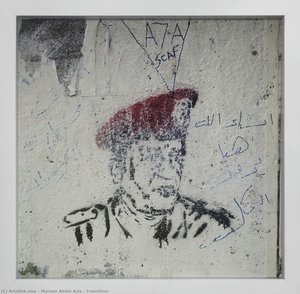
“Transition” by Myriam Abdel Aziz isn’t merely a painting; it's a visual chronicle of a pivotal moment in Egyptian history—the February 11th uprising that ousted President Mubarak and ushered in an era fraught with uncertainty. Captured on canvas, this artwork embodies the spirit of resilience and the urgent need for artistic expression during times of upheaval.
The piece’s dominant aesthetic is documentary photography blended with stylistic elements reminiscent of cinematic art, specifically drawing inspiration from Pakistani film posters like “Aandhi Shakar.” Abdel Aziz meticulously recreated these posters as a painting, demonstrating her commitment to capturing visual narratives and conveying emotion through carefully considered composition. This initial influence instilled in her a distinctive approach characterized by dramatic perspectives and stylized map designs.
Composition & Symbolism: The Weight of History
At the artwork’s core is a portrait of a man wearing a striking red hat—a figure representing military authority, instantly anchoring the viewer to the political landscape of Egypt. Surrounding him are layers of graffiti art in Arabic script and other markings, creating a dynamic yet deliberately chaotic scene. This visual layering isn't accidental; it mirrors the fractured nature of Egyptian society during the transition period.
The textured wall serves as more than just a backdrop—it symbolizes the scarred surface of Egypt’s past, reflecting the challenges faced by its citizens as they navigated the turbulent shifts brought about by the revolution. The red hat itself carries significant symbolic weight, representing leadership and perhaps allegiance to forces shaping the nation's future.
Technique & Material: Ephemeral Beauty
Abdel Aziz skillfully employs spray paint—a technique commonly used in urban art—to achieve a raw and immediate visual impact. The textured surface of the wall complements this method, enhancing the artwork’s authenticity and conveying its fleeting existence. Graffiti, traditionally viewed as transient forms of expression, underscore the ephemeral nature of artistic endeavors during periods of social transformation.
The muted color palette—primarily shades of grey, black, and white—contributes to the artwork's solemn mood. Subtle tonal variations suggest depth and texture within the graffiti layers, inviting contemplation on the complexities of Egyptian identity and the enduring legacy of political struggle. The overall impression is one of tension, conflict, and a poignant awareness of history’s passage.
Rawiya Collective & Artistic Vision
Myriam Abdel Aziz's artistic journey solidified her dedication to portraying Arab women's stories with sensitivity and nuance—a mission embraced by Rawiya Collective. This collective’s ethos encouraged exploration of themes like vulnerability, resilience, and the subtle shifts occurring within communities—elements that consistently permeate her photographic oeuvre.
“Transition” exemplifies Abdel Aziz’s skill in conveying emotion through visual storytelling, mirroring the spirit of her artistic endeavors. It stands as a testament to the power of art to capture moments of profound significance and provoke reflection on societal change.



 Zobacz w skali 1:1
 Kup ręcznie malowany obraz
 Wyślij
 Udostępnij
 Szczegóły

 Pobierz plik obrazu
 Podobne obiekty
 RTG
RTG Pokaz slajdów
 Statystyki


 Czytaj więcej






































 Opcja ze szkłem jest dostępna wyłącznie w rozmiarach poniżej 110 cm