Zobacz w skali 1:1 Zobacz w AR Kup ręcznie malowany obraz Przełącz na wersję cyfrową Wyślij
Szczegóły Przewodnik Dodaj do ulubionych Pobierz plik obrazu Podobne obiekty RTG Pokaz slajdów Statystyki

Newspaper:

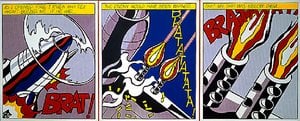
A dynamic 1959 comic strip caricature by Brazilian master Miécio Caffé captures a lively scene of movement and humor, offering a unique glimpse into mid-century graphic satire that you can bring to your collection.

Odkryj barwny świat Miécio Caffé – brazylijskiego humorysty graficznego i kolekcjonera! Karykatury legend muzyki, satyra i wyjątkowe dziedzictwo artystyczne. Poznaj jego twórczość!

Dzieło sztuki prezentowane na tej stronie podlega ochronie prawem autorskim, co oznacza, że nie mamy prawa do tworzenia ani sprzedaży jego identycznej reprodukcji. Ochrona ta jest egzekwowana na mocy umów międzynarodowych, takich jak Konwencja berneńska oraz przez przepisy prawa krajowego, w tym te określone w Prawo autorskie USA – Tytuł 17.

Metoda ta jest w pełni zgodna z przepisami prawa autorskiego, ponieważ nie polega na kopiowaniu ani powielaniu chronionego dzieła. Stanowi ona kreatywną reinterpretację – nowy obraz, który czerpie inspirację z oryginału, ale nie jest z nim tożsamy.

Giclée / Wydruk artystyczny

Wydruki giclée lub płótna o jakości muzealnej, szybka realizacja i szeroki wybór opcji wykończenia. ( Kup ręcznie malowany obraz Przełącz na wersję cyfrową)

Corner sample of the P118B picture frame: moulded polystyrene, 5 cm wide and 3 cm thick
P118B zł10
Corner sample of the P118H picture frame: moulded polystyrene, 5 cm wide and 3 cm thick
P118H zł10
Corner sample of the P118W picture frame: moulded polystyrene, 5 cm wide and 3 cm thick
P118W zł10
Corner sample of the P438Z picture frame: moulded polystyrene, 5.5 cm wide and 3.5 cm thick
P438Z zł10
Corner sample of the P508JH picture frame: moulded polystyrene, 7 cm wide and 3.5 cm thick
P508JH zł12
Corner sample of the P508YH picture frame: moulded polystyrene, 7 cm wide and 3.5 cm thick
P508YH zł12
Corner sample of the P805H picture frame: moulded polystyrene, 5 cm wide and 3.5 cm thick
P805H zł10
Corner sample of the P805Z picture frame: moulded polystyrene, 5 cm wide and 3.5 cm thick
P805Z zł10
Corner sample of the P919BZ picture frame: moulded polystyrene, 7 cm wide and 3.5 cm thick
P919BZ zł10
Corner sample of the P919G picture frame: moulded polystyrene, 7 cm wide and 3.5 cm thick
P919G zł10
Corner sample of the P919XJ picture frame: moulded polystyrene, 7 cm wide and 3.5 cm thick
P919XJ zł10
Corner sample of the P959ZH picture frame: moulded polystyrene, 5 cm wide and 3 cm thick
P959ZH zł10
Corner sample of the P968JZ picture frame: moulded polystyrene, 6 cm wide and 4 cm thick
P968JZ zł12
Corner sample of the W106C picture frame: solid wood, 5 cm wide and 3 cm thick
W106C zł8
Corner sample of the W218G picture frame: solid wood, 5 cm wide and 3 cm thick
W218G zł10
Corner sample of the W218JH picture frame: solid wood, 5 cm wide and 3 cm thick
W218JH zł8
Corner sample of the W218Y picture frame: solid wood, 5 cm wide and 3 cm thick
W218Y zł10
Corner sample of the W307PJ picture frame: solid wood, 6 cm wide and 3 cm thick
W307PJ zł10
Corner sample of the W316G picture frame: solid wood, 6 cm wide and 3 cm thick
W316G zł10
Corner sample of the W316PJ picture frame: solid wood, 6 cm wide and 3 cm thick
W316PJ zł8
Corner sample of the W316Y picture frame: solid wood, 6 cm wide and 3 cm thick
W316Y zł10
Corner sample of the W398PJ picture frame: solid wood, 5 cm wide and 3 cm thick
W398PJ zł8
Corner sample of the W4111J picture frame: solid wood, 6.5 cm wide and 3.5 cm thick
W4111J zł10
Corner sample of the W500HY picture frame: solid wood, 7 cm wide and 5 cm thick
W500HY zł15
Corner sample of the W500JH picture frame: solid wood, 7 cm wide and 5 cm thick
W500JH zł15
Corner sample of the W692G picture frame: solid wood, 8 cm wide and 4 cm thick
W692G zł12
Corner sample of the W849H picture frame: solid wood, 5 cm wide and 3 cm thick
W849H zł8
Corner sample of the W940BG picture frame: solid wood, 7.5 cm wide and 4.5 cm thick
W940BG zł15
Corner sample of the W953PJ picture frame: solid wood, 6 cm wide and 3.5 cm thick
W953PJ zł8

Standardowy
na zamówienie
CM
INCH

Wybierz spośród naszych standardowych rozmiarów, które zachowują oryginalne proporcje dzieła sztuki.

szerokość
wysokość

Możesz wprowadzić własne wymiary, aby dopasować dzieło do konkretnej ramy lub przestrzeni. Jeśli wybrany rozmiar nie będzie odpowiadał proporcjom oryginalnego obrazu, przytniecie dzieło lub rozszerzymy obraz za pomocą odbicia lustrzanego lub jednolitego wypełnienia krawędzi. Przed rozpoczęciem produkcji prześlemy cyfrową wizualizację do Twojej akceptacji.
Prosimy pamiętać, że podgląd na ekranie nie odzwierciedla faktycznego przycinania ani rozszerzania. Tylko wizualizacja dokładnie pokaże końcową kompozycję.
Mimo dostępności niestandardowych rozmiarów, zalecamy wybór wymiaru z listy zdefiniowanej, aby zachować oryginalne proporcje.

Dostawa na cały świat () w ciągu 2 tygodni zamiast standardowych 4/5 tygodni. (8 Październik)

Bezpłatna ekspresowa wysyłka na cały świat
Wysokiej jakości płótno lniane
Pełne ubezpieczenie transportowe
Gwarancja zwrotu należności celnych i podatków importowych
Gwarancja idealnego odwzorowania barw
100-dniowy okres na zwrot dzieła w przypadku wykrycia wad produkcyjnych
Gwarancja 100% zwrotu pieniędzy
Oferta przy zakupie wielu sztuk

Cena całkowita

zł 252

Newspaper:

Giclée / Wydruk artystyczny

Rozmiar reprodukcji

-

Suma do zapłaty

zł 252

Kluczowe informacje

  • Artist: Miécio Caffé
  • Location: Museu Afro Brazil collection
  • Year: 1959
  • Notable elements: Comic strip, caricature, bold lines
  • Subject or theme: Daily life, characters in motion

A Glimpse into Brazilian Graphic Wit

In the vibrant tapestry of mid-century Brazilian visual culture, few voices resonate with as much playful charm and satirical bite as that of Miécio Caffé. His work, specifically this captivating newspaper clipping from 1959, serves as a window into a bygone era of graphic humor that once animated the daily lives of Brazilians. The piece presents a lively comic strip composition, where characters move through a choreographed scene of everyday motion. At its heart, we find a trio of figures: one hurrying with hands tucked behind him, another observing the unfolding drama with a relaxed gaze, and a third poised with an umbrella, adding a touch of whimsical preparation to the narrative. This rhythmic arrangement of bodies, set against the backdrop of a bustling street life complete with bicycles and passing pedestrians, captures the kinetic energy of urban Brazil during a period of profound social transition.

The technique employed by Caffé is a masterclass in the art of the caricature, utilizing bold, decisive lines that command attention even within the small format of a newsprint publication. His style is characterized by an economy of line—where a single stroke can convey a character's entire temperament or the frantic pace of a runner. This graphic simplicity does not diminish the complexity of the emotion; rather, it amplifies it. The interplay between the heavy ink work and the negative space creates a sense of depth and movement that draws the eye across the frame, making the static image feel as though it is caught in a moment of mid-motion. For the collector of vintage graphic arts, this piece offers a profound appreciation for the precision required to translate human character into minimalist, high-impact illustration.

Historical Resonance and Artistic Legacy

To understand this work is to understand the cultural landscape of 20th-century Brazil. Miécio Caffé was not merely an illustrator; he was a chronicler of his time, deeply embedded in the musical and social fabric of his nation. His ability to blend humor with sharp social observation allowed him to bridge the gap between high art and popular media. This specific piece, emerging from the late 1950s, reflects a period when the newspaper was the primary vessel for shared cultural experience. The inclusion of such caricatures in daily publications helped shape the national identity, providing a mirror in which the public could see their own joys, struggles, and eccentricities reflected through a lens of satire.

Beyond its immediate visual appeal, the artwork carries a deep emotional resonance, evoking a sense of nostalgia for the golden age of print media. For interior designers and art enthusiasts looking to curate a space with character, a reproduction of this work offers more than just decoration; it provides a conversation piece that speaks to the history of Brazilian graphic humor. It brings an element of storytelling into a room, inviting viewers to linger on the details of the characters' expressions and the nostalgic charm of the composition. Whether placed in a modern gallery setting or a classic study, Caffé’s work remains a timeless testament to the power of wit and the enduring allure of the hand-drawn line.

Pytania i odpowiedzi

Czy dostępny jest wysokiej rozdzielczości plik do pobrania dla "Newspaper:"?

„Newspaper:” jest dostępny jako wysokiej rozdzielczości cyfrowe zdjęcie do pobrania, zakupiony bezpośrednio na ta strona.

Na czym polega kompozycja kolorystyczna dzieła „Newspaper:” autorstwa Miécio Caffé?

W "Newspaper:" Gentle kontrast współgra z Unified Palette harmonią.

Kto stworzył "Newspaper:"?

Autorem dzieła „Newspaper:” jest Miécio Caffé. Praca ta figuruje w katalogu pod nazwiskiem Miécio Caffé.

W jaki sposób "Newspaper:" wpisuje się w tematykę i styl twórczości Miécio Caffé?

"Newspaper:" należy do nurtu Graphic Humor w twórczości Miécio Caffé, której rozpoznawalne motywy obejmują graphic humor and satire, brazilian social commentary, part of graphic legacy, illustrative caricature style.

Ile lat miał(a) Miécio Caffé, tworząc "Newspaper:" w 1959 roku?

Miécio Caffé stworzył/a "Newspaper:" w wieku 39 lat. Artysta urodził/a się w 1920, a datowanie dzieła to 1959.

Jaki jest format dzieła "Newspaper:"?

Format dzieła „Newspaper:” to Portrait. Jest to pomocna informacja podczas planowania miejsca, w którym zostanie umieszczona reprodukcja.

W którym roku powstało „Newspaper:” autorstwa Miécio Caffé?

Dzieło „Newspaper:” autorstwa Miécio Caffé powstało w 1959.


Biografia artysty

wczesne lata i kariera

miécio caffé, znamienity brazylijski artysta, przyszedł na świat w 1920 roku w juazeiro, w Brazylii. Największą sławę przyniosła mu twórczość w dziedzinie humoru graficznego, która rozkwitała od lat 50. aż do lat 90. XX wieku. Artystyczna podróż caffé rozpoczęła się od karykatur i ilustracji, co ostatecznie doprowadziło go do zostania właścicielem jednej z największych prywatnych kolekcji brazylijskich płyt muzycznych.

wkład artystyczny

Twórczość miécio caffé charakteryzuje się unikalnym połączeniem humoru i satyry. Jego karykatury często przedstawiały wybitne postaci brazylijskiej muzyki, takie jak noel rosa, lupicínio rodrigues oraz inne dostojne osobistości. Jako badacz i kolekcjoner, wkład caffé w świat brazylijskiej muzyki jest nieoceniony.

znaczące dzieła i wystawy

* Dzieła miécio caffé można odnaleźć w różnych kolekcjach, w tym w museu middlesbrough institute of modern art (mima), które prezentuje różnorodny zakres sztuki nowoczesnej i współczesnej. * Do jego najbardziej znaczących prac należą karykatury słynnych muzyków, które były prezentowane na licznych wystawach, takich jak 24° salão internacional de humor de piracicaba, sp.

dziedzictwo i pamięć

miécio caffé odszedł 11 marca 2003 roku w wieku 82 lat w praia grande, w stanie são paulo, w Brazylii. Jego dziedzictwo nieustannie inspiruje zarówno nowe pokolenia artystów, jak i badaczy. ważna uwaga: niniejsza biografia opiera się na dostępnych informacjach z WahooArt.com i może nie stanowić wyczerpującego ani definitywnego opracowania życia i twórczości miécio caffé.
Miécio Caffé

Miécio Caffé

1920 - 2003 , Brazylia

Najważniejsze informacje

  • Artistic Movement Or Style: Humor graficzny i satyra
  • Date Of Birth: 1920
  • Date Of Death: 2003
  • Full Name: Miécio Caffé
  • Nationality: Brazylijczyk
  • Notable Artworks:
    • Karykatura Pelé
    • Ilustracja koszykarza
    • Ilustracja czarnoskórego piłkarza
  • Place Of Birth: Juazeiro do Norte, Brazylia