Podgląd w skali 1:1 Podgląd AR Zamów ręcznie malowaną reprodukcję Przejdź do wersji cyfrowej Wyślij jako kartkę
Szczegóły dzieła Przewodnik Dodaj do ulubionych Pobierz obraz Podobne obiekty RTG Pokaz slajdów Q&A Statystyki

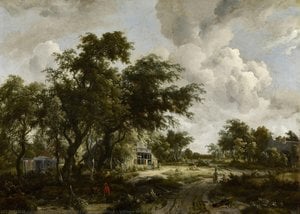
LA FORET DE CHENES

Meindert Hobbema's "La Forêt de Chênes" captures a serene Dutch woodland scene with masterful atmospheric perspective and luminous detail, showcasing the artist’s signature style.

Meindert Hobbema: mistrz holenderskiego pejzażu znany z nastrojowych scen leśnych i światła. Odkryj jego szczegółowe obrazy kanałów, dróg i budynków z XVII-wiecznego Amsterdamu.

Giclée / Wydruk artystyczny

Wydruki giclée lub płótna o jakości muzealnej, szybka realizacja i szeroki wybór opcji wykończenia. ( Zamów ręcznie malowaną reprodukcję Przejdź do wersji cyfrowej)

Corner sample of the P118B picture frame: polistyren formowany, 5 cm wide and 3 cm thick
P118B zł10
Corner sample of the P118H picture frame: polistyren formowany, 5 cm wide and 3 cm thick
P118H zł10
Corner sample of the P118W picture frame: polistyren formowany, 5 cm wide and 3 cm thick
P118W zł10
Corner sample of the P438Z picture frame: polistyren formowany, 5.5 cm wide and 3.5 cm thick
P438Z zł10
Corner sample of the P508JH picture frame: polistyren formowany, 7 cm wide and 3.5 cm thick
P508JH zł12
Corner sample of the P508YH picture frame: polistyren formowany, 7 cm wide and 3.5 cm thick
P508YH zł12
Corner sample of the P805H picture frame: polistyren formowany, 5 cm wide and 3.5 cm thick
P805H zł10
Corner sample of the P805Z picture frame: polistyren formowany, 5 cm wide and 3.5 cm thick
P805Z zł10
Corner sample of the P919BZ picture frame: polistyren formowany, 7 cm wide and 3.5 cm thick
P919BZ zł10
Corner sample of the P919G picture frame: polistyren formowany, 7 cm wide and 3.5 cm thick
P919G zł10
Corner sample of the P919XJ picture frame: polistyren formowany, 7 cm wide and 3.5 cm thick
P919XJ zł10
Corner sample of the P959ZH picture frame: polistyren formowany, 5 cm wide and 3 cm thick
P959ZH zł10
Corner sample of the P968JZ picture frame: polistyren formowany, 6 cm wide and 4 cm thick
P968JZ zł12
Corner sample of the W106C picture frame: lite drewno, 5 cm wide and 3 cm thick
W106C zł8
Corner sample of the W218G picture frame: lite drewno, 5 cm wide and 3 cm thick
W218G zł10
Corner sample of the W218JH picture frame: lite drewno, 5 cm wide and 3 cm thick
W218JH zł8
Corner sample of the W218Y picture frame: lite drewno, 5 cm wide and 3 cm thick
W218Y zł10
Corner sample of the W307PJ picture frame: lite drewno, 6 cm wide and 3 cm thick
W307PJ zł10
Corner sample of the W316G picture frame: lite drewno, 6 cm wide and 3 cm thick
W316G zł10
Corner sample of the W316PJ picture frame: lite drewno, 6 cm wide and 3 cm thick
W316PJ zł8
Corner sample of the W316Y picture frame: lite drewno, 6 cm wide and 3 cm thick
W316Y zł10
Corner sample of the W398PJ picture frame: lite drewno, 5 cm wide and 3 cm thick
W398PJ zł8
Corner sample of the W4111J picture frame: lite drewno, 6.5 cm wide and 3.5 cm thick
W4111J zł10
Corner sample of the W500HY picture frame: lite drewno, 7 cm wide and 5 cm thick
W500HY zł15
Corner sample of the W500JH picture frame: lite drewno, 7 cm wide and 5 cm thick
W500JH zł15
Corner sample of the W692G picture frame: lite drewno, 8 cm wide and 4 cm thick
W692G zł12
Corner sample of the W849H picture frame: lite drewno, 5 cm wide and 3 cm thick
W849H zł8
Corner sample of the W940BG picture frame: lite drewno, 7.5 cm wide and 4.5 cm thick
W940BG zł15
Corner sample of the W953PJ picture frame: lite drewno, 6 cm wide and 3.5 cm thick
W953PJ zł8

Standardowy format
personalizowane
CM
INCH

Wybierz spośród naszych standardowych rozmiarów, które zachowują oryginalne proporcje dzieła sztuki.

szerokość
wysokość

Wpisz wymaganą szerokość i wysokość, aby dopasować grafikę do ramy lub ściany. Wydruk można jedynie przyciąć, nigdy nie powiększając go poza oryginalny obraz, dlatego format o innych proporcjach spowoduje utratę części kompozycji. Przed rozpoczęciem druku prześlemy Ci cyfrowy podgląd do zatwierdzenia. Obraz wyświetlany na tej stronie nie pokazuje rzeczywistego przycięcia — jedynie podgląd oddaje ten efekt.

Dostawa na cały świat () w ciągu 2 tygodni zamiast standardowych 4/5 tygodni. (2 Listopad)

Bezpłatna ekspresowa wysyłka na cały świat
Wysokiej jakości płótno lniane
Pełne ubezpieczenie przesyłki
Gwarancja zwrotu należności celnych i podatków importowych
Gwarancja wiernego odwzorowania kolorów
100-dniowa polityka zwrotów (tylko w przypadku wad)
Gwarancja 100% zwrotu pieniędzy
Zniżka przy zakupie wielu sztuk

Suma całkowita

zł 265

LA FORET DE CHENES

Giclée / Wydruk artystyczny

Wymiary reprodukcji

-

Cena całkowita

zł 265

Najważniejsze informacje

  • Year: 1660s
  • Location: Louvre, Paris
  • Artistic style: Idealized realism
  • Artist: Meindert Hobbema
  • Title: LA FORET DE CHENES

A Serene Woodland Vision – Unveiling “La Forêt de Chênes”

Meindert Hobbema’s “La Forêt de Chênes,” a captivating landscape painting from the late 17th century, isn't merely a depiction of a forest; it’s an immersive experience. Painted during a period of relative obscurity for the artist himself, yet increasingly appreciated in later decades, this work embodies the quiet grandeur and atmospheric depth that defined the Dutch Golden Age. Hobbema, a devoted pupil of Jacob van Ruysdael, masterfully captures the essence of the Dutch countryside – not through dramatic vistas or heroic figures, but with an exquisite sensitivity to light, texture, and the subtle poetry of nature. The painting transports us to a cool, dappled woodland, where sunlight filters through the dense canopy, casting long shadows and illuminating patches of moss-covered earth.

La Forêt de Chênes by Meindert Hobbema

The Language of Light and Shadow – Technique and Style

Hobbema’s technique is characterized by a remarkable layering of paint, creating an astonishingly realistic sense of depth and texture. He employs atmospheric perspective with exquisite precision—distant trees fade into a hazy blue-grey, while the foreground oaks stand proud and detailed, their rough bark rendered with meticulous care. The brushstrokes are visible yet controlled, contributing to the painting’s overall sense of realism without sacrificing elegance. The color palette is predominantly earthy – deep greens, browns, and greys dominate, punctuated by subtle hints of yellow and orange in the foliage, suggesting a late afternoon sun. This masterful use of light and shadow isn't simply decorative; it evokes a profound feeling of tranquility and solitude. The composition itself—a winding path leading into the heart of the forest—draws the viewer’s eye deeper into this serene world.

A Dutch Golden Age Masterpiece – Historical Context

“La Forêt de Chênes” is a quintessential example of the Dutch Golden Age landscape tradition. Following in the footsteps of Jacob van Ruysdael, Hobbema focused on capturing the beauty of the Netherlands’ rural landscapes—not grand historical scenes or mythological narratives, but intimate glimpses into everyday life and the natural world. During this period, the Dutch Republic was experiencing a flourishing economy and a burgeoning artistic scene, and landscape painting became increasingly popular as a means of celebrating the country's prosperity and its connection to nature. Hobbema’s work reflects this cultural shift, offering a contemplative escape from the bustle of urban life.

Symbolism and Emotional Resonance – More Than Just a Landscape

Beyond its technical brilliance, “La Forêt de Chênes” resonates with deeper symbolic meaning. The towering oaks, often associated with strength, longevity, and wisdom, stand as silent witnesses to the passage of time. The winding path invites us on a journey of discovery, suggesting a connection between humanity and nature. The painting’s overall mood is one of peaceful contemplation—a reminder of the beauty and serenity that can be found in the natural world. It's a scene designed not just to be observed, but to be felt – a quiet invitation to slow down, breathe deeply, and connect with something larger than ourselves.

Bringing “La Forêt de Chênes” into Your Space

Reproductions of Hobbema’s “La Forêt de Chênes” offer a beautiful way to bring this timeless masterpiece into your home or office. Whether you choose a large-scale canvas print or a smaller metal poster, the painting's atmospheric depth and serene beauty will undoubtedly enhance any space. Consider framing it in a natural wood frame to complement the artwork’s earthy tones, or displaying it alongside other landscape paintings from the Dutch Golden Age for a cohesive and visually stunning collection.

Pytania i odpowiedzi

Jak mogę pobrać obraz „LA FORET DE CHENES” – Meindert Hobbema?

Możliwość pobrania dzieła „LA FORET DE CHENES”: strona Pobierz plik cyfrowy oferuje wysokiej rozdzielczości cyfrowe zdjęcie do pobrania.

Czy istnieją dzieła podobne do „LA FORET DE CHENES”?

Strona Podobne dzieła dzieła „LA FORET DE CHENES” – Meindert Hobbema prezentuje powiązane utwory.

Czy dzieło „LA FORET DE CHENES” – Meindert Hobbema jest jasne czy ciemne?

Pod względem postrzeganej jasności, „LA FORET DE CHENES” – Meindert Hobbema jest shadow.


Biografia artysty

Cichy Mistrz Holenderskiego Krajobrazu

Meindert Lubbertszoon Hobbema pozostaje postacią spowitą relatywną niepamięcią w porównaniu ze swoimi współczesnymi, takimi jak Rembrandt czy Vermeer, a jednak jawi się jako jeden z najbardziej wyrazistych głosów Złotego Wieku sztuki holenderskiej. Jego pejzaże—charakteryzujące się niezwykłym poziomem szczegółowości i przesycone namacalnym poczuciem atmosfery—uchwyca spokojne piękno wiejskiej Holandii z niezwykłą precyzją. Choć dokumentacja biograficzna pozostaje nieco nieuchwytna, badacze zdołali nakreślić portret artysty głęboko zakorzenionego w swojej epoce, pod silnym wpływem mistrzów swoich czasów i oddanego chwytaniu subtelnych niuansów światła, tekstury oraz świata natury. Urodzony w Amsterdamie około 1638 roku, Hobbema spędził swoje wczesne lata w cieniu tętniącej życiem energii artystycznej holenderskiego Złotego Wieku. Do sfery zawodowej wkroczył dzięki formalnej nauce u Jacoba van Ruysdaela, która rozpoczęła się około 1657 roku. Ten formacyjny okres był kluczowy, gdyż pozwolił mu przyswoić mistrzowską technikę Ruysdaela w przedstawianiu krajobrazów za pomocą świetlistych palet barwnych i skrupulatnej obserwacji. Poprzez tę artystyczną linię sukcesji, Hobbema odziedziczył tradycję opowiadania historii za pomocą scenografii, gdzie rozmieszczenie drzewa czy zakręt ścieżki służyły prowadzeniu wzroku widza przez starannie skomponowany, naturalny dramat.

Ewolucja Stylu i Techniki

Współpraca z Ruysdelem była czymś znacznie więcej niż tylko okresem edukacyjnym; stała się ona fundamentem wymiany intelektualnej i stylistycznej, która napędziła artystyczną ewolucję Hobbemy. Choć jego wczesne dzieła często odzwierciedlały scenerie rzeczne i kompozycje swojego mentora, Hobbema stopniowo wypracował własną, unikalną wizję, naznaczoną zwiększoną wrażliwością na światło i kolor. Około 1662 roku wpływ Ruysdaela skrystalizował się w styl będący wyłącznie jego własnością—charakteryzujący się preferencją dla stonowanych tonów, teksturalnych pociągnięć pędzla oraz niezachwianym skupieniem na utrwalaniu świata naturalnego dokładnie tak, jak jawił się on ludzkiemu oku. Jego dojrzałe dzieła są cenione za zdolność uchwycenia subtelnej gry promieni słonecznych przesączających się przez gęste liście oraz sposobu, w jaki światło tańczy na leśnych ścieżkach. W przeciwieństwie do bardziej dramatycznych lub burzliwych krajobrazów odnajdywanych w innych holenderskich tradycjach, twórczość Hobbemy skłania się ku spokojnemu, ustrukturyzowanemu realizmowi. Posiadał on nieporównywalną zdolność do oddawania:
  • Zawiłych tekstur kory i mchu na wiekowych drzewach.
  • Atmosferycznej głębi tworzonej przez wycofujące się w dal leśne perspektywy.
  • Cichego, rytmicznego ruchu światła słonecznego przez liściaste korony.
  • Skromnego piękna wiejskich dróg, kanałów i rustykalnych budowli.

Dziedzictwo i Znaczenie Historyczne

Wkład Hobbemy w tradycję holenderskiego pejzażu polega na jego umiejętności wyniesienia prozaicznych aspektów wiejskiego życia do rangi tematów o głębokim, kontemplacyjnym pięknie. Jego obrazy nie tylko dokumentują topografię siedemnastowiecznej Holandii; one przywołują poczucie ciszy i trwałości. Dzięki mistrzostwu w operowaniu światłem i kompozycją, przekształcił on proste leśne sceny w złożone studia cichego majestatu natury. Choć mógł nie osiągnąć światowej sławy, jaką cieszyły się ówczesne portrecistki, jego znaczenie historyczne jest utwierdzone przez rolę, jaką odegrał w dopracowaniu gatunku pejzażu. Jego praca stanowi żywe ogniwo w ewolucji holenderskiego realizmu, oferując okno na epokę, w której mistrzostwo światła i obserwacja natury stały się ostatecznymi wyrazami artystycznej prawdy. Dziś jego malarstwo pozostaje uwielbiane za zdolność przenoszenia widza do spokojnego, skąpanego w słońcu świata, który wydaje się jednocześnie intymnie prawdziwy i ponadczasowo poetycki.
Meindert Hobbema

Meindert Hobbema

1638 - 1709 , Holandia

Krótka nota

  • Artistic Movement Or Style: Holenderska sztuka pejzażu Złotego Wieku
  • Artists Or Movements Influenced By This Artist: Rembrandt
  • Artists Who Influenced This Artist: Jacob van Ruysdael
  • Date Of Birth: Amsterdam, Holandia (1638)
  • Date Of Death: Grudzień 1709
  • Full Name: Meindert Lubbertszoon Hobbema
  • Nationality: Holender
  • Notable Artworks:
    • Młyn wodny 1
    • Leśny pejzaż z chatkami
    • Chatki w lesie
  • Place Of Birth: Amsterdam