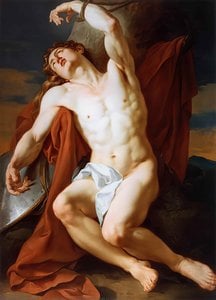
O artyście
A Calabrian Knight of the Baroque
Mattia Preti, znany jako Il Cavaliere Calabrese – Kalwaryjski Krzyżan, stanowi kluczową postać w sztuce włoskiego baroku XVII wieku. Urodzony w Tavernie, w regionie Calabria, we Włoszech 24 lutego 1613 roku, jego artystyczna podróż była dynamiczną ewolucją, absorpcją różnorodnych wpływów i ostatecznie doprowadziła do stworzenia unikalnego stylu, który na stałe zapisał się w historii sztuki, szczególnie w Malcie, gdzie spędził znaczną część swojego życia. Początki jego edukacji artystycznej przypadły na Giovanniego Battistę Caracciolo, malarza głęboko zakorzenionego w ruchu karawaggistyście. Ta fundamentalna ekspozycja wywarła na nim głębokie zrozumienie dramatycznego światłocienia – intensywnego tańca światła i cienia – oraz zaangażowanie w realistyczną reprezentację, które pozostały charakterystycznymi cechami jego twórczości przez całe życie. Przed 1630 rokiem dołączył do swojego brata Gregoriusa w Rzymie, zanurzając się w artystyczne burzliwość tego miasta i studiując mistrzów, którzy zdefiniowali tamtejszą epokę: Caravaggia, Guercino, Rubensa, Guido Reni i Giovanniego Lanfranco. Ten okres był kluczowy, kształtując nie tylko jego umiejętności techniczne, ale także jego wyobrażenia estetyczne.
Forging a Dynamic Style
Rozwój artystyczny Preti nie był jedynie naśladowaniem; był syntezą wpływów, sprytnie utkany w styl odmienny od innych. Początkowo głęboko zakorzeniony w karawaggismie, stopniowo przesunął się poza jego rygory, przyjmując dynamizm i intensywność emocjonalną, które charakteryzowały wyższy barok. Jego pobyt w Neapolu jeszcze bardziej doprecyzował tę ewolucję, wystawiając go na wpływ tętniącej życiem twórczości Luca Giordano. Ten okres zaowocował powiększeniem jego obrazów, skomplikowanymi kompozycjami i wzmożonym poczuciem dramy. Mistrzowsko wykorzystywał dramatyczne kontrasty światła i cienia, dziedziczone od Caravaggia, nie tylko jako urządzenie techniczne, ale także jako sposób na wzmocnienie wpływu emocjonalnego i kierowanie wzrokiem widza. Jego postaci są nasycone wyczuwalnymi emocjami, wyrażonymi poprzez ekspresyjne twarze i dynamiczną postawę ciała. Ta umiejętność wywoływania potężnych uczuć – pobożności, rozpaczy, ekstazy – stała się definiującą cechą jego twórczości. Nie ograniczał się do przedstawiania scen; dążył do *ożywienia* ich, wstrzyknięcia życia do biblijnych narracji i ikon religijnych.
Commissions and Masterpieces Across Italy
Mattia Preti’s talent szybko zyskał uznanie, prowadząc do serii znaczących zleceń na całym obszarze Włoch. Na samym początku swojej kariery stworzył imponujące cykle freskowe w rzymskich kościołach, takich jak Sant’Andrea della Valle i San Carlo ai Catinari, demonstrując zdolność do tworzenia prac o dużej skali dekoracyjnej. Jego praca w kościele San Biagio w Modenie pokazała jego umiejętność adaptacji stylu do różnych ustawień architektonicznych. Jednak niektóre z jego najbardziej ambitnych – choć niestety utraconych – dzieł stanowiły freski, które namalował na siedem bram miasta Neapol przedstawiających życie i męczeństwo św. Jana Chrzciciela. Choć pozostają jedynie szkice, świadczą one o ogromie i wpływie tych monumentalnych dzieł. Te zlecenia nie były jedynie wypełnianiem prośby patrona; stanowiły okazję dla Preti do zaangażowania się w życie religijne i kulturowe społeczności, do których służył, nadając swojemu sztuce znaczenie i cel.
The Maltese Zenith: St. John’s Co-Cathedral
Jednak to właśnie na Malcie Preti osiągnął szczyt swojej artystycznej doskonałości. Appointed a Knight of the Order of Saint John w 1660 roku, podjął się transformującego projektu: pełnej renowacji wnętrza katedry św. Jana Chrzciciela w Wallettcie. Ta inicjatywa – prawdopodobnie jego najważniejsze dziedzictwo – obejmowała niesamowitą serię obrazów przedstawiających życie i męczeństwo św. Jana Chrzciciela. Ogrom skali tego przedsięwzięcia jest imponujący; Preti stworzył wizualną narrację, która otaczała widza, zanurzając go w historii świętego. Opulentne barokowe tło zapewniło idealną przestrzeń dla jego dramatycznego stylu, a wynikające z tego dzieła umocniły jego reputację jako jednego z czołowych malarzy Europy. Jego praca w St. John’s nie była jedynie dekoracyjna; była aktem wiary, świadectwem jego oddania i potężnym wyrazem tożsamości religijnej Zakonu.
A Lasting Legacy
Mattia Preti kontynuował otrzymywanie zleceń z całego continentu po sukcesie w Malcie, umacniając swoją pozycję jako czołowy twórca sztuki baroku włoskiego. Zmarł w 1699 roku, pozostawiając bogate artystyczne dziedzictwo, które nadal inspiruje i fascynuje odbiorców do dziś. Jego mistrzowskie wykorzystanie światła i cienia, skomplikowane kompozycje i umiejętność wyrażania intensywnych emocji pozostają charakterystycznymi cechami jego stylu. Jego wkład jest zachowany w muzeach takich jak Muzeum Capodimonte w Neapolu, a także dzięki reprodukcjom udostępnionym przez platformy takie jak WahooArt.com, zapewniając, że jego sztuka dociera do nowych pokoleń. Trwały wpływ Preti’ego na sztukę można najlepiej odczuć we wnętrzach katedry św. Jana Chrzciciela, zapierającą dech w piersiach świadectwo jego artystycznego geniuszu i niezachwianej oddanej baroku estetyce. *Il Cavaliere Calabrese* naprawdę zasłużył na swoje miano – nie tylko jako rycerz, ale także jako mistrz malarstwa, który oświetlił świat swoim widzeniem.



 Podgląd w skali
 Przełącz na wydruki
 Wyślij jako kartkę
 Udostępnij
 Szczegóły dzieła

 Pobierz
 Podobne obiekty
 RTG
RTG Pokaz slajdów
 Statystyki


 Rozwiń treść






































 Opcja ze szkłem jest dostępna wyłącznie w rozmiarach poniżej 110 cm