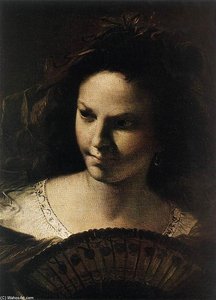
Mattia Preti’s “Flying Angel”: A Baroque Vision of Strength and Grace
The painting "Flying Angel" by Mattia Preti, completed around 1630, is more than just a depiction of physical exertion; it's a profound exploration of faith, determination, and the human spirit striving towards the divine. This remarkable work, now housed in the Kunstpalast museum in Düsseldorf, offers a captivating glimpse into the world of the Calabrian Knight – as Mattia Preti was known – a pivotal figure in the vibrant Baroque movement that swept through Italy and beyond. Preti’s unique style, forged from influences ranging from Caravaggio's dramatic chiaroscuro to the dynamism of Guercino, results in an image brimming with intense emotion and masterful execution.
At first glance, the scene presents a man, powerfully built and straining under considerable weight. He grips a rope or handle with both hands, his muscles taut and defined – a testament to the sheer force required for this seemingly impossible task. The background, though somewhat indistinct, hints at an outdoor setting, adding to the sense of struggle against natural forces. However, it’s not merely a study in physical strength that commands attention; the angel, soaring above him, is the true focal point. This isn't a traditional, serene depiction of angelic grace; instead, she embodies active intervention, her wings outstretched with purposeful motion, as if guiding and bolstering the man’s efforts.
The Baroque Palette: Light, Shadow, and Dramatic Intensity
Preti’s masterful use of color is central to the painting's impact. He employs a rich, vibrant palette – deep reds, ochres, and browns – creating a sense of warmth and intensity that immediately draws the viewer in. The dramatic interplay of light and shadow, characteristic of the Baroque style, is particularly evident in the man’s body, highlighting his muscular form and conveying the palpable strain he experiences. The angel, bathed in a softer, ethereal glow, contrasts sharply with the earthly struggle below, reinforcing the idea of divine assistance overcoming mortal limitations. The artist's technique involved layering thin glazes of paint to achieve remarkable depth and luminosity – a hallmark of Preti’s distinctive style.
Symbolism and Spiritual Narrative
Beyond its visual appeal, “Flying Angel” is laden with symbolic meaning. The act of lifting the heavy object can be interpreted as representing humanity's struggle against sin and adversity, while the angel symbolizes divine grace and redemption. The man’s determined expression speaks to unwavering faith and a willingness to persevere in the face of hardship. Some scholars suggest that the specific object being lifted might have held particular significance within Preti’s context – perhaps representing the burden of earthly responsibilities or the weight of spiritual transgression. The angel's position, actively aiding the man, underscores the belief in God’s intervention and support for those seeking salvation.
A Knight of Malta: Context and Legacy
Mattia Preti’s life was deeply intertwined with the Order of Saint John, a powerful military and religious organization based in Malta. He served as a Knight of the Order, earning the title “Il Cavalier Calabrese,” and spent much of his career working for them, particularly during his time in Malta. This affiliation profoundly shaped his artistic output, influencing his subject matter – often religious scenes depicting saints and miracles – and his stylistic choices. “Flying Angel” exemplifies this influence, reflecting Preti’s commitment to dramatic storytelling and his ability to imbue his works with a sense of spiritual urgency. His legacy extends beyond Malta, as he continued to work in Rome and Naples, leaving behind a significant body of paintings that continue to captivate viewers today. Reproductions of this powerful image offer a tangible connection to this extraordinary artist and the vibrant world of 17th-century Baroque art.
Pytania i odpowiedzi
Jak kolory w dziele "Anioł Lecący" współgrają ze sobą?
Harmonia kolorystyczna dzieła "Anioł Lecący" została określona jako Dysonansowa paleta.
Co przedstawia „Anioł Lecący” – Mattia Preti?
Tematyka obecna w „Anioł Lecący” – Mattia Preti obejmuje baroque art, angel, strength, exertion, lifting, figure, religious, italy. Razem stanowią one podsumowanie tematyki dzieła.
Kto jest autorem dzieła "Anioł Lecący"?
„Anioł Lecący” zostało stworzone przez Mattia Preti. Informacje na tej stronie dotyczą oryginalnego dzieła autorstwa Mattia Preti.



 Podgląd w skali 1:1
 Przełącz na wydania drukowane
 Wyślij jako kartkę
 Udostępnij
 Szczegóły dzieła
 Przewodnik

 Pobierz obraz
 Podobne obiekty
 RTG
RTG Pokaz slajdów
 Q&A
Q&A Statystyki


 Rozwiń treść