

Dzieło sztuki prezentowane na tej stronie podlega ochronie prawem autorskim, co oznacza, że nie mamy prawa do tworzenia ani sprzedaży jego identycznej reprodukcji. Ochrona ta jest egzekwowana na mocy umów międzynarodowych, takich jak Konwencja berneńska oraz przez przepisy prawa krajowego, w tym te określone w Prawo autorskie USA – Tytuł 17.
Metoda ta jest w pełni zgodna z przepisami prawa autorskiego, ponieważ nie polega na kopiowaniu ani powielaniu chronionego dzieła. Stanowi ona kreatywną reinterpretację – nowy obraz, który czerpie inspirację z oryginału, ale nie jest z nim tożsamy.
Wydruki giclée lub płótna o jakości muzealnej, szybka realizacja i szeroki wybór opcji wykończenia. ( Zamów ręcznie malowaną reprodukcję Przejdź do wersji cyfrowej)





























Wybierz spośród naszych standardowych rozmiarów, które zachowują oryginalne proporcje dzieła sztuki.

Wpisz wymaganą szerokość i wysokość, aby dopasować grafikę do ramy lub ściany. Wydruk można jedynie przyciąć, nigdy nie powiększając go poza oryginalny obraz, dlatego format o innych proporcjach spowoduje utratę części kompozycji. Przed rozpoczęciem druku prześlemy Ci cyfrowy podgląd do zatwierdzenia. Obraz wyświetlany na tej stronie nie pokazuje rzeczywistego przycięcia — jedynie podgląd oddaje ten efekt.
Dostawa na cały świat () w ciągu 2 tygodni zamiast standardowych 4/5 tygodni. (8 Listopad)
Untitled (8)
Wymiary reprodukcji
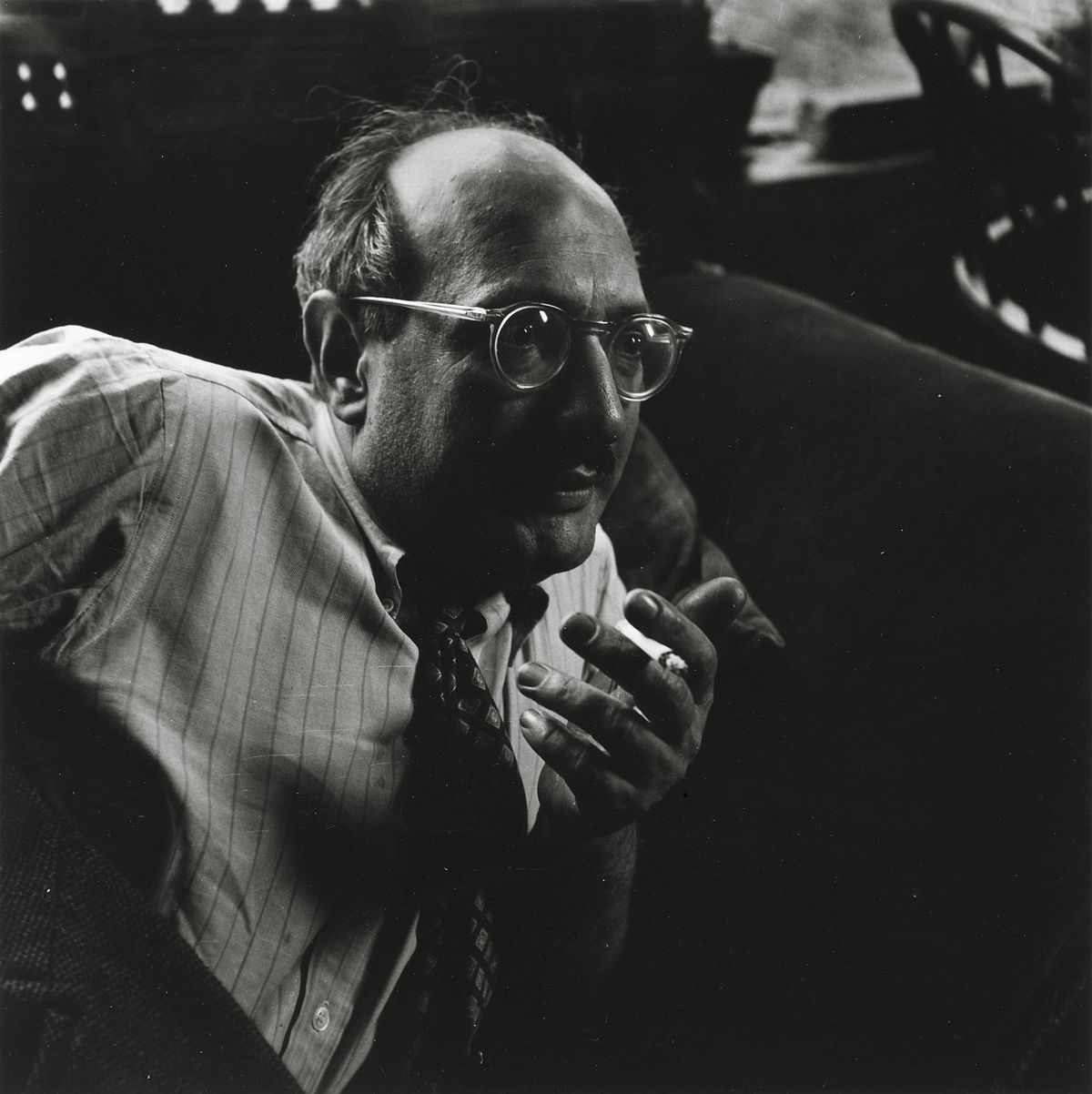
Mark Rothko’s “Untitled (8)” isn't merely a painting; it’s an invitation to a profound, almost meditative experience. Born into a world shadowed by displacement – his childhood in Latvia marked by the anxieties of a Jewish family amidst political unrest – Rothko carried within him a deep sensitivity to human suffering, a theme that would become a cornerstone of his artistic vision. This early exposure shaped his approach to color, transforming it from simple representation into a vehicle for conveying complex emotions and existential questions. “Untitled (8)” embodies this philosophy perfectly, presenting a landscape not of form or detail, but of pure, resonant hue.
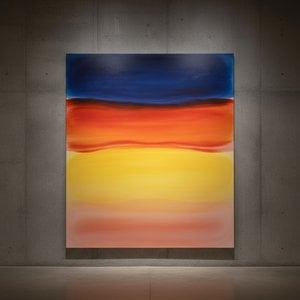
Created in 1949, “Untitled (8)” is a quintessential example of Rothko’s Color Field painting style. Rejecting traditional representation, he employed large, rectangular blocks of color – predominantly red, blue, and punctuated by subtle yellow tones – that seem to float within the canvas. This technique, radical for its time, moved away from illusionistic depth and perspective, instead focusing on the direct impact of color itself. Rothko wasn’t interested in depicting a scene; he sought to evoke an atmosphere, a feeling. The absence of brushstrokes or discernible texture further emphasizes this effect, creating a sense of luminous flatness that draws the viewer into the painting's emotional core.
The deliberate use of these primary colors – red, blue, and yellow – is not arbitrary. Rothko believed that color possessed an inherent power to communicate directly with the subconscious. Red, often associated with passion, energy, and even danger, dominates the left side of the canvas, creating a sense of intensity. The cool blues on the right offer a contrasting counterpoint, suggesting tranquility, introspection, or perhaps melancholy. The subtle yellow in the center acts as a bridge between these opposing forces, hinting at moments of harmony and balance.
Rothko's work emerged during a period of significant artistic upheaval following World War II. Abstract Expressionism, with its emphasis on individual emotion and spontaneous gesture, was gaining prominence in the United States. However, Rothko pushed this movement further, stripping away all traces of personal style and focusing solely on the elemental qualities of color. His paintings weren’t about self-expression; they were about creating a shared experience for the viewer – an encounter with something beyond the rational mind.
Considered alongside works like “Untitled 142” (a monumental Color Field painting embodying somber hues and existential contemplation) or “Untitled” (1953), Rothko’s approach to color became increasingly profound. The influence of his early life, marked by loss and displacement, is palpable in the paintings' quiet intensity and their exploration of themes like mortality and the search for meaning. His later work, particularly the murals created for the Rothko Chapel in Houston, solidified this vision, creating a space dedicated to contemplation and spiritual reflection.
“Untitled (8)” remains one of Mark Rothko’s most iconic works, captivating viewers with its simple yet profound beauty. Its enduring appeal lies not in its representational qualities but in its ability to evoke a wide range of emotions – from serenity and contemplation to sadness and longing. Reproductions by WahooArt offer an exceptional opportunity to experience this powerful artwork firsthand, bringing Rothko’s vision into your home or office space. The careful attention to color fidelity and the masterful rendering of texture ensure that these reproductions capture the essence of the original painting, allowing you to engage with its emotional depth in a meaningful way.
„Untitled (8)” figuruje w katalogu jako dzieło o Iconic wśród prac należących do nurtu Color Field Painting.
W pomieszczeniu typu Living Room sugerowany jest wydruk dzieła „Untitled (8)” w rozmiarze Large.
Zalecany rozmiar wydruku dzieła „Untitled (8)” – Mark Rothko to Large w orientacji Portrait.

1903 - 1970 , Łotwa

Explore the profound emotional depth of Color Field painting. Discover the history of mid-century abstraction, from Rothko to Newman, and learn how pure color transforms the viewer's experience through our expert art history guide.

Odkryj 25 arcydzieł Marka Rothko – mistrza abstrakcji i koloru. Poznaj historie, techniki i emocje kryjące się za jego płótnami. Reprodukcje obrazów najwyższej jakości na WahooArt.com. Eksploruj kolekcję online!

Odkryj 25 arcydzieł Wassily Kandinskiego – pioniera abstrakcji i ekspresjonizmu! Poznaj historie, techniki i emocje kryjące się za jego kolorowymi kompozycjami. Reprodukcje obrazów najwyższej jakości na WahooArt.com. Eksploruj pełną kolekcję online!

Odkryj 10 arcydzieł ekspresjonizmu abstrakcyjnego – Pollock, Rothko, de Kooning i inni. Poznaj historie artystów, techniki i inspiracje dla Twojego wnętrza. Reprodukcje najwyższej jakości na WahooArt.com!
Explore the profound emotional depth of Mark Rothko's abstract expressionism. Discover the history, techniques & lasting impact of this pivotal Color Field painter. Expert insights for collectors and art enthusiasts.
 Podgląd w skali 1:1
 Wyślij jako kartkę
 Udostępnij
 Szczegóły dzieła
 Przewodnik

 Pobierz obraz
 Podobne obiekty
 RTG
RTG Pokaz slajdów
 Pytania i odpowiedzi
 Statystyki
 Rozwiń treść









 Opcja ze szkłem jest dostępna wyłącznie w rozmiarach poniżej 110 cm


