Podgląd w skaliPodgląd w skali Podgląd ARPodgląd AR Zamów ręcznie malowaną reprodukcję Zamów ręcznie malowaną reprodukcjęPrzełącz na obraz cyfrowy Przełącz na obraz cyfrowy Wyślij jako kartkęWyślij jako kartkę
Szczegóły dziełaSzczegóły dzieła Dodaj do ulubionych Dodaj do ulubionych PobierzPobierz Podobne obiektyPodobne obiekty RTGRTG Pokaz slajdówPokaz slajdów StatystykiStatystyki

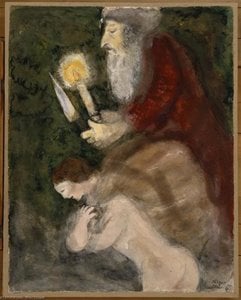
Abraham i Trzej Aniołowie

Meta opis: Marc Chagall przedstawia scenę spotkania Abrahama z trzema Aniołami w stylu naiwnego obrazowania. Ikoniczny obraz z Biblii, pełen kolorów i symboliki judaizmu oraz wiercenia w świat snu. Znajdź reprodukcję na WahooArt.com!

Poznaj fascynujący świat Marc Chagalla (1887-1985), rosyjskiego i francuskiego mistrza sztuki, znanego z obrazów pełnych snu i folklorystycznych motywów oraz pięknych witraży. Odkryj jego dziedzictwo!

Giclée / Wydruk artystyczny

Druk giclée lub płótno o jakości muzealnej, szybka realizacja i szeroki wybór opcji wykończenia. (Zamów ręcznie malowaną reprodukcję Zamów ręcznie malowaną reprodukcjęPrzełącz na obraz cyfrowy Przełącz na obraz cyfrowy)

P118B $10
P118H $10
P118W $10
P438Z $10
P508JH $12
P508YH $12
P805H $10
P805Z $10
P919BZ $10
P919G $10
P919XJ $10
P959ZH $10
P968JZ $12
W106C $8
W218G $10
W218JH $8
W218Y $10
W307PJ $10
W316G $10
W316PJ $8
W316Y $10
W398PJ $8
W4111J $10
W500HY $15
W500JH $15
W692G $12
W849H $8
W940BG $15
W953PJ $8

Standardowy rozmiar
na wymiar
CM
INCH

Wybierz spośród naszych standardowych rozmiarów, które zachowują oryginalne proporcje dzieła sztuki.

szerokość
wysokość

Możesz wprowadzić własne wymiary, aby dopasować dzieło do konkretnej ramy lub przestrzeni. Jeśli wybrany rozmiar nie będzie odpowiadał proporcjom oryginalnego obrazu, przytniecie dzieło lub rozszerzymy obraz za pomocą odbicia lustrzanego lub jednolitego wypełnienia krawędzi. Przed rozpoczęciem produkcji prześlemy cyfrową wizualizację do Twojej akceptacji.
Prosimy pamiętać, że podgląd na ekranie nie odzwierciedla faktycznego przycinania ani rozszerzania. Tylko wizualizacja dokładnie pokaże końcową kompozycję.
Mimo dostępności niestandardowych rozmiarów, zalecamy wybór wymiaru z listy zdefiniowanej, aby zachować oryginalne proporcje.

Dostawa na cały świat () w ciągu 2 tygodni zamiast standardowych 4/5 tygodni. (12 Wrzesień)

why_choose_icon
Bezpłatna ekspresowa wysyłka na cały świat
why_choose_icon
Wysokiej jakości płótno lniane
why_choose_icon
Pełne ubezpieczenie przesyłki
why_choose_icon
Gwarancja zwrotu należności celnych i podatków importowych
why_choose_icon
Gwarancja wiernego odwzorowania kolorów
why_choose_icon
100-dniowa polityka zwrotów (tylko w przypadku wad)
why_choose_icon
Gwarancja 100% zwrotu kosztów
why_choose_icon
Zniżka przy zamówieniu wielu produktów

Suma całkowita

$ 68

reproduction

Abraham i Trzej Aniołowie

Giclée / Wydruk artystyczny

Wymiary reprodukcji

-

Cena całkowita

$ 68

Szybki podgląd

  • Artist: Marc Chagall
  • Influences: Jewish Folklore
  • Location: Private Collection
  • Movement: Expressionism
  • Medium: Oil on canvas
  • Title: Abraham and three Angels
  • Year: 1964

Abraham and Three Angels – A Dreamscape of Faith and Divine Promise

Marc Chagall’s “Abraham and Three Angels,” painted in 1964, transcends mere representation; it embodies the artist's profound engagement with biblical narrative and his signature style—a blend of naive art and surrealist imagination. This striking canvas captures a pivotal moment from Genesis: Abraham receiving divine visitors who announce the impending destruction of Sodom and Gomorrah alongside the joyous anticipation of Isaac’s birth. Chagall masterfully conveys this dual narrative through vibrant color palettes and fantastical imagery, cementing its place as one of his most enduring masterpieces.

Style and Technique – Naive Art Infused with Surrealist Vision

Chagall's artistic approach firmly resides within the realm of naive art (Primitivism), a movement characterized by childlike simplicity and an uninhibited expression of emotion. Unlike academic painting, Chagall eschews meticulous realism, prioritizing instead expressive distortion and symbolic color to convey spiritual truths. The brushstrokes are loose and gestural, creating a textured surface that pulsates with energy—a deliberate departure from traditional artistic conventions. This technique allows for a direct transmission of feeling, mirroring the artist’s own inner landscape and capturing the essence of memory and dreamlike experience. The painting's luminous hues – predominantly reds, yellows, blues, and golds – contribute significantly to its emotional impact, transporting viewers into Chagall’s visionary world.

Historical Context – Echoes of Vitebsk and Jewish Folklore

Painted during a period marked by significant artistic experimentation and social upheaval, “Abraham and Three Angels” reflects Chagall's formative influences—particularly his upbringing in Vitebsk, Belarus, where he absorbed the traditions of Hasidic Judaism. Vitebsk’s multicultural environment fostered an aesthetic sensibility rooted in folklore and myth, elements that permeate Chagall’s oeuvre. The biblical tale itself speaks to themes of faith, righteousness, and divine intervention – concepts central to Jewish spirituality and powerfully articulated by Chagall through his symbolic visual language. Furthermore, the painting's creation coincided with Chagall’s involvement in Vitebsk’s cultural revival movement, demonstrating his commitment to preserving Jewish heritage and artistic expression.

Symbolism – Layers of Meaning Within a Dreamlike Composition

The composition is laden with symbolism that elevates “Abraham and Three Angels” beyond a straightforward depiction of scripture. The central table represents hospitality and communion—a gesture of welcome extended by Abraham to the divine messengers. The overflowing basket symbolizes fertility and abundance, mirroring the promise of Isaac’s progeny. The angel's wings embody spiritual ascension and divine grace, while his golden halo signifies holiness. Notably, Chagall employs a flattened perspective, reminiscent of Byzantine icons, further emphasizing the sacred dimension of the scene. The inclusion of a dog—a recurring motif in Chagall’s work—represents loyalty and companionship, adding another layer of emotional resonance to the artwork.

Emotional Impact – A Celebration of Hope Amidst Foreboding

Ultimately, “Abraham and Three Angels” succeeds in conveying a profound sense of optimism tempered by apprehension. Despite the looming threat of divine judgment concerning Sodom and Gomorrah, Chagall portrays Abraham with unwavering faith—a figure accepting God’s will with dignity and grace. The painting's vibrant colors evoke feelings of warmth and joy, juxtaposed against the solemnity of the biblical narrative. It invites contemplation on themes of destiny, morality, and the enduring power of belief. As Caroline Blyth aptly observes, “In Chagall’s painting, writes Caroline Blyth, the messengers sit round Abraham’s table – wings fluttering, feet dangling – seemingly tucking in with relish to the sumptuous feast he has prepared for them. Abraham, meanwhile, stands by rather nervously, not sure, perhaps, what’s going on… The colours in this picture are absolutely gorgeous, the brightness of the angels’ wings and garments suggestive of an atmosphere that pops with festive spirit.” Chagall's masterpiece continues to captivate audiences today, offering a glimpse into his visionary imagination and its enduring connection to universal human experience.

O artyście

A Life Painted in Dreams: The World of Marc Chagall

Marc Chagall, born Moishe Shagal in 1887 in the small Belarussian town of Liozna near Vitebsk, wasn’t merely a painter; he was a poet of color, a weaver of dreams, and a chronicler of memory. His life, spanning nearly a century, mirrored the tumultuous currents of the 20th century, yet his art remained steadfastly rooted in a deeply personal vision—one infused with the folklore of his Hasidic Jewish upbringing and an unwavering belief in the power of imagination. Vitebsk itself was more than just a birthplace; it became the emotional core of his artistic universe, a recurring motif populated by flying figures, whimsical animals, and the vibrant hues of remembered landscapes. The town’s unique blend of cultures—Russian Orthodox churches alongside bustling Jewish marketplaces—forged an aesthetic sensibility that would defy easy categorization throughout his long career. Though he sought formal training first with a local sign painter and later in St. Petersburg under Léon Bakst, and then in Paris at the Académie de la Grande Chaumière, Chagall never fully embraced any single artistic movement. He absorbed elements of Cubism, Symbolism, and Fauvism, but always filtered them through his own intensely personal lens, creating a style that was uniquely, unmistakably Chagall.

Early Years and Artistic Beginnings

Chagall’s formative years were marked by hardship and displacement. Born into a family of impoverished Jewish artisans, he experienced the trauma of pogroms—violent attacks against Jews—which instilled in him a profound awareness of persecution and loss. Despite these challenges, he pursued his artistic ambitions with unwavering determination, initially studying sign painting before enrolling at St. Petersburg’s Imperial Art Academy under Léon Bakst, where he honed his skills in theatrical design. However, Bakst's insistence on adhering to academic conventions clashed with Chagall’s innate inclination toward expressive abstraction, prompting him to forge his own path—a path that would ultimately lead him away from formal training and towards a radically original artistic vision. His early paintings, such as I and the Village (1911), already demonstrated his distinctive approach: he eschewed realistic representation in favor of fragmented imagery imbued with symbolic meaning. The village wasn’t rendered realistically but as a collection of recollections, bathed in luminous colors—a technique that would become central to his oeuvre. This ability to transmute personal experience into universal themes became a hallmark of his art and foreshadowed the stylistic innovations that would characterize his subsequent work.

The Symbolist Influence and Vitebsk’s Vision

Chagall's artistic development was profoundly shaped by Symbolism, particularly by artists like Gustave Moreau and Edvard Munch. He embraced the Symbolists’ preoccupation with emotion and psychological depth, rejecting the objective depiction of reality in favor of subjective expression. The influence of folklore—particularly Jewish folklore—was equally significant. Chagall drew inspiration from biblical stories, folktales, and Jewish traditions, incorporating fantastical elements into his paintings that evoked a sense of wonder and enchantment. Vitebsk remained an enduring presence in Chagall’s artistic imagination. He depicted the town repeatedly throughout his career, capturing its distinctive atmosphere—the juxtaposition of Orthodox churches and Jewish marketplaces—with vibrant colors and dreamlike distortions. These images weren't merely topographical representations; they were expressions of nostalgia for a lost homeland and reflections on themes of identity and belonging.

Cubism and Beyond: Experimentation and Innovation

While Chagall absorbed elements of Cubism, pioneered by Pablo Picasso and Georges Braque, he never fully embraced its geometric rigor. Instead, he adapted Cubist principles—such as fragmentation and multiple perspectives—to his own expressive style, creating canvases that defied conventional spatial conventions. He experimented with collage techniques, incorporating newspaper clippings and other found objects into his paintings—a practice that reflected his engagement with the cultural landscape of his time. His palette became increasingly bold and chromatic, employing colors that seemed to defy natural laws—colors that pulsed with emotion and conveyed a sense of otherworldly beauty. This willingness to push boundaries—to challenge artistic conventions—was driven by an unwavering belief in the transformative power of art.

Mature Works and Legacy

Chagall’s mature oeuvre encompasses a vast range of subjects—biblical narratives, portraits, landscapes, still lifes—each rendered with unparalleled sensitivity and imagination. Paintings like White Crucifixion (1937) are emotionally charged meditations on suffering and redemption, reflecting the anxieties of the era while simultaneously reaffirming Chagall’s humanist values. His stained glass windows for the Hadassah Hebrew University Medical Center synagogue in Jerusalem—a monumental undertaking that cemented his reputation as a visionary artist—represent a culmination of his artistic explorations. These works stand as testament to his enduring influence on subsequent generations of artists, who continue to draw inspiration from his lyrical style and his profound engagement with universal themes. Marc Chagall’s legacy extends beyond his paintings; it resides in the indelible mark he left on the history of art—a mark characterized by beauty, imagination, and an unwavering commitment to expressing the deepest recesses of human experience. He died March 28, 1985, leaving behind a body of work that continues to captivate audiences worldwide.

Marc Chagall

Marc Chagall

1887 - 1985 , Білорусь

Krótka nota

  • Artistic Movement Or Style: Modernizm, Kubizm
  • Artists Or Movements Influenced By This Artist:
    • Surrealizm
    • Artyści nowoczesni
  • Artists Who Influenced This Artist:
    • Bakst
    • Delaunay
    • Borowikowy
  • Date Of Birth: 7 lipca 1887
  • Date Of Death: 28 marca 1985
  • Full Name: Marc Chagall
  • Nationality: Rosjanin-Francuz
  • Notable Artworks:
    • I i Wieś
    • Nad Vitebskiem
    • Białe Ukrzyżowanie
  • Place Of Birth: Liozna, Białoruś
Odkryj dzieła sztuki uporządkowane według tematów, stylów i cech charakterystycznych.