DARMOWA KONSULTACJA ARTYSTYCZNA
x
Kup wysokiej rozdzielczości, ulepszony obraz cyfrowy, znacznie lepszy niż podgląd online.
Każdy plik jest starannie przygotowywany przez naszych specjalistów przy użyciu zaawansowanych narzędzi oraz profesjonalnej, ręcznej retuszy. Dbamy o to, aby każdy obraz cechował się wyjątkową ostrością, precyzyjnym odwzorowaniem kolorów i subtelnymi detalami.
Ostateczny plik dostarczany jest drogą mailową w ciągu 72 godzin, zoptymalizowany do natychmiastowego wykorzystania w profesjonalnych zastosowaniach redakcyjnych i poligraficznych. To ta sama jakość, której ufają czołowe studia projektowe, wydawnictwa oraz galerie sztuki.
Pobierz plik o wysokiej rozdzielczości do osobistego wyświetlania, druku oraz projektów kreatywnych.
Wybierając WahooArt.com, nie otrzymujesz jedynie obrazu – otrzymujesz profesjonalnie udoskonalone cyfrowe dzieło sztuki, stworzone z najwyższą precyzją i objęte gwarancją satysfakcji. Oto wszystko, co automatycznie dołączane jest do Twojego zamówienia:
Plik z obrazem cyfrowym w wysokiej rozdzielczości zostanie przesłany na Twój adres e-mail w ciągu 72 godzin od złożenia zamówienia – gotowy do natychmiastowego użycia.
Twoja grafika została profesjonalnie zoptymalizowana przy użyciu zaawansowanych narzędzi AI oraz ręcznej edycji, co zapewnia maksymalną szczegółowość, klarowność i wierność kolorów.
Przypadkowo usunąłeś lub zgubiłeś swój plik? Bez obaw – prześlemy go Tobie ponownie w dowolnym momencie, bez żadnych opłat.
Ciesz się swoją sztuką natychmiast, bez żadnych opłat celnych, należności ani kosztów dostawy – pliki cyfrowe są zawsze wolne od podatku.
Dzięki zastosowaniu profesjonalnych narzędzi i procesów zarządzania barwą zapewniamy, że Twoje cyfrowe zdjęcie odzwierciedla oryginalne kolory tak wiernie, jak to tylko możliwe.
Jeśli nie będziesz zadowolony ze swojego cyfrowego obrazu, poprawimy go lub zwrócimy 100% kosztów w ciągu 60 dni – bez żadnych pytań.
Nie zadowoleni? Otrzymaj pełny zwrot kosztów w ciągu 60 dni od otrzymania pliku cyfrowego – bez zbędnych pytań.
Kup 3 obrazy, oszczędź 10% - Kup 5, oszczędź 15% - Kup 10+, oszczędź 20%. Idealne do projektów kreatywnych, galerii i agencji.
Lyonel Charles Adrian Feininger, a name synonymous with the vibrant intersection of Expressionism and modern art, was born in New York City on July 17, 1871. His lineage was deeply rooted in artistic heritage; his father, Karl Wilhelm Friedrich Feininger, was a celebrated German-American violinist and composer, while his mother, Elizabeth Feininger, possessed a remarkable voice as an American singer. This familial legacy of musical and artistic talent profoundly shaped Lyonel’s early development, instilling within him a deep appreciation for creative expression from a remarkably young age.
His childhood was marked by extensive travels throughout Europe, experiences that proved pivotal in shaping his artistic sensibilities. Beginning at the tender age of sixteen, he embarked on a journey to study music in Hamburg and Berlin, immersing himself in the rich cultural landscape of these European capitals. However, it wasn’t solely music that captivated him; a burgeoning interest in visual arts quickly took hold, leading him to pursue drawing studies in both cities. These formative years exposed him to diverse artistic styles and techniques, laying the groundwork for his distinctive approach to painting.
Following his European sojourn, Feininger established a successful career as a caricaturist, a profession that would occupy much of his time from 1894 until the mid-1930s. He quickly gained recognition for his witty and engaging comic strips, which appeared in numerous German, French, and American magazines. Titles like “The Kin-der-Kids” and “Wee Willie Winkie’s World” became immensely popular, showcasing his remarkable ability to capture character and humor with a unique graphic style. This period provided him with invaluable experience in visual communication and commercial art, honing his skills in composition, layout, and audience engagement – skills that would later prove essential to his development as a fine artist.
A significant turning point in Feininger’s artistic trajectory occurred at the age of thirty-six when he decisively transitioned from commercial art to fine art. This decision coincided with the rise of Expressionism, a movement characterized by its emphasis on emotional expression and subjective experience. He eagerly embraced this burgeoning artistic philosophy, joining influential groups such as Die Brücke, Novembergruppe, and Gruppe 1919, immersing himself in the vibrant creative atmosphere of Berlin’s avant-garde scene.
In 1919, a truly momentous opportunity presented itself: he was appointed as the first faculty member at the Bauhaus, the revolutionary art school founded by Walter Gropius. This appointment marked a profound shift in his career and provided him with access to an unparalleled environment for artistic experimentation. As the master artist in charge of the printmaking workshop, Feininger exerted a considerable influence on numerous students, shaping their artistic perspectives and fostering a spirit of innovation.
Feininger’s artistic style was instantly recognizable, characterized by a distinctive blend of influences. He skillfully incorporated elements of Cubism, utilizing fragmented forms and multiple viewpoints to create dynamic compositions. Simultaneously, he drew inspiration from stained glass aesthetics, employing translucent colors and intricate patterns to evoke a sense of ethereal beauty. Furthermore, his work frequently referenced architecture, particularly the imposing structures of German churches and buildings, reflecting a deep fascination with form and space.
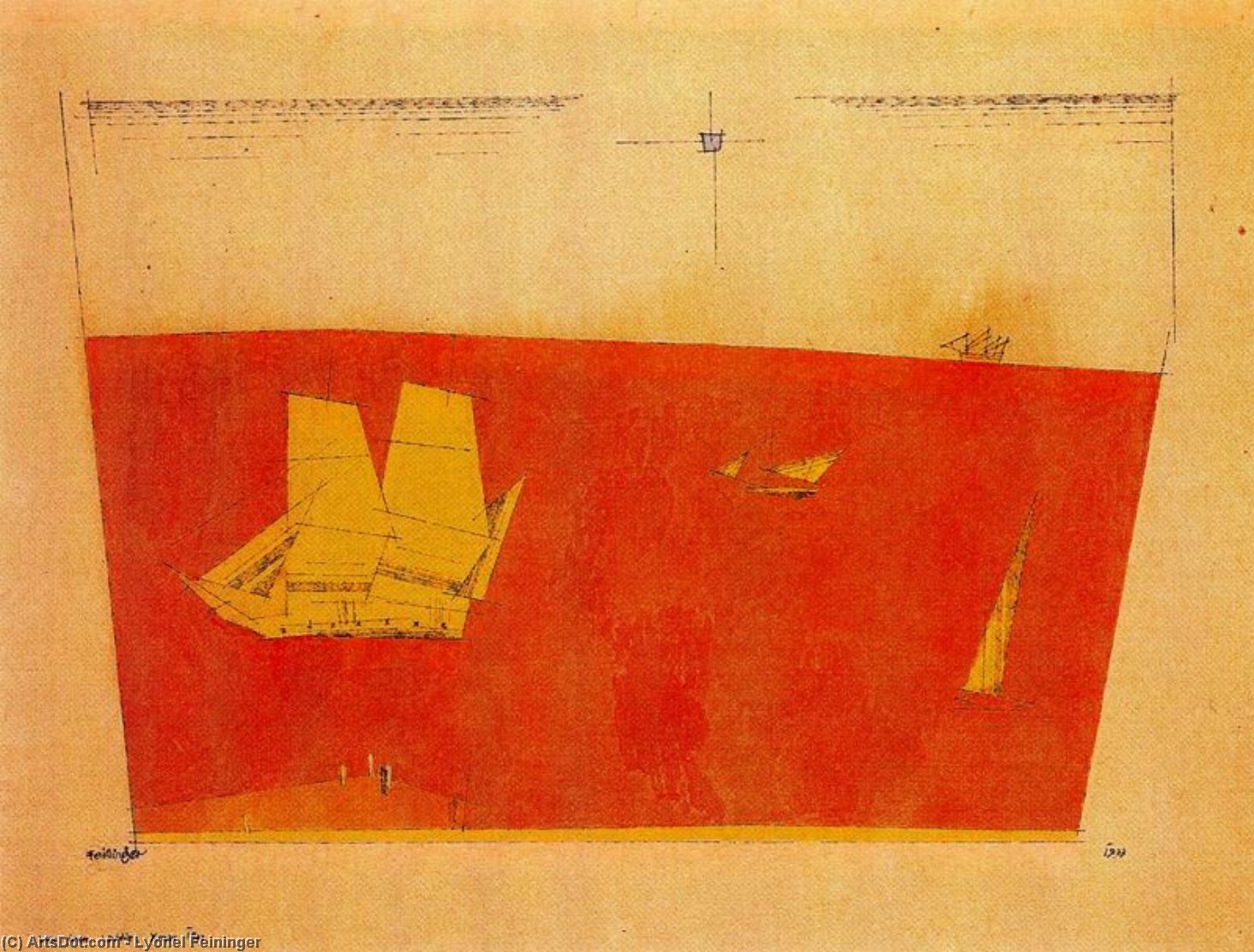
The sea played an equally significant role in his artistic vision. He repeatedly depicted maritime scenes, capturing the power and majesty of the Baltic Sea with remarkable precision and emotional intensity. These recurring motifs—architecture, stained glass, and the sea—became hallmarks of his unique style, distinguishing his work from that of other Expressionist artists.
Throughout his prolific career, Feininger produced a vast body of artwork encompassing watercolors, drawings, prints, and paintings. Notable works include “Werder I,” a captivating watercolor depicting the German landscape; “Gaberndorf II,” a poignant paper drawing capturing a moment of quiet contemplation; and “Boats,” a vibrant cubist painting that exemplifies his innovative approach to form and color. These pieces, along with countless others, demonstrate his remarkable versatility and artistic depth.
Following the rise of Nazism in 1933, Feininger emigrated to the United States, where he continued to paint and create art until his death on January 13, 1956. Despite facing significant challenges during this period, he remained a dedicated artist, producing works that reflected both his personal experiences and his enduring artistic vision. Lyonel Feininger’s legacy extends far beyond his individual creations; he is remembered as a pivotal figure in the development of Expressionism and a key contributor to the Bauhaus movement, whose innovative ideas continue to inspire artists today.
1871 - 1956 , Stany Zjednoczone Ameryki
Opowiedz nam o swoim projekcie, a nasi eksperci od sztuki przygotują dla Ciebie 3 spersonalizowane propozycje dzieł sztuki.
Pozwól nam przygotować 3 propozycje specjalnie dla Ciebie – za darmo!