Podgląd w skali 1:1 Podgląd AR Zamów ręcznie malowaną reprodukcję Przejdź do wersji cyfrowej Wyślij jako kartkę
Szczegóły dzieła Przewodnik Dodaj do ulubionych Pobierz obraz Podobne obiekty RTG Pokaz slajdów Q&A Statystyki

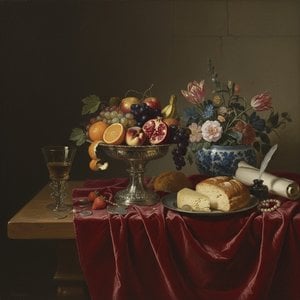
The Fruit and Vegetable Costermonger

Experience the vibrant beauty of Louise Moillon's 'The Fruit and Vegetable Costermonger'! This 1631 masterpiece showcases exquisite detail & rich colors, capturing a bustling Parisian market scene.

Odkryj Louise Moillon: malarkę barokowej martwej natury, znaną z niezwykłej szczegółowości i świetlistych kompozycji owocowych. Poznaj jej eleganckie dzieła z XVII-wiecznej Francji.

Giclée / Wydruk artystyczny

Wydruki giclée lub płótna o jakości muzealnej, szybka realizacja i szeroki wybór opcji wykończenia. ( Zamów ręcznie malowaną reprodukcję Przejdź do wersji cyfrowej)

Corner sample of the P118B picture frame: polistyren formowany, 5 cm wide and 3 cm thick
P118B zł10
Corner sample of the P118H picture frame: polistyren formowany, 5 cm wide and 3 cm thick
P118H zł10
Corner sample of the P118W picture frame: polistyren formowany, 5 cm wide and 3 cm thick
P118W zł10
Corner sample of the P438Z picture frame: polistyren formowany, 5.5 cm wide and 3.5 cm thick
P438Z zł10
Corner sample of the P508JH picture frame: polistyren formowany, 7 cm wide and 3.5 cm thick
P508JH zł12
Corner sample of the P508YH picture frame: polistyren formowany, 7 cm wide and 3.5 cm thick
P508YH zł12
Corner sample of the P805H picture frame: polistyren formowany, 5 cm wide and 3.5 cm thick
P805H zł10
Corner sample of the P805Z picture frame: polistyren formowany, 5 cm wide and 3.5 cm thick
P805Z zł10
Corner sample of the P919BZ picture frame: polistyren formowany, 7 cm wide and 3.5 cm thick
P919BZ zł10
Corner sample of the P919G picture frame: polistyren formowany, 7 cm wide and 3.5 cm thick
P919G zł10
Corner sample of the P919XJ picture frame: polistyren formowany, 7 cm wide and 3.5 cm thick
P919XJ zł10
Corner sample of the P959ZH picture frame: polistyren formowany, 5 cm wide and 3 cm thick
P959ZH zł10
Corner sample of the P968JZ picture frame: polistyren formowany, 6 cm wide and 4 cm thick
P968JZ zł12
Corner sample of the W106C picture frame: lite drewno, 5 cm wide and 3 cm thick
W106C zł8
Corner sample of the W218G picture frame: lite drewno, 5 cm wide and 3 cm thick
W218G zł10
Corner sample of the W218JH picture frame: lite drewno, 5 cm wide and 3 cm thick
W218JH zł8
Corner sample of the W218Y picture frame: lite drewno, 5 cm wide and 3 cm thick
W218Y zł10
Corner sample of the W307PJ picture frame: lite drewno, 6 cm wide and 3 cm thick
W307PJ zł10
Corner sample of the W316G picture frame: lite drewno, 6 cm wide and 3 cm thick
W316G zł10
Corner sample of the W316PJ picture frame: lite drewno, 6 cm wide and 3 cm thick
W316PJ zł8
Corner sample of the W316Y picture frame: lite drewno, 6 cm wide and 3 cm thick
W316Y zł10
Corner sample of the W398PJ picture frame: lite drewno, 5 cm wide and 3 cm thick
W398PJ zł8
Corner sample of the W4111J picture frame: lite drewno, 6.5 cm wide and 3.5 cm thick
W4111J zł10
Corner sample of the W500HY picture frame: lite drewno, 7 cm wide and 5 cm thick
W500HY zł15
Corner sample of the W500JH picture frame: lite drewno, 7 cm wide and 5 cm thick
W500JH zł15
Corner sample of the W692G picture frame: lite drewno, 8 cm wide and 4 cm thick
W692G zł12
Corner sample of the W849H picture frame: lite drewno, 5 cm wide and 3 cm thick
W849H zł8
Corner sample of the W940BG picture frame: lite drewno, 7.5 cm wide and 4.5 cm thick
W940BG zł15
Corner sample of the W953PJ picture frame: lite drewno, 6 cm wide and 3.5 cm thick
W953PJ zł8

Standardowy format
personalizowane
CM
INCH

Wybierz spośród naszych standardowych rozmiarów, które zachowują oryginalne proporcje dzieła sztuki.

szerokość
wysokość

Wpisz wymaganą szerokość i wysokość, aby dopasować grafikę do ramy lub ściany. Wydruk można jedynie przyciąć, nigdy nie powiększając go poza oryginalny obraz, dlatego format o innych proporcjach spowoduje utratę części kompozycji. Przed rozpoczęciem druku prześlemy Ci cyfrowy podgląd do zatwierdzenia. Obraz wyświetlany na tej stronie nie pokazuje rzeczywistego przycięcia — jedynie podgląd oddaje ten efekt.

Dostawa na cały świat () w ciągu 2 tygodni zamiast standardowych 4/5 tygodni. (28 Październik)

Bezpłatna ekspresowa wysyłka na cały świat
Wysokiej jakości płótno lniane
Pełne ubezpieczenie przesyłki
Gwarancja zwrotu należności celnych i podatków importowych
Gwarancja wiernego odwzorowania kolorów
100-dniowa polityka zwrotów (tylko w przypadku wad)
Gwarancja 100% zwrotu pieniędzy
Zniżka przy zakupie wielu sztuk

Suma całkowita

zł 262

The Fruit and Vegetable Costermonger

Giclée / Wydruk artystyczny

Wymiary reprodukcji

-

Cena całkowita

zł 262

Najważniejsze informacje

  • Subject or theme: Market scene, produce
  • Title: The Fruit and Vegetable Costermonger
  • Movement: Baroque
  • Influences: Flemish painting
  • Medium: Oil on panel
  • Dimensions: 48 x 65 cm

The Fruit and Vegetable Costermonger: A Window into 17th-Century Parisian Life

Louise Moillon’s “The Fruit and Vegetable Costermonger,” painted in 1631, is more than just a still life; it's a vibrant snapshot of daily life in 17th-century Paris. This remarkable work, now housed within the Louvre Museum, offers a captivating glimpse into the bustling markets and social dynamics of a city undergoing significant transformation. Moillon’s masterful technique and keen observation elevate this seemingly simple scene to a level of profound artistic merit, revealing layers of symbolism and historical context that continue to intrigue art historians today.

Born into a family steeped in artistic tradition – her father, Nicolas Moillon, was himself a respected painter – Louise Moillon benefited from an early exposure to the principles of observation and representation. Raised within the Huguenot community of Saint-Germain-des-Prés, she inherited a sensibility that valued naturalism and detail, qualities deeply rooted in the artistic heritage of the Netherlands, where many of her family members had sought refuge. This background profoundly shaped her style, imbuing her paintings with an understated elegance and a meticulous attention to the textures and colors of everyday objects.

A Symphony of Color and Light

Moillon’s skill lies not just in her ability to depict fruit and vegetables realistically, but in her masterful manipulation of light and shadow – a technique known as *chiaroscuro*. The painting is dominated by a warm, diffused light that seems to emanate from an unseen source, bathing the table and its contents in a golden glow. This careful use of light not only enhances the visual appeal of the scene but also creates a sense of depth and volume, drawing the viewer into the heart of the market stall. Notice how she uses highlights to emphasize the smooth skin of the peaches, the glossy sheen of the oranges, and the delicate veins in the leaves – each detail rendered with exquisite precision.

The composition itself is carefully balanced, creating a sense of harmony and order amidst the apparent chaos of the market scene. The arrangement of the fruits and vegetables—the abundance of apples, the vibrant hues of the oranges, the contrasting textures of the broccoli—is deliberately asymmetrical, adding to the painting’s dynamism and visual interest. The inclusion of the two women, seemingly engaged in a transaction, subtly introduces an element of human interaction into this otherwise still-life tableau, grounding the scene in the realities of daily life.

Symbolism and Social Commentary

Beyond its aesthetic qualities, “The Fruit and Vegetable Costermonger” is rich in symbolic meaning. The presence of the costermonger – a street vendor selling fruits and vegetables—reflects the growing commercial activity in Paris during the 17th century. The painting can be interpreted as a commentary on the social hierarchy of the time, with the wealthy women observing the proceedings from their elevated position while the costermonger provides sustenance for the masses. The abundance of fruit and vegetables also carries symbolic weight, representing prosperity, fertility, and the bounty of nature – themes that were particularly resonant during a period marked by both religious upheaval and economic growth.

Furthermore, Moillon’s decision to depict these fruits and vegetables at their peak ripeness—without any signs of decay or spoilage—is noteworthy. This deliberate choice challenges the traditional *memento mori* (remember you must die) motif prevalent in Dutch still-life paintings of the era, which often featured decaying fruit as a reminder of mortality. Instead, Moillon celebrates the beauty and vitality of life, capturing a fleeting moment of abundance and pleasure.

A Timeless Masterpiece

“The Fruit and Vegetable Costermonger” stands as a testament to Louise Moillon’s artistic genius and her ability to capture the essence of a particular time and place. Her meticulous attention to detail, masterful use of light and shadow, and subtle symbolic meanings combine to create a work that is both visually stunning and intellectually stimulating. Today, this painting continues to captivate viewers with its vibrant colors, dynamic composition, and profound insights into the social and cultural landscape of 17th-century Paris – a timeless masterpiece that offers a unique window into the past.

Pytania i odpowiedzi

Czy dostępny jest plik do pobrania w wysokiej rozdzielczości dla "The Fruit and Vegetable Costermonger"?

Aby otrzymać plik cyfrowy dzieła „The Fruit and Vegetable Costermonger” – Louise Moillon, zamów wysokiej rozdzielczości cyfrowe zdjęcie do pobrania na stronie Cyfrowy obraz.

Gdzie mogę zobaczyć podgląd dzieła "The Fruit and Vegetable Costermonger"?

Podgląd dzieła „The Fruit and Vegetable Costermonger” – Louise Moillon można znaleźć na stronie Podgląd w pomieszczeniu.

Jakie kolory dominują w dziele „The Fruit and Vegetable Costermonger” – Louise Moillon?

„The Fruit and Vegetable Costermonger” – Louise Moillon wykorzystuje paletę w odcieniach Earthy, w której dominuje kolor Phthalo Green (#1c1919).


Biografia artysty

Cicha genialność Louise Moillon

W wielkich, rozmachu pełnych narracjach epoki baroku, gdzie płótno często zdominowane jest przez dramat i ruch, twórczość Louise Moillon oferuje głęboką i medytacyjną alternatywę. Urodzona w Paryżu w 1610 roku, Moillon wyłoniła się ze świata ukształtowanego przez intensywne przemiany religijne i kulturowe XVII-wiecznej Francji. Jej samo pochodzenie opowiada historię odporności i artystycznego dziedzictwa; jako potomkini hugenotów uciekających z Holandii, była zanurzona w tradycji ceniącej skrupulatną obserwację świata natury. To tło stanowiło coś więcej niż tylko rodzinną historię – oferowało stylistyczny język zakorzeniony w holenderskim mistrzostwie światła, tekstury i symbolicznego realizmu.

Wczesne lata życia Moillon naznaczone były zarówno stratą, jak i głębokim artystycznym mentorem. Śmierć jej ojca, malarza pejzażowego i marszanda Nicolas Moillon, gdy miała zaledwie dziesięć lat, mogła zmienić jej życiową ścieżkę, jednak jej wychowanie pozostało głęboko osadzone w sztuce. Pod okiem ojczyma, François Garnier, biegłego artysty i handlarza, dopracowała technikę, która stała się jej znakiem rozpoznawczym. Jej edukacja nie polegała jedynie na nakładaniu pigmentu na płótno, lecz była zanurzeniem w humanistycznych wartościach jej czasów, nauką dostrzegania boskości w najdrobniejszych szczegółach dojrzewającego owocu czy delikatnym łuku płatka kwiatu.

Mistrzostwo tekstury i światła

Prawdziwy geniusz Moillon tkwi w jej zdolności do przekształcania codzienności w coś niezwykłego. Jej kompozycje charakteryzują się spokojną nieruchomością, ciszą, która zaprasza widza do zatrzymania się i uważnej obserwacji. Posiadała niemal nadnaturalną umiejętność chwytania dotykowych jakości swoich tematów – woskowatej skórki cytryny, miękkiego meszku brzoskwini czy półprzezroczystego soku z rozgniecionej jagody. W dziełach takich jak Martwa natura z cytrynami i pomarańczami Curaçao w białej wielopłatkowej misie, można wyczuć chłodną wilgoć owoców kontrastującą z twardą, szkliwioną powierzchnią porcelany, co tworzy doświadczenie zmysłowe wykraczające poza dwuwymiarową płaszczyznę.

Jej technika była głęboko zainspirowana naturalistycznymi tradycjami kręgów protestanckich, w których się poruszała. Podejście to faworyzowało klarowność i precyzję ponad teatralne cienie bardziej ekstrawaganckich mistrzów baroku. Zamiast tego, Moillon wykorzystywała światło do rzeźbienia swoich tematów, stosując subtelne gradacje tonu w celu stworzenia objętości i głębi. Jej paleta, choć często skupiona na żywych barwach natury, była używana z taką powściągliwością, że każdy kolor wydawał się świetlisty, jakby rozświetlony od wewnątrz. To mistrzostwo pozwoliło jej zbudować most między zwykłą ilustracją botaniczną a sztuką wysoką, nadając każdemu dziełu poczucie życia i witalności.

Dziedzictwo i znaczenie historyczne

Przez całe długie życie, które trwało niemal dziewięć dekad, Moillon osiągnęła poziom sławy rzadko spotykany u artystek jej epoki. Jej zdolność do pozyskiwania zleceń od prestiżowych patronów, w tym członków dworu królewskiego, świadczy o niepodważalnej jakości i wyrafinowaniu jej twórczości. Choć jej prace często skupiały się na intymnej skali martwej natury, ich wpływ był rozległy, znacząco przyczyniając się do rozwoju francuskiej tradycji malarstwa martwej natury.

Historyczne znaczenie Louise Moillon wykracza poza jej umiejętności techniczne; reprezentuje ona kluczowe ogniwo między holenderską tradycją naturalistyczną a rozkwitającą francuską estetyką XVII wieku. Jej obrazy służą jako okna na utracony świat paryskich targowisk i prywatnych ogrodów, chwytając poczucie obfitości i ulotnego piękna. Dziś jej dzieła pozostają cennymi skarbami w takich instytucjach jak Luwr, stanowiąc trwały dowód życia poświęconego odnajdywaniu niezwykłości w tym, co zwyczajne. Jej dziedzictwo odnajdujemy w każdym pociągnięciu pędzla, które celebruje cichy, zapierający dech w piersiach splendor świata natury.

Louise Moillon

Louise Moillon

1610 - 1696 , Francja

Krótka nota

  • Artistic Movement Or Style: Martwa natura baroku
  • Artists Or Movements Influenced By This Artist:
    • Michał Anioł
    • Rafael
    • Tycjan
  • Artists Who Influenced This Artist:
    • Isaac Moillon
    • François Garnier
  • Date Of Birth: Paryż, Francja (1610)
  • Date Of Death: 1696
  • Full Name: Louise Moillon
  • Nationality: Francuska
  • Notable Artworks:
    • Koszyk moreli
    • CZARA WIŚNI, ŚLIWEK I MELONU
    • Koszyk brzoskwiń z pigwą i śliwkami
  • Place Of Birth: Paryż