Podgląd w skali 1:1 Podgląd AR Zamów ręcznie malowaną reprodukcję Przejdź do wersji cyfrowej Wyślij jako kartkę
Szczegóły dzieła Przewodnik Dodaj do ulubionych Pobierz obraz Podobne obiekty RTG Pokaz slajdów Q&A Statystyki

Dove with squabs

Explore 'Dove with Squabs' by Levoy Exil (1985), a vibrant Haitian folk art painting featuring stylized nature & symbolic doves. Abstract, rhythmic lines evoke tranquility & hope. #HaitianArt #NaivePainting

Discover Levoy Exil, a renowned Haitian artist & Saint Soleil movement contributor! Explore his mystical, pointillist paintings depicting Vodou, vibrant colors & abstract forms. Learn more!

Dzieło sztuki prezentowane na tej stronie podlega ochronie prawem autorskim, co oznacza, że nie mamy prawa do tworzenia ani sprzedaży jego identycznej reprodukcji. Ochrona ta jest egzekwowana na mocy umów międzynarodowych, takich jak Konwencja berneńska oraz przez przepisy prawa krajowego, w tym te określone w Prawo autorskie USA – Tytuł 17.

Metoda ta jest w pełni zgodna z przepisami prawa autorskiego, ponieważ nie polega na kopiowaniu ani powielaniu chronionego dzieła. Stanowi ona kreatywną reinterpretację – nowy obraz, który czerpie inspirację z oryginału, ale nie jest z nim tożsamy.

Giclée / Wydruk artystyczny

Wydruki giclée lub płótna o jakości muzealnej, szybka realizacja i szeroki wybór opcji wykończenia. ( Zamów ręcznie malowaną reprodukcję Przejdź do wersji cyfrowej)

Corner sample of the P118B picture frame: polistyren formowany, 5 cm wide and 3 cm thick
P118B zł10
Corner sample of the P118H picture frame: polistyren formowany, 5 cm wide and 3 cm thick
P118H zł10
Corner sample of the P118W picture frame: polistyren formowany, 5 cm wide and 3 cm thick
P118W zł10
Corner sample of the P438Z picture frame: polistyren formowany, 5.5 cm wide and 3.5 cm thick
P438Z zł10
Corner sample of the P508JH picture frame: polistyren formowany, 7 cm wide and 3.5 cm thick
P508JH zł12
Corner sample of the P508YH picture frame: polistyren formowany, 7 cm wide and 3.5 cm thick
P508YH zł12
Corner sample of the P805H picture frame: polistyren formowany, 5 cm wide and 3.5 cm thick
P805H zł10
Corner sample of the P805Z picture frame: polistyren formowany, 5 cm wide and 3.5 cm thick
P805Z zł10
Corner sample of the P919BZ picture frame: polistyren formowany, 7 cm wide and 3.5 cm thick
P919BZ zł10
Corner sample of the P919G picture frame: polistyren formowany, 7 cm wide and 3.5 cm thick
P919G zł10
Corner sample of the P919XJ picture frame: polistyren formowany, 7 cm wide and 3.5 cm thick
P919XJ zł10
Corner sample of the P959ZH picture frame: polistyren formowany, 5 cm wide and 3 cm thick
P959ZH zł10
Corner sample of the P968JZ picture frame: polistyren formowany, 6 cm wide and 4 cm thick
P968JZ zł12
Corner sample of the W106C picture frame: lite drewno, 5 cm wide and 3 cm thick
W106C zł8
Corner sample of the W218G picture frame: lite drewno, 5 cm wide and 3 cm thick
W218G zł10
Corner sample of the W218JH picture frame: lite drewno, 5 cm wide and 3 cm thick
W218JH zł8
Corner sample of the W218Y picture frame: lite drewno, 5 cm wide and 3 cm thick
W218Y zł10
Corner sample of the W307PJ picture frame: lite drewno, 6 cm wide and 3 cm thick
W307PJ zł10
Corner sample of the W316G picture frame: lite drewno, 6 cm wide and 3 cm thick
W316G zł10
Corner sample of the W316PJ picture frame: lite drewno, 6 cm wide and 3 cm thick
W316PJ zł8
Corner sample of the W316Y picture frame: lite drewno, 6 cm wide and 3 cm thick
W316Y zł10
Corner sample of the W398PJ picture frame: lite drewno, 5 cm wide and 3 cm thick
W398PJ zł8
Corner sample of the W4111J picture frame: lite drewno, 6.5 cm wide and 3.5 cm thick
W4111J zł10
Corner sample of the W500HY picture frame: lite drewno, 7 cm wide and 5 cm thick
W500HY zł15
Corner sample of the W500JH picture frame: lite drewno, 7 cm wide and 5 cm thick
W500JH zł15
Corner sample of the W692G picture frame: lite drewno, 8 cm wide and 4 cm thick
W692G zł12
Corner sample of the W849H picture frame: lite drewno, 5 cm wide and 3 cm thick
W849H zł8
Corner sample of the W940BG picture frame: lite drewno, 7.5 cm wide and 4.5 cm thick
W940BG zł15
Corner sample of the W953PJ picture frame: lite drewno, 6 cm wide and 3.5 cm thick
W953PJ zł8

Standardowy format
personalizowane
CM
INCH

Wybierz spośród naszych standardowych rozmiarów, które zachowują oryginalne proporcje dzieła sztuki.

szerokość
wysokość

Wpisz wymaganą szerokość i wysokość, aby dopasować grafikę do ramy lub ściany. Wydruk można jedynie przyciąć, nigdy nie powiększając go poza oryginalny obraz, dlatego format o innych proporcjach spowoduje utratę części kompozycji. Przed rozpoczęciem druku prześlemy Ci cyfrowy podgląd do zatwierdzenia. Obraz wyświetlany na tej stronie nie pokazuje rzeczywistego przycięcia — jedynie podgląd oddaje ten efekt.

Dostawa na cały świat () w ciągu 2 tygodni zamiast standardowych 4/5 tygodni. (29 Październik)

Bezpłatna ekspresowa wysyłka na cały świat
Wysokiej jakości płótno lniane
Pełne ubezpieczenie przesyłki
Gwarancja zwrotu należności celnych i podatków importowych
Gwarancja wiernego odwzorowania kolorów
100-dniowa polityka zwrotów (tylko w przypadku wad)
Gwarancja 100% zwrotu pieniędzy
Zniżka przy zakupie wielu sztuk

Suma całkowita

zł 262

Dove with squabs

Giclée / Wydruk artystyczny

Wymiary reprodukcji

-

Cena całkowita

zł 262

Najważniejsze informacje

  • Notable elements or techniques: Rhythmic lines, stylized forms, patterns
  • Title: Dove with squabs
  • Subject or theme: Nature, peace, fertility, and life
  • Movement: Saint Soleil
  • Artistic style: Haitian folk art, Naive painting

Quiz o sztuce

Do każdego pytania dotyczy tylko jedna poprawna odpowiedź.

Pytanie 1:
What artistic movement is the artist Levoy Exil associated with?
Pytanie 2:
Which style best describes the visual approach of 'Dove with squabs'?
Pytanie 3:
What is the primary symbolic meaning suggested by the doves in this artwork?
Pytanie 4:
How is texture primarily achieved in this painting?
Pytanie 5:
What is the dominant visual characteristic of the composition?

A Symphony of Rhythm and Spirit

In the vibrant tapestry of Haitian contemporary art, few works capture the rhythmic pulse of life as enchantingly as Levoy Exil’s Dove with Squabs. Created in 1985, this masterpiece serves as a window into a world where nature and spirituality dance in a seamless, stylized embrace. At first glance, the viewer is greeted by a lush, tropical tableau that feels both intimately familiar and dreamily surreal. A central vessel, overflowing with verdant foliage, acts as the heart of the composition, flanked by two majestic, columnar trees that frame the scene like sentinante guardians of a sacred grove. The painting does not merely depict a moment in nature; it orchestrates a visual melody through the use of bold, repetitive patterns and a mesmerizing flow of lines that guide the eye across the canvas in a continuous, hypnotic loop.

The technique employed by Exil is a testament to his mastery of the Saint Soleil movement, a pivotal era in Haitian art history. Eschewing traditional Western realism, Exil embraces a more naive, decorative approach that prioritizes emotional resonance and symbolic depth over anatomical precision. The artist utilizes rhythmic, almost pointillist-inspired linework to build texture and volume, creating a sense of movement that suggests the rustling of leaves and the soft fluttering of wings. This layered application of paint creates a rich, tactile quality, where every stroke contributes to a larger, unified pattern. The flattened perspective and even, diffused lighting strip away the distractions of shadow and depth, allowing the pure, vibrant colors and geometric simplicity to command the viewer's full attention.

Symbolism and the Soul of Haiti

Beyond its striking aesthetic appeal, Dove with Squabs is deeply imbued with the spiritual heritage of Haiti. As a prominent figure shaped by the workshops of the Saint Soleil movement, Exil’s work often serves as a bridge to the mystical realms of Vodou. The central figures—the doves and their young squabs—are far more than mere ornithological subjects; they are potent symbols of peace, fertility, and the enduring hope of a people. Nestled within the abundance of the overflowing pot, these birds represent the nurturing power of life and the continuity of generations. The lush greenery and the structured, rhythmic trees evoke a sense of cosmic order and the fertile vitality of the Haitian landscape, suggesting that even within abstraction, there is a profound connection to the ancestral earth.

For the discerning collector or interior designer, this artwork offers much more than a splash of color. It provides an emotional anchor for a space, evoking a sense of tranquility, whimsy, and profound peace. The piece possesses a unique ability to transform a room, acting as a conversation starter that invites contemplation on themes of growth and harmony. Whether placed in a contemporary gallery setting or a curated residential collection, Dove with Squabs radiates an aura of warmth and spiritual resilience. Owning a high-quality reproduction of this work allows one to bring a fragment of the Saint Soleil legacy into their own environment, celebrating the enduring beauty of Haitian folk art and the timeless dance between the natural and the divine.

Pytania i odpowiedzi

Kto stworzył "Dove with squabs" i w jakim roku?

Levoy Exil, "Dove with squabs", 1985 rok

W którym roku powstało dzieło "Dove with squabs"?

"Dove with squabs" powstało w 1985 roku. Data ta pozwala umiejscowić dzieło w kontekście twórczości Levoy Exil oraz epoki, w której powstało.

Do jakiego pomieszczenia polecane jest dzieło „Dove with squabs” – Levoy Exil?

Zalecaną przestrzenią dla „Dove with squabs” – Levoy Exil jest Children's Room. Sugestia ta może być oczywiście dostosowana do Twojego wnętrza.


Biografia artysty

A Visionary of Haitian Vodou Art

Levoy Exil stands as one of Haiti’s most distinctive artistic voices, a pivotal figure within the Saint Soleil movement and celebrated for his mesmerizing depictions of Vodou spirituality. Born in 1944 in Soisson-la-Montagne, Haiti, he embodies the spirit of Haitian folk art—a raw, emotive expression rooted in ancestral traditions and imbued with profound symbolism. His journey into painting began in 1972, coinciding with his immersion in the Saint Soleil workshops cofounded by Tiga and Maude Robart, a collaborative endeavor that profoundly shaped his artistic vision. Before finding his calling on the canvas, Exil worked as a mason, a background that perhaps informs the structural precision found within his vibrant, layered compositions.

Exil’s formative years were marked by exposure to Haitian culture and Vodou beliefs—a religion characterized by elaborate rituals, ancestor veneration, and communion with spirits known as Loas. These influences permeate his oeuvre, informing his stylistic choices and thematic preoccupations. Notably, he cites Prosper Pierre Louis, another Saint Soleil artist, as a significant inspiration, recognizing Pierre Louis’s masterful portrayals of Vodou Loas and their evocative use of color and form. The influence of African art traditions is palpable in Exil's approach—a deliberate harkening back to primal visual languages that prioritize intuition over rational representation. Interestingly, Exil has also expressed being haunted more by the memory of the Arawak Indians, the first inhabitants of Hispaniola, than by his African ancestry, often manifesting in figures with elongated limbs and almond-shaped eyes.

The Spirit of Saint Soleil

The Saint Soleil movement, established in the mountains above LaBoule, served as a crucible for artistic experimentation and spiritual exploration. Participants were provided with art materials without prior experience, fostering spontaneity and unlocking latent creative potential. This environment nurtured Exil’s distinctive style—characterized by Pointillism, where minuscule dots meticulously layered onto canvas reveal an image through chromatic diffusion. His canvases rarely exhibit unused portions of the surface, demonstrating a commitment to maximal visual impact. The movement gained international prestige following the visit of French novelist and art historian André Malraux in 1975. Malraux was so profoundly moved by the works emerging from this community that he dedicated a chapter of his final book, L'Intemporel, to Saint Soleil, famously describing it as the most striking experience of magic painting in the twentieth century.

As Exil’s technique matured, his work became a rhythmic dance of color and form. His paintings often feature:

  • Symbolic Nature: Elements such as the sun, doves, and floral patterns that evoke both tranquility and cosmic energy.
  • Spiritual Geometry: A complex network of grid-like lines and intense motifs that trap solar forms within a structured, mystical space.
  • Chromatic Diffusion: The use of vibrant, saturated hues applied through delicate dots to create a sense of shimmering light.

Legacy and Artistic Significance

Beyond his early contributions to the original Saint Soleil group, Exil remained a vital force in Haitian art, later becoming one of the five members of Cinq Soleil, a group of artists that reformed in the late 1980s. His work continues to serve as a bridge between the earthly and the divine, translating the complex, often unseen world of Vodou into a visual language accessible to the global stage. Through his mastery of pointillist textures and his ability to weave together the histories of the Arawak and African peoples, Levoy Exil has secured his place as a master of Caribbean expressionism. His paintings are not merely images but are windows into a spiritual landscape where every dot of color serves as an invocation of the sacred.

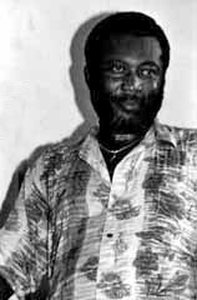
Levoy Exil

Levoy Exil

1944 - , Haiti

Krótka nota

  • Artistic Movement Or Style: Saint Soleil
  • Artists Or Movements Influenced By This Artist: ['Pointillism']
  • Artists Who Influenced This Artist: ['Prosper Pierre Louis']
  • Date Of Birth: 1944
  • Full Name: Levoy Exil
  • Nationality: Haitian
  • Notable Artworks:
    • Dove with Squabs
    • Country Wedding
  • Place Of Birth: Soisson-la-Montagne, Haiti